
In this guide
- 01 Which type of “China agent” do…
- 02 How we ranked these 12
- 03 Comparison table: all 12 at a g…
- 04 1. SINO Shipping
- 05 2. JingSourcing
- 06 3. LeelineSourcing
- 07 4. Dragon Sourcing
- 08 5. Supplyia
- 09 6. Meeno Group
- 10 7. IMEX Sourcing Services
- 11 8. Keen Sourcing
- 12 9. Maple Sourcing
- 13 10. China 2 West
- 14 11. Li & Fung
- 15 12. CJ Dropshipping
- 16 More agents worth knowing
- 17 Where your agent sits matters:…
- 18 What agents really charge
- 19 worked example: what an order a…
- 20 Before you wire money: the 10-m…
- 21 Which agent for your profile
- 22 Do you actually need an agent a…
- 23 Sourcing agents in
- 24 Bottom line
- Sourcing agent fees converge at 3-10% of order value across the industry — 8% is a fair benchmark, with flat-fee models running ~10% and $100k/year minimums at the top end.
- Expect 2-6 weeks from brief to a vetted supplier shortlist, and 30-50% deposits (often 100% upfront on a first order) as the standard payment structure.
- Agent-managed bulk sourcing cuts unit costs 20-40% versus marketplace buying at scale — the usual trigger point is 15-20 units sold per day.
- The agent fee is the small number: in our worked example it's under 5% of the landed cost, while freight, inspection and duties add 70%+ to the ex-factory price.
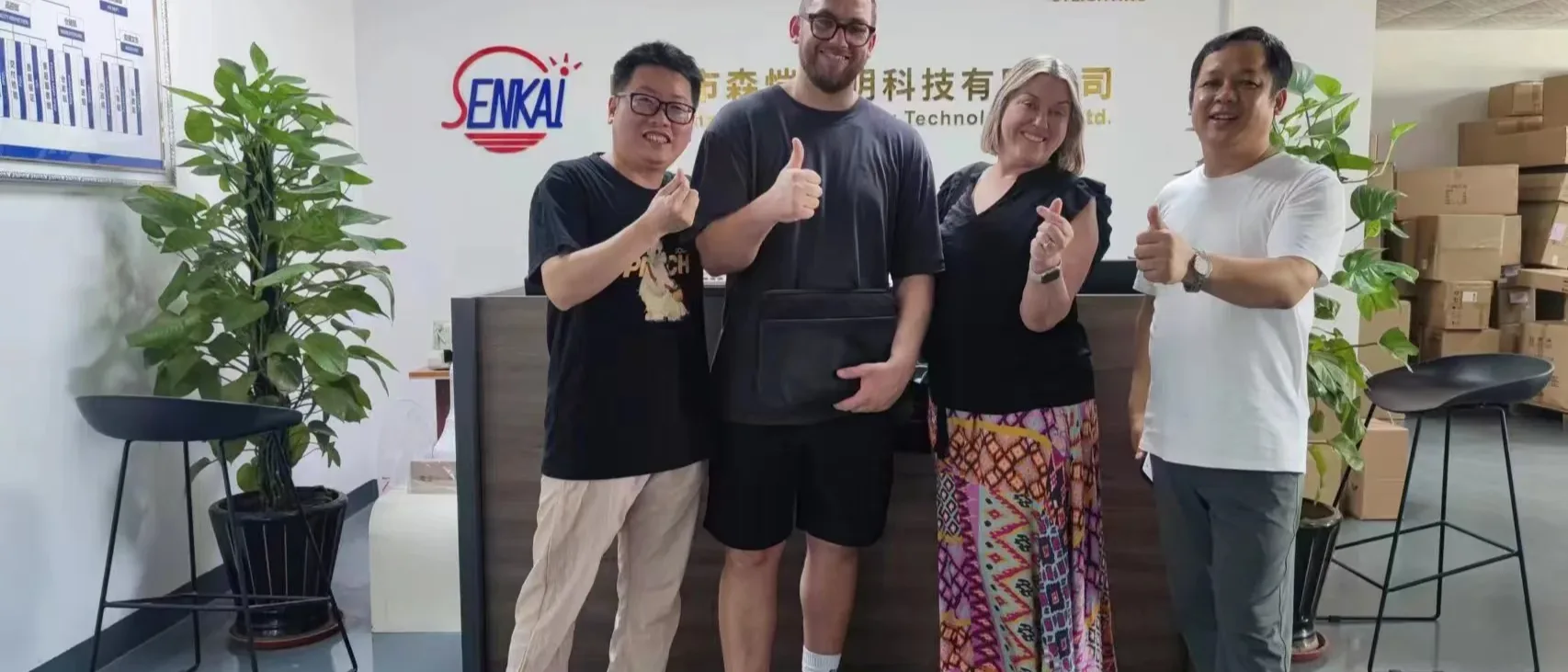
Every “best China sourcing agent” list on page one has the same three problems: the host ranks itself #1 with no stated criteria, half the comparison cells say “not disclosed”, and none of them can tell you what happens after the goods leave the factory — because none of them ships the cargo. We do. SINO Shipping is a freight forwarder with our own offices across China, and we watch the second half of agent-sourced orders every week: the inspections that saved a container, and the “8% all-in” deals that quietly weren’t.
Full disclosure up front: SINO Shipping is our platform — we’ve ranked it #1, we explain exactly what we do differently, and there are 11 strong alternatives below if we’re not the right fit. Every fact about a competitor on this page (founding year, HQ, fees, network size) comes from their own published materials or the consensus of the major industry rankings — where a number isn’t public, the table says so instead of pretending.
This comparison is part of our finding suppliers in China series inside the sourcing and procurement from China hub. It’s strictly a comparison of named companies — if you’re still deciding whether to use an agent at all, that question has its own dedicated guide.
Which type of “China agent” do you actually need?
Three very different businesses all call themselves sourcing agents, and mixing them up is the most common way buyers end up with the wrong partner:
| Type | What they actually do | Typical fee | You need this if… |
|---|---|---|---|
| B2B sourcing agent | Finds and vets factories against your specs, negotiates, runs QC, manages production | 3-10% of order value | You order in bulk (roughly $2,000+ per order), custom or private-label products |
| 1688/Taobao buying agent | Buys listed products from Chinese domestic platforms on your behalf — payment, receiving, re-export | 3-8% + fixed handling fees | You want domestic Chinese prices on catalog goods — see our 1688 buying walkthrough and our Taobao agent comparison |
| Dropshipping agent / platform | Holds inventory, fulfills your store’s orders one parcel at a time | Per-order fee + product markup | You run dropshipping from China at 15-20+ orders/day |
This page ranks the first type, with one platform entry (CJ Dropshipping, #12) included because it dominates the third category and appears on every competing list. If your orders are still under about $500 a time, you don’t need any of them yet — test on marketplaces first (our wholesale websites guide covers that stage).
How we ranked these 12 (real methodology, stated once)
No competing list explains its order, so here’s ours, in weight order:
- Verified terms — published fees, MOQ floors and payment structure beat “contact us” opacity.
- QC scope — does quality control come with the sourcing, and at what depth (photo check vs AQL inspection vs factory audit)?
- Shipping integration — who owns the freight? Split responsibility between agent and forwarder is where most disputes we see are born.
- Buyer-profile fit — an agent brilliant for a $200k OEM program can be wrong for a $3k Yiwu order, and vice versa.
- Track record and scale — founding year, client counts, network size, as published.
We did not rank by catalog size or website polish. And yes — we put ourselves first, for reasons we argue openly in the entry; judge them against the other 11.
Comparison table: all 12 at a glance
The columns that matter are the last three — they’re the ones competing lists leave blank.
| Agent | Base | Fee model | MOQ / entry point | Best for | QC | Shipping |
|---|---|---|---|---|---|---|
 SINO Shipping | HK + 6 mainland offices | Quote agreed up front | Projects from ~$500 | Sourcing + QC + freight under one contract | ✅ From $88, same-day report | ✅ We are the forwarder |
 JingSourcing | Yiwu (2015) | Commission-only, free sourcing | Very low, startup-friendly | Startups & e-commerce, general goods | ✅ In-house team | Arranged via partners |
 LeelineSourcing | Wuhan | Commission-based | Small-to-mid orders | Amazon FBA & mid-market QC | ✅ Inspection services | Arranged via partners |
 Dragon Sourcing | Shanghai + global (2004) | Project/contract, not published | High — enterprise programs | Multi-country enterprise procurement | ✅ Audit-grade | Client’s own logistics |
 Supplyia | Yiwu + New York (2013) | ~5% service fee | Small business friendly | Amazon sellers & small importers | ✅ Included | Arranged via partners |
 Meeno Group | Yiwu | 3-8% | $500 minimum order | Toys, clothing, electronics, bulk/OEM | ✅ Included | Arranged via partners |
 IMEX Sourcing | Guangzhou + HK (2011) | Not published — request quote | SMB and up | Tech-enabled Amazon FBA sourcing | ✅ Included | Arranged via partners |
 Keen Sourcing | Shanghai (2006) | Not published — request quote | Startup/SMB | Consumer goods, fitness products | ✅ Included | Arranged via partners |
 Maple Sourcing | Hong Kong (2013) | Not published — request quote | Container-scale | Electronics & consumer goods programs | ✅ Included | ✅ 166 containers/month |
 China 2 West | Guangdong (2005) | Project-based, not published | Medium-high MOQ | Contract manufacturing, OEM, tooling | ✅ Engineering-grade | Client’s own logistics |
 Li & Fung | Hong Kong (1906) | Enterprise contracts | Very high — retail programs | High-volume fashion & home for retailers | ✅ Full compliance stack | ✅ Own supply-chain arm |
 CJ Dropshipping | Yiwu (2014) | Per-order + product markup | No MOQ | Dropshipping fulfillment, not classic sourcing | ⚠️ Basic checks | ✅ Own fulfillment network |
“Not published — request quote” means exactly that: the company doesn’t disclose rates publicly. We’d rather show you the gap than invent a number. Fee benchmarks and terms checked in November 2026.
1. SINO Shipping — sourcing, QC and freight under one contract (that’s us)
Best for: buyers who want one accountable partner from factory search to doorstep | Entry point: projects from ~$500 | Fee model: quoted and agreed before work starts
Here’s our honest pitch. Every classic sourcing agent on this list — including the excellent ones — hands your cargo to a third-party freight forwarder the moment it’s ready. That’s the point where responsibility splits: the agent says the goods left fine, the forwarder says they arrived as received, and you’re in the middle. We built the service the other way around: SINO Shipping is a freight forwarder first, operating from Hong Kong plus our own teams in Shenzhen, Guangzhou, Shanghai, Ningbo, Tianjin and Qingdao — and sourcing is the front end of the same chain, run with MorePlus, the dedicated sourcing arm of our group, FS International.
What that looks like in practice:
- Supplier sourcing: you brief specs, budget and timeline; we come back with 3-5 vetted factories, then handle on-site visits and samples before you commit anything. Free consultation, reply in under 24 hours (how the service works — and the full sourcing-assistance overview).
- Verification before you pay: document checks from $150, on-site factory visits from $300, full audits from $500, report in 3-7 days. Details in supplier vetting and QC by SINO.
- Quality control: AQL inspections from $88 with same-day photo reports (QC service) — priced so that skipping inspection is never the rational choice.
- Negotiation beyond price: our Chinese-speaking teams negotiate MOQ, lead time, payment terms, samples and warranty — the terms that decide disputes later, not just the unit price.
- The freight itself: we consolidate cargo from multiple suppliers at our warehouses near Shanghai, Shenzhen and Ningbo — combining suppliers into one shipment typically cuts per-CBM cost 25-40% versus separate LCL shipments — then ship it under the same contract, door to door (end-to-end procurement + logistics).
- 1688 and Taobao access: we act as the China-side buying agent those platforms require — payment, Mandarin communication, dispute handling, export paperwork.
Honest limits: if you need a deep specialist in one niche — say, injection-molding engineering (China 2 West does that better) or a retail program across 40 markets (that’s Li & Fung’s world) — hire the specialist. We shine when the order is real but not enterprise-sized, when you’re buying from several suppliers at once, and when shipping complexity is the actual bottleneck. Get a free quote and compare our all-in number against an agent fee plus a separate forwarder — that comparison is the whole argument.
2. JingSourcing — the consensus favorite for startups
Best for: startups and e-commerce sellers on small budgets | Base: Yiwu, founded 2015 | Fee model: commission-only, free sourcing service
JingSourcing is the company every competing list agrees on — it appears on six of the seven major rankings we benchmarked, usually near the top, and its own site ranks for the head term on brand strength alone. The numbers behind that: 200+ sourcing specialists and 4,000+ clients served from Yiwu, the world’s small-commodity capital. Its model is commission-only — the sourcing work itself is free, with Jing earning on the order — which, combined with genuinely low MOQ tolerance, makes it the default recommendation for first-time importers and e-commerce sellers.
Strengths: scale of staff (200+ people is a real operations floor, not a broker’s desk), startup-friendly minimums, in-house QC, strong English communication, and Yiwu positioning for general merchandise.
Watch out for: commission-only means the margin lives inside your quote — fine, but benchmark the final unit price against a second source before committing. And Yiwu DNA cuts both ways: brilliant for consumer goods and promo items, less deep for engineered or certified products.
3. LeelineSourcing — the Amazon FBA workhorse
Best for: Amazon FBA sellers and mid-market buyers who want QC built in | Base: Wuhan | Fee model: commission-based
LeelineSourcing claims 6,000+ international clients — the largest published client base of any classic agent on this list — and has built its reputation on Amazon FBA programs: supplier search, negotiation, inspection and FBA prep as one flow. Being based in Wuhan rather than a coastal hub is an underrated advantage: central China location, lower operating costs, and equal distance to the Yiwu, Guangdong and Zhejiang supplier belts.
Strengths: FBA-specific experience (labeling, prep, Amazon compliance), inspection services in-house, big enough to have seen your product category before.
Watch out for: commission rates aren’t published — get the percentage and what it covers in writing, especially whether inspections are included or billed per visit. For high-stakes orders, we’d still layer an independent third-party inspection on top of any agent’s own QC, theirs or ours.
4. Dragon Sourcing — the enterprise procurement firm
Best for: corporates running multi-country procurement programs | Base: Shanghai + global offices, founded 2004 | Fee model: project/contract-based
Dragon Sourcing is a different animal from the Yiwu agents: a procurement services firm with 85,000+ registered suppliers across 50+ countries, offices on several continents, and two decades of enterprise engagements. This is who you call when the brief is “rationalize our supplier base across China, Vietnam and India”, not “find me a yoga mat factory”.
Strengths: genuine multi-country capability (increasingly relevant in the tariff era — see the 2026 section below), audit-grade supplier evaluation, professional procurement methodology, longevity since 2004.
Watch out for: the engagement model is consulting-shaped — MOQs and budgets below enterprise scale won’t fit, fees aren’t published, and you’ll manage logistics separately. Small and mid-sized importers get better economics from the agents above.
5. Supplyia — published rates and small-business focus
Best for: Amazon sellers and small importers who want a disclosed fee | Base: Yiwu + New York, founded 2013 | Fee model: ~5% service fee
Supplyia earns its spot for a rare virtue: it publishes its pricing — around 5% service fee, with honest public guidance that “8% is fair” industry-wide and that first orders typically run 100% upfront while larger repeat orders move to 30-50% deposits. A US office (New York) plus the Yiwu operation gives Western buyers a same-time-zone contact, and the claimed network of 200+ vetted manufacturers is curated rather than sprawling.
Strengths: transparent fee, US presence, small-business temperament, straight talk about payment norms most agents keep vague.
Watch out for: 200+ vetted factories is a feature for common categories and a limit for unusual ones — if your product is niche, ask specifically who they’ve made it with. Logistics is brokered out, so get the freight quote separately and early.
6. Meeno Group — disclosed terms for bulk consumer goods
Best for: bulk and OEM orders in toys, clothing and electronics | Base: Yiwu | Fee model: 3-8%, $500 minimum order
Meeno Group is the other agent on this list with genuinely published terms: 3-8% service fee and a $500 minimum order — one of the lowest disclosed entry points in the industry. The focus is bulk consumer goods (toys, apparel, electronics) with OEM capability for buyers moving from catalog products to private label.
Strengths: disclosed fee band and MOQ floor, low entry point, OEM experience in its core categories, Yiwu market access.
Watch out for: the 3-8% range is wide — pin down where your order sits and why before signing. Category depth outside toys/clothing/electronics is thinner; for industrial or certified products look at China 2 West or an enterprise firm.
7. IMEX Sourcing Services — the tech-enabled operator
Best for: Amazon FBA and e-commerce sellers who want software-grade visibility | Base: Guangzhou + Hong Kong, founded 2011 | Fee model: not published — request quote
IMEX Sourcing Services has served 450+ businesses since 2011 from Guangzhou, with a Hong Kong entity for contracting — and differentiates on process: dashboards, documented workflows and a tech-enabled approach to what is usually a WeChat-and-spreadsheets industry. The Guangzhou base puts it in the middle of the electronics/apparel/furniture supplier belt.
Strengths: process transparency and tooling, Guangzhou location, HK contracting entity (cleaner for Western legal comfort), FBA specialization.
Watch out for: fees aren’t public, so comparison-shop the quote; and tech visibility is not a substitute for physical inspection — confirm what on-site QC is included versus billed.
8. Keen Sourcing — the veteran generalist for SMBs
Best for: startups and SMBs in consumer goods and fitness products | Base: Shanghai, founded 2006 | Fee model: not published — request quote
Keen Sourcing has been running since 2006 — two decades, which in this industry filters out a lot — from Shanghai, with a specialty in consumer goods and fitness products for startup and SMB buyers. Shanghai positioning means proximity to the Jiangsu/Zhejiang manufacturing belt and to China’s biggest port.
Strengths: longevity (few agents survive 20 years), SMB-appropriate scale, fitness/consumer-goods track record.
Watch out for: no published rates or MOQ floors, and a smaller public footprint than Jing or Leeline — ask for references in your category and verify them (the checklist below applies to every company on this page, ours included).
9. Maple Sourcing — container-scale programs from Hong Kong
Best for: electronics and consumer-goods buyers shipping full containers on repeat | Base: Hong Kong (Tsim Sha Tsui), established 2013 | Fee model: not published — request quote
Maple Sourcing publishes the operational numbers most agents hide: 1,000+ qualified suppliers, 300+ clients, and 166 containers shipped per month. That last figure is the tell — this is an agent built for repeat container programs, not sample orders, with Hong Kong contracting and banking as standard.
Strengths: real logistics throughput (166 containers/month means shipping competence is proven, not promised), HK legal/banking environment, electronics and consumer-goods depth.
Watch out for: if you’re not at container scale yet, you’re not the core customer — minimums and attention will reflect that. Fee structure on request only.
10. China 2 West — when sourcing becomes manufacturing
Best for: product development, OEM, tooling and molding projects | Base: Guangdong, founded 2005 | Fee model: project-based, not published
China 2 West sits at the engineering end of the spectrum: Western-managed, Guangdong-based since 2005, covering contract manufacturing, product development, tooling and molding — the projects where “find me a supplier” becomes “help me get this thing designed, tooled and made to spec”. MOQs are medium-to-high accordingly, because tooling economics demand volume.
Strengths: engineering-grade project management, Western management with on-the-ground Guangdong teams, genuine OEM/NPI capability that classic agents don’t have.
Watch out for: wrong tool for catalog-product buying — you’d be paying engineering overhead for a job Yiwu agents do for a small commission. Budget for a longer, staged engagement (design → tooling → pilot → production).
11. Li & Fung — the 120-year reference point
Best for: enterprise retailers running high-volume fashion and home-goods programs | Base: Hong Kong, founded 1906 | Fee model: enterprise contracts
Li & Fung is on this list as the ceiling of the category: founded in 1906, present in 40+ markets with about 30 global locations, and the supply-chain engine behind a meaningful share of Western retail for a century. If you’re a retail chain moving high volumes of fashion or home goods, this is what sourcing looks like at the top — compliance stacks, multi-country orchestration, its own logistics arm.
Strengths: unmatched history and scale, full compliance and ESG machinery, true end-to-end supply-chain capability.
Watch out for: it exists here mostly for calibration — SME buyers are not the customer, and quoting starts at program scale. If reading this entry felt aspirational rather than practical, every other entry on the list will serve you better today.
12. CJ Dropshipping — the platform, for a different job
Best for: dropshippers who need per-order fulfillment, not bulk sourcing | Base: Yiwu, founded 2014 | Fee model: per-order fees + product markup, no MOQ
CJ Dropshipping appears on most competing lists as if it were a classic sourcing agent. It isn’t — it’s a fulfillment platform: 400,000+ listed items, no MOQ, warehouses that hold your inventory and ship per-order with store integrations. For a dropshipping business doing 15-20+ orders a day, that’s exactly the machine you want. For bulk sourcing of a custom product, it’s the wrong shape entirely.
Strengths: zero MOQ, integrated fulfillment and store plugins, fast start for e-commerce testing.
Watch out for: per-unit economics — platform fees and markups stack in a way a 5-8% agent commission doesn’t at volume. The classic graduation path we see: validate on CJ, then move the winning product to agent-managed bulk sourcing, cutting unit costs 20-40% at scale.
More agents worth knowing (quick, honest directory)
Beyond the top 12, these names recur across the industry rankings with at least one verifiable distinguishing fact:
- Yansourcing (founded 2010) — Shenzhen-linked generalist, frequent top-10 pick on competing lists.
- Sourcing Bro (Shenzhen) — e-commerce sourcing with fulfillment included; a CJ alternative with more of an agent’s shape.
- Guangzhou Sourcing (Guangzhou) — the niche player for FF&E/OS&E procurement on hotel and building projects.
- HiSourcing (Yiwu, 2017) — direct access to Yiwu’s 75,000+ market booths; advertises zero service fees, which means the margin is in the quote — price-check accordingly.
- Cosmo Sourcing (2012) and Sourcing Allies (2006) — Western-owned firms popular with US/EU buyers who want home-jurisdiction contracts.
- Source One Ltd. (1991) and ITI Manufacturing — the old guard of US-owned China sourcing, industrial temperament.
- Gembah (2017) — product development marketplace rather than an agent; pairs design help with manufacturing intros.
None of these are ranked above because they either publish less data than our top 12 or duplicate a profile already covered by a stronger entry.
Where your agent sits matters: the city map
“China sourcing agent” hides a geography lesson. Agents cluster where their supply base lives, and picking the wrong city costs real money:
- Yiwu — general merchandise, promo items, toys, accessories, lowest MOQs on earth (75,000+ booths in one market). Home of JingSourcing, Supplyia, Meeno, CJ, HiSourcing. If your product is small, light and unbranded, source it here.
- Shenzhen — electronics, from cables to IoT. A Shenzhen sourcing agent earns their fee purely through factory triage: the same “manufacturer” listing can be a Huaqiangbei trader or a real SMT line, and only someone local tells them apart fast. Our Shenzhen team does this triage weekly for client orders.
- Guangzhou — apparel, leather, furniture, beauty, plus project procurement (FF&E). Also the Canton Fair’s home — worth combining with a fair visit.
- Shanghai / Ningbo — industrial goods, home goods, packaging, and China’s two biggest port complexes; agents here (Keen, Dragon) skew professional-services.
- Wuhan and inland — lower-cost operations serving all belts (Leeline’s model); expect slightly longer sample loops, often offset by lower fees.
Deeper background on the manufacturing belts: key manufacturing regions — Guangdong, Zhejiang, Fujian.
What agents really charge — the full fee picture
Pulling every disclosed number in the industry into one place:
| Fee element | Market norm | Sources of truth |
|---|---|---|
| Commission | 3-10% of order value; 8% is a fair mid-point | Supplyia ~5%; Meeno 3-8%; flat models ~10% |
| Complex projects | Up to 15% (engineering, certification, multi-factory) | Enterprise/OEM firms |
| Minimums | $500-$2,500 per project where disclosed | Meeno $500 floor; premium firms $2,500+ |
| Flat-fee ceiling | ~10% flat with $100k/year minimums | Top-end retainer models |
| First order payment | 100% upfront is the industry norm | Standard across published policies |
| Repeat orders | 30-50% deposit, balance against documents or inspection | Standard across published policies |
| ”Free” sourcing | Margin embedded in the factory quote | Commission-only and zero-fee models |
Three rules that protect you regardless of the agent:
- Ask where the money comes from. A disclosed 8% you can audit beats a “free” service with an invisible 15% inside the unit price. Neither is dishonest — but only one is checkable.
- Gate payments behind inspection. Deposit to start production, balance only after a passed pre-shipment inspection ($200-400 third-party, or from $88 with us). The inspection is the protection; payment terms just enforce it.
- Get the fee perimeter in writing — does it include samples, inspections, rework coordination, export documents? The gap between “8% all-in” and “8% plus extras” routinely doubles the effective rate.
The worked example: what an order actually costs, landed
No competing list shows this math end-to-end, so here it is — the part we do for a living. Say your agent finds custom silicone kitchen sets at $1.80/unit EXW from a Jiangmen factory, and you order 2,000 units to the US East Coast, LCL by sea. Illustrative figures checked against our November 2026 quotes; your product and lane will differ:
| Cost block | Amount | Notes |
|---|---|---|
| Product, 2,000 units at $1.80 | $3,600 | EXW factory price, negotiated by the agent |
| Agent commission (8%) | $288 | Fair-benchmark rate on order value |
| Pre-shipment inspection (AQL) | $300 | Third-party $200-400 standard; gates the balance payment |
| Domestic trucking + export clearance | $190 | Factory → consolidation warehouse, docs |
| Sea freight LCL (~4.5 CBM) + destination charges | $980 | Port-to-door, US East Coast |
| US duties incl. Section 301 (~25% this category) | $900 | On customs value — see the tariff note below |
| Total landed | $6,258 | $3.13/unit — 74% above the “sticker” price |
What that table teaches:
- The agent fee is the small number — $288 of $6,258, under 5% of the landed cost. Buyers who agonize over 5% vs 8% commission while ignoring freight mode and duty classification are optimizing the wrong line.
- Freight, inspection and duties are quotable before you commit. Getting that number first is free (literally) and it’s the cheapest mistake-prevention in importing — full cost anatomy in our freight costs guide.
- The landed unit price is the only price. $1.80 became $3.13 in a well-run order. Comparing agents — or platforms — on ex-factory stickers is comparing noise.
Before you wire money: the 10-minute verification checklist
Competing lists mention scams; none give you the procedure. Here it is — run it on any agent, including us:
- Business license. Ask for their Chinese business license and verify the 18-digit Unified Social Credit Code on the official registry (gsxt.gov.cn). No license, no wire. Hong Kong entities: check the Companies Registry instead.
- Bank account name = registered company name. Exactly, in Chinese. “Please pay our director’s personal account this once” is how most of the fraud cases we hear about start.
- Live video call. Office and warehouse on camera, today, not a produced video. Two minutes of walking around answers more than two weeks of email.
- Two references in your category — and actually call them. Ask what went wrong on their orders and how the agent handled it; smooth-only stories are a red flag of their own.
- Written contract before payment one: fee structure and perimeter, refund terms, dispute process, who owns supplier relationships and molds. The absence of any refund/dispute language is the tell.
- Start small on purpose. First order = trial order. An agent who pushes you to “commit volume for better pricing” before a completed first cycle is optimizing their pipeline, not your risk.
Full anti-fraud playbook: how to spot reliable suppliers vs scams.
Which agent for your profile? (decision matrix)
| Your profile | Volume signal | What you need | Shortlist |
|---|---|---|---|
| Testing an idea | Orders under ~$500 | No agent yet — marketplaces + samples | AliExpress/DHgate (platform guide) |
| Dropshipper scaling | 15-20+ orders/day | Fulfillment platform or dropship agent | CJ Dropshipping, Sourcing Bro |
| Amazon FBA seller | Repeat POs, prep + compliance | FBA-literate agent with QC | Leeline, Supplyia, IMEX, SINO |
| SME importer | $2k-$100k orders, multiple suppliers | Full-service agent + consolidated freight | SINO, JingSourcing, Meeno, Maple |
| Custom/engineered product | Tooling, NPI, certifications | Manufacturing project management | China 2 West, Gembah |
| Enterprise program | Multi-country, retail volume | Procurement firm / supply-chain partner | Dragon Sourcing, Li & Fung |
The volume thresholds are the industry’s real graduation ladder: marketplace buying → agent-managed bulk (worth 20-40% unit-cost reduction at scale) → dedicated programs. Most buyers switch too late, not too early.
Do you actually need an agent at all?
One honest paragraph, because it’s a different question from “which one”: if you buy standard catalog products from English-speaking Alibaba suppliers, can visit factories yourself or don’t need to, and your orders are big enough to get factories’ attention directly — you may not need an agent, and the 3-10% is yours to keep. The full trade-off analysis (commission structures, supplier access, quality control, the failure modes) lives in our dedicated guide to the pros and cons of working with sourcing agents, and if you want to understand the machine you’d be hiring into, read how sourcing works in China first.
Sourcing agents in 2026: AI, tariffs, and China+1
Three shifts are reshaping what “a good agent” means this year:
- AI killed the directory value, not the agent. Finding 50 supplier names is now free — any LLM does it in seconds. What still costs money is what AI can’t do: stand on the factory floor, catch the subcontracting switch, negotiate in Mandarin at 11pm before a ship cutoff. Agents whose pitch is “we know suppliers” are depreciating; agents whose pitch is “we verify and execute” are appreciating.
- US tariffs changed the math, not the destination. With Section 301 tariffs of 25-30% still covering broad categories of Chinese goods (and 50% Section 232 on steel/aluminum/copper products), duty classification is now a bigger lever than agent commission for US buyers — price per HS code, not per vibe (customs duties guide).
- China+1 raised the bar for multi-country capability. Buyers diversifying into Vietnam or India discover their $8/hour Yiwu agent has no network there. Firms with genuine multi-country reach (Dragon Sourcing at enterprise scale) or forwarders with multi-origin lanes hold an edge — though for most product categories, China’s supplier depth still wins the total-cost math in 2026.
Bottom line
The best China sourcing agent is a matching decision, backed by verification: Yiwu commission agents for low-MOQ consumer goods, FBA specialists for Amazon programs, engineering firms for custom products, enterprise procurement for retail scale — and in every case, the checklist before the wire and an inspection before the balance payment. The fee is the small number; the landed cost and the accountability chain are the big ones.
That accountability chain is why we built SINO Shipping the way we did: sourcing, verification, QC and freight under one contract, from our own offices in Hong Kong, Shenzhen, Guangzhou, Shanghai, Ningbo, Tianjin and Qingdao. Tell us what you’re sourcing and where it’s going — our team replies within 24 hours with the real, landed number, and if one of the 11 alternatives above fits you better, we’ll tell you that too.
ReferenceGlossary· 16 terms
Search a term, or jump by letter.
- all-in
- Quote that includes the main cost components (e.g. freight + handling + clearance). Always confirm what's included so you're not comparing a partial quote to a full one.
- B2B
- Business to business. The buyer is a company (e.g. importer) that clears and takes delivery. DAP often fits B2B when the buyer has a broker and controls the import leg.
- CBM
- Cubic metre. Standard unit for shipping volume; used for LCL pricing and container capacity.
- clearance
- Customs clearance. Process of presenting goods and documents to customs and obtaining release for import or export. Export clearance (who files it) is the key difference between EXW and FOB.
- consolidation
- Combining several LCL shipments into one container at origin. Reduces cost per CBM; adds CFS time.
- customs value
- Taxable base for duty and Consumption Tax. In Japan, usually CIF: goods + freight + insurance to the port or airport of import.
- destination charges
- Fees at the destination port: terminal handling, documentation, release, CFS deconsolidation (LCL), storage. Often bundled or omitted from the first quote—confirm line by line.
- duty
- Import duty. Tax levied by customs on imported goods, based on HS code, value, and origin.
- export clearance
- Customs process to release goods for export before departure. Who arranges it depends on Incoterm: seller under FOB/FCA, buyer under EXW.
- EXW
- Ex Works. Seller makes goods available at their premises; buyer arranges pickup, export clearance, freight, and everything beyond. Risk transfers at the factory gate—the earliest of all Incoterms.
- forwarder
- Freight forwarder. Company that books transport, arranges documentation, and often coordinates customs on your behalf.
- HS Code
- Harmonized System code. International product classification used for customs; determines duty rate and any restrictions.
- landed cost
- Total cost to get goods to the final destination: transport, handling, customs, duties, taxes, and last-mile. Use it to compare modes, not headline rate alone.
- LCL
- Less than Container Load. Your cargo shares a container with others; priced per CBM (plus CFS and handling at both ends).
- REACH
- Registration, Evaluation, Authorisation and Restriction of Chemicals (EC 1907/2006). EU regulation controlling chemicals in products imported into Portugal.
- rework
- Correcting cargo that doesn't meet requirements (relabeling, repacking, recounting). Done at your cost when cargo is refused or held; fix at origin to avoid fees.
No term matches your search.