
- FTL offers faster transit and lower per-unit costs for shipments over 12 tons; LTL suits smaller loads and flexible scheduling.
- China's main trucking corridors link coastal ports to inland cities, supporting domestic distribution and export flows.
- Cross-border trucking connects China to ASEAN, Central Asia, Russia, and Europe, with typical transit times of 5–15 days.
- Bonded trucking enables duty-free moves between ports, ICDs, and FTZs, streamlining customs for re-export or consolidation.
- Port and ICD drayage is essential for container movement, with average local haul distances under 50 km.
- Multimodal trucking is key for first/last mile, integrating with rail, sea, or air for efficient end-to-end logistics.

China’s road and inland trucking sector is the backbone of its domestic and international logistics, connecting factories, ports, and border crossings with remarkable efficiency. For importers and logistics managers, understanding how trucking integrates with other modes—sea, air, and rail—is essential for optimising costs, transit times, and supply chain reliability. Trucking is not only the first and last mile for most shipping from China but also a primary transport mode for cross-border trade with Southeast Asia, Central Asia, Russia, and even Europe.
Whether you’re moving full truckloads (FTL) from a Shenzhen factory to a Shanghai port, consolidating less-than-truckload (LTL) shipments for cross-border delivery, or leveraging bonded trucking to defer duties, the choices you make at this stage can determine the success of your entire logistics operation. This comprehensive guide demystifies China’s road freight network, from domestic distribution to complex international corridors, drayage, and multimodal solutions.
Road Freight’s Role in China’s Logistics Ecosystem
China’s vast geography and manufacturing diversity demand a robust road freight network. Trucks are the most flexible mode for moving goods between inland production hubs, coastal ports, and international borders. Road freight supports:
- First-mile pickup from factories, often in industrial parks far from ports or airports.
- Drayage to container yards, inland container depots (ICDs), and export terminals.
- Last-mile delivery to buyers, warehouses, or distribution centres, both domestically and in neighbouring countries.
- Cross-border trucking for direct delivery to Southeast Asia, Central Asia, Russia, and even deep into Europe.
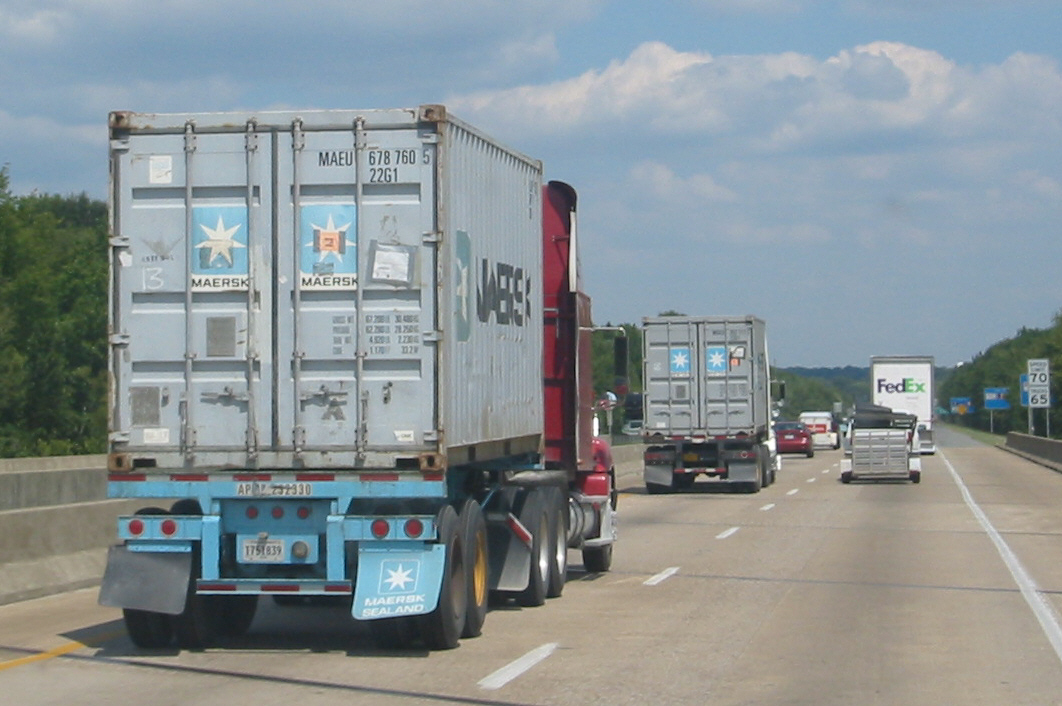
The basics of road freight from China include a wide variety of vehicle types, from small vans for e-commerce parcels to 40-foot container trucks for bulk exports. Road freight is also the backbone of multimodal solutions, seamlessly linking with sea, air, and rail.
Domestic Road Freight: Network, Hubs, and Corridors
China’s domestic road network is one of the world’s most extensive, with over 160,000 km of expressways and millions of kilometres of secondary roads. Major industrial cities—such as Guangzhou, Shenzhen, Shanghai, Ningbo, Qingdao, and Chongqing—are connected by high-capacity highways, supporting rapid movement of goods to and from major road freight hubs.
Key Domestic Corridors
- Yangtze River Delta: Connects Shanghai, Suzhou, Hangzhou, and Ningbo, handling electronics, apparel, and machinery.
- Pearl River Delta: Links Shenzhen, Guangzhou, Dongguan, and Zhuhai, crucial for electronics and consumer goods.
- Bohai Economic Rim: Connects Beijing, Tianjin, and Dalian, serving heavy industry and automotive sectors.
- Chengdu-Chongqing Corridor: Vital for Western China’s manufacturing and agricultural exports.
Trucks move goods between factories and ICDs, which serve as inland extensions of seaports, allowing customs clearance and container handling closer to production sites.
Drayage and Last-Mile Delivery
Drayage—the short-haul trucking of containers between ports, ICDs, and warehouses—is a critical part of China’s export process. Efficient drayage minimises dwell times and port congestion, especially in major gateways like Shanghai and Shenzhen. Last-mile delivery, whether for bulk cargo or e-commerce parcels, relies on a dense network of local and regional trucking operators.
FTL vs LTL: Choosing the Right Trucking Solution
Selecting between Full Truckload (FTL) and Less-than-Truckload (LTL) is a key decision that impacts cost, transit time, and risk. FTL means your cargo occupies an entire truck, while LTL consolidates multiple shipments from different shippers.
| Factor | FTL (Full Truckload) | LTL (Less-than-Truckload) |
|---|---|---|
| Capacity | Entire truck (up to 28T/68m³) | Partial load (shared space) |
| Cost structure | Fixed per trip | Priced by weight/volume |
| Transit time | Direct, faster | Slower, with stops/consolidation |
| Handling risk | Lower (fewer transfers) | Higher (multiple handlings) |
| Ideal for | Large, urgent, fragile, or high-value cargo | Small, non-urgent, cost-sensitive shipments |
For a deeper dive, see LTL vs FTL Road Freight.

Cross-Border Trucking: ASEAN, Central Asia, Russia, Europe
China’s international trucking corridors have expanded rapidly, providing alternatives to sea, air, and rail. Cross-border road freight is especially popular for time-sensitive or high-value cargo moving to Southeast Asia, Central Asia, Russia, and Europe.
Key Cross-Border Routes
- ASEAN (Southeast Asia): Via the Kunming–Bangkok Expressway, trucks reach Thailand, Vietnam, Laos, Cambodia, and Malaysia. Transit times from Kunming to Bangkok average 3–5 days.
- Central Asia (CIS): Routes from Urumqi and Khorgos connect to Kazakhstan, Uzbekistan, Kyrgyzstan, and beyond, supporting Belt and Road trade.
- Russia and Europe: Trucking via Manzhouli, Erenhot, or Horgos enables direct delivery to Russia and even as far as Germany or Poland, often in 10–16 days.
Cross-border trucking is covered in detail in Cross-Border Trucking from China.
Bonded Trucking
Bonded trucking allows goods to move under customs seal, deferring duties and taxes until reaching a bonded zone or final destination. This is crucial for transhipment, re-export, or multimodal moves via rail or sea freight.
Multimodal Trucking: Pairing Road with Sea, Rail, and Air
Road freight rarely works in isolation. In China, multimodal solutions are standard practice, combining the flexibility of trucking with the scale or speed of other modes. Typical pairings include:
- Road + Sea: FTL/LTL drayage from inland factories to coastal ports for sea freight from China.
- Road + Rail: Trucking to rail terminals (e.g., Chongqing, Xi’an, Zhengzhou) for China-Europe rail freight, then onward delivery by truck at the destination.
- Road + Air: Trucking to major airports (Shanghai PVG, Guangzhou CAN, Shenzhen SZX) for air freight from China.
- Road + Express: First-mile pickup for express courier shipments, with last-mile delivery at the destination.
Multimodal solutions are explored in Multimodal Road Freight Solutions.
When to Use Multimodal Pairings
- Cost savings: Truck-rail or truck-sea is often cheaper than all-road for long distances.
- Speed: Truck-air or truck-rail can cut transit times compared to sea alone.
- Customs management: Bonded trucking enables smooth transfers between modes without clearing customs at each handoff.
Road Freight Costs: Structure, Bands, and Influencing Factors
Understanding the cost structure of road freight is essential for budgeting and negotiation. Costs vary by distance, cargo type, route, and service level. For detailed breakdowns, see Road Freight Costs & Pricing.
| Route Type | FTL (USD per trip) | LTL (USD per CBM) | Key Influencers |
|---|---|---|---|
| Domestic (e.g., Shenzhen–Shanghai, 1,600 km) | $1,200–$1,800 | $50–$80 | Fuel, tolls, demand, seasonality |
| Drayage (port to ICD, 30–80 km) | $120–$250 | $12–$25 | Port fees, congestion, chassis |
| Cross-border (Kunming–Bangkok, 1,800 km) | $2,000–$3,500 | $90–$130 | Customs, border delays, permits |
| Bonded trucking (to border/ICD) | +10–20% premium | +10–20% premium | Security, customs handling |
These are indicative figures; actual rates fluctuate based on fuel prices, driver availability, and cargo urgency.
Customs and Documentation for Road Freight
Customs clearance is a critical step for both domestic and cross-border trucking. Documentation requirements depend on cargo type, route, and bonded status. For a full checklist, refer to Customs & Documentation for Road Freight.
Typical Documents Required
- Commercial invoice & packing list
- Bill of lading or CMR (for international)
- Export/import licences (where applicable)
- Customs declaration forms
- Bonded transport permits (for bonded moves)
- Certificate of origin (for preferential tariffs)
- Insurance documents
Customs procedures at borders (e.g., Horgos, Mohan, Manzhouli) can add 1–2 days to transit times, especially during peak periods or for high-security cargo.
Major Road Freight Hubs and Gateways
China’s logistics hubs are strategically located to facilitate both domestic distribution and international trade. Key hubs include:
- Shenzhen & Guangzhou: Gateway to Southeast Asia, major export ports.
- Shanghai & Ningbo: Largest container ports, central to Yangtze River Delta trade.
- Chongqing & Chengdu: Rail and road links to Central Asia and Europe.
- Urumqi & Khorgos: Main road/rail border crossings to Kazakhstan and Russia.
- Manzhouli & Erenhot: Northern gateways to Russia and Mongolia.
For more, see Major Road Freight Hubs in China.
These hubs feature advanced infrastructure: container yards, ICDs, customs facilities, and truck depots, ensuring efficient transhipment and customs clearance.
Road Freight Transit Times: What to Expect
Transit times for road freight vary widely depending on route, mode (FTL/LTL), and border conditions. For detailed estimates, see Road Freight Transit Times.
| Route Type | FTL (Days) | LTL (Days) | Notes |
|---|---|---|---|
| Shenzhen–Shanghai (1,600 km) | 2–3 | 3–5 | LTL includes consolidation |
| Chengdu–Guangzhou (1,400 km) | 2–3 | 3–5 | |
| Kunming–Bangkok (cross-border) | 3–5 | 5–7 | Border checks may add delays |
| Urumqi–Almaty (Kazakhstan) | 2–4 | 4–6 | Customs/bonded moves |
| Manzhouli–Moscow | 10–14 | 14–18 | Weather, customs impact times |
Factors affecting transit include weather, road conditions, holidays, and customs/border congestion.
Safety, Compliance, and Sustainability
China’s road freight sector is governed by strict safety and compliance standards, especially for hazardous, oversized, or high-value cargo. Sustainability is also gaining importance, with growing adoption of electric trucks and green logistics practices.
- Driver regulations: Hours-of-service limits, licensing requirements.
- Vehicle standards: Emissions, weight limits, GPS tracking.
- Cargo security: Seals, tracking, bonded transport for high-value goods.
- Sustainability: Electric/NG trucks, route optimisation, modal shift to rail.
For compliance best practices, see Road Safety, Compliance & Sustainability.
Specialised Trucking Solutions
Certain cargo types require specialised trucks or handling:
- Refrigerated (reefer) trucks: For perishables, pharmaceuticals.
- Flatbeds and lowboys: For oversized machinery, vehicles.
- Hazardous goods: ADR-compliant vehicles, licensed drivers.
- Project cargo: Heavy-lift, modular transport for infrastructure projects.
Specialised solutions are detailed in Specialized Trucking Solutions.
Trends and Future Outlook
China’s road freight sector is evolving rapidly, shaped by technology, infrastructure upgrades, and shifting trade patterns. Key trends include:
- Digitalisation: Real-time tracking, e-documentation, and platform-based freight matching.
- Green logistics: Electric and LNG trucks, carbon tracking, and modal shift.
- Belt and Road expansion: New corridors to Europe, Russia, and ASEAN.
- Integration with rail and sea: More seamless multimodal solutions.
Stay updated with Road Freight Trends & Future Outlook.
Conclusion
Road and inland trucking is the linchpin of China’s logistics system, enabling efficient domestic distribution, seamless multimodal integration, and direct cross-border access to key global markets. Whether you’re shipping FTL or LTL, domestically or internationally, understanding the nuances of China’s road freight sector—from costs to customs to multimodal solutions—will help you optimise your supply chain. For tailored advice or a competitive quote, contact our team.