
In this guide
- Wholesale T-shirt prices in China range from $0.85 to $2.80 per unit for basic cotton styles.
- Guangdong, Zhejiang, and Jiangsu provinces produce over 60% of China's T-shirt exports.
- Minimum order quantities typically start at 300-500 units per design for custom T-shirts.
- Production lead times for bulk T-shirt orders average 18-25 days, excluding shipping.
China dominates the global t-shirt manufacturing market — the country’s textile exports reached $293.6 billion in 2023, and China remains the #1 source for wholesale t-shirts worldwide. Whether you’re buying in bulk for a retail brand, launching a print-on-demand store, or sourcing custom promotional tees, Chinese suppliers offer unbeatable pricing starting at $2.60 per basic cotton t-shirt with extensive customization options.
In this guide, we cover the best suppliers, real pricing benchmarks, fabric types, customization options, production timelines, and shipping logistics for importing wholesale t-shirts from China.
Why Source T-Shirts from China?
China’s textile industry employs over 10 million workers and accounts for roughly 35% of global textile production. Despite growing competition from Vietnam and Bangladesh, China remains the top choice for t-shirt importers for several reasons:
- Lowest prices globally — basic cotton tees from $2.60/unit vs $4-5 from Vietnam or Bangladesh
- Full customization — screen printing, DTG, embroidery, sublimation, custom labels, packaging
- Flexible MOQs — from 50 units (small brands) to 100,000+ (enterprise orders)
- Fast production — 7-21 days for standard orders, 3-5 days for rush orders
- Fabric variety — cotton, polyester, CVC, organic, bamboo, tri-blend, ring-spun
- GOTS-certified options — 1,775 GOTS-certified companies in China (out of 13,500 worldwide)
- Established infrastructure — decades of textile manufacturing expertise, ports in Guangzhou, Shanghai, Ningbo

Price Comparison: China vs Other Countries
| Country | Avg. Wholesale Price | MOQ | Customization | Lead Time | Strengths |
|---|---|---|---|---|---|
| China | $2.60-$4.00 | 50-500 | Full (all methods) | 7-21 days | Price, speed, variety |
| Vietnam | $3.00-$4.50 | 200-1000 | Limited | 14-30 days | Growing capacity |
| Bangladesh | $2.80-$3.80 | 500-2000 | Basic | 21-45 days | Very large bulk |
| India | $3.20-$5.00 | 200-1000 | Good | 14-30 days | Organic cotton |
| Turkey | $4.00-$7.00 | 100-500 | Full | 10-25 days | EU proximity, quality |
China wins on flexibility — lowest MOQs, fastest lead times, and the most customization options. Bangladesh can match on price for very large orders (5,000+ units) but requires higher MOQs and longer lead times. Turkey is the premium option with EU proximity but significantly higher pricing.
Two Ways to Source T-Shirts from China
There are two main sourcing models:
-
Wholesale (bulk orders) — You order 100-10,000+ t-shirts, pay upfront, stock inventory, and sell at retail. Higher margin (60-80%) but requires capital investment and storage. Ideal for brands, retailers, and Amazon FBA sellers.
-
Dropshipping (zero inventory) — Your supplier prints and ships directly to your customer on each order. Lower margin (40-60%) but zero upfront inventory cost. Ideal for new entrepreneurs testing designs. We cover dropshipping in detail below.
Best T-Shirt Wholesale Suppliers & Platforms
Major Online Platforms
 Alibaba — The largest B2B platform with 5,000+ t-shirt manufacturers. Search for “blank t-shirts wholesale” or “custom t-shirts OEM”. Trade Assurance covers most verified sellers. MOQs typically 50-500 units. Best for serious bulk buyers.
 AliExpress — Best for small test orders and dropshipping. No MOQ, single-item ordering available. Prices are 20-40% higher than Alibaba but ideal for testing designs before committing to bulk.
1688.com — Alibaba’s domestic Chinese platform. T-shirt prices are 30-50% lower than Alibaba international because it targets Chinese buyers. The interface is entirely in Chinese — use a sourcing agent or Google Translate to navigate. MOQs from 20-100 units. Best prices available online.
 Made-in-China — Strong for factory-direct orders and OEM/ODM projects. Particularly good for buyers who need custom fabric blends, specific weight ranges, or certifications (GOTS, OEKO-TEX).

Trade Fairs & Physical Markets
- Canton Fair Phase 3 — The world’s largest textile sourcing event. ~2,500 exhibitors in textiles and apparel. Held in Guangzhou every April and October. You can negotiate face-to-face and inspect fabric quality on-site.
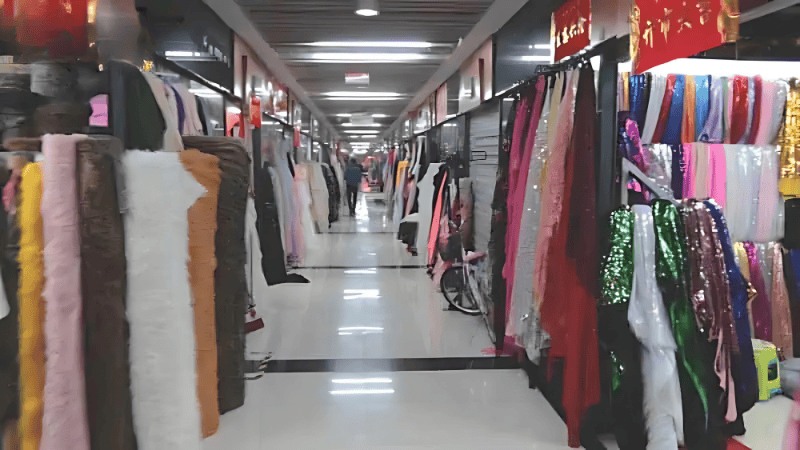
- Yiwu Market — Excellent for basic blank tees at rock-bottom prices. Over 75,000 booths, with a dedicated textile section. MOQs often as low as 50-100 pieces.
- Keqiao Textile Market (Shaoxing) — China’s largest fabric market. If you need custom fabric before sending it to a garment factory, this is where to source it.
Notable Chinese T-Shirt Manufacturers
| Manufacturer | Location | Specialty | MOQ | Certifications |
|---|---|---|---|---|
| Sichuan Eco Garments Co. | Sichuan | Organic/eco-friendly tees | 100 | GOTS, OEKO-TEX |
| Guangzhou Yingchao Garment | Guangdong | Custom sublimation, sportswear | 50 | ISO 9001 |
| Nanchang Huachun Garment | Jiangxi | Basic cotton blanks, bulk orders | 500 | BSCI, OEKO-TEX |
| Dongguan Jiayang Textile | Guangdong | Premium cotton, fashion tees | 100 | GOTS, BCI |
| Jinhua Yidong Knitting | Zhejiang | Polyester performance tees | 200 | ISO 14001 |
| Quanzhou Huabao Garment | Fujian | Streetwear, oversized, heavy cotton | 100 | BSCI |
| Shanghai Garments Group | Shanghai | Premium brands, export-ready | 300 | WRAP, ISO 9001 |
Always verify supplier credentials before ordering. Request OEKO-TEX or GOTS certificates, check factory audit reports, and order samples first. For tips on vetting suppliers, see our supplier verification guide.
T-Shirt Pricing: Detailed Breakdown
Pricing by Fabric Type
| Fabric | Avg. FOB Price | Weight Range | Best For | Feel |
|---|---|---|---|---|
| 100% Cotton (160gsm) | $2.60-$3.50 | 140-180g | Everyday basic tees | Soft, breathable |
| Cotton/Polyester CVC 60/40 | $2.40-$3.20 | 140-170g | Sports, casual wear | Durable, less shrinkage |
| 100% Polyester (mesh) | $2.00-$3.00 | 120-150g | Sportswear, sublimation | Moisture-wicking |
| Organic Cotton (GOTS) | $3.50-$5.50 | 150-200g | Eco brands, premium | Premium soft |
| Bamboo Blend | $3.80-$5.00 | 160-200g | Premium, sustainable | Ultra-soft, antibacterial |
| Tri-Blend (50/25/25) | $3.50-$5.00 | 140-180g | Fashion, vintage look | Buttery soft |
| Ring-Spun Cotton | $3.00-$4.50 | 150-200g | Premium basic | Smooth, strong |
| Combed Cotton | $2.80-$3.80 | 150-180g | Mid-range quality | Clean finish |
Pricing by Customization Method
| Customization Method | Additional Cost/Unit | Min. Order | Best For |
|---|---|---|---|
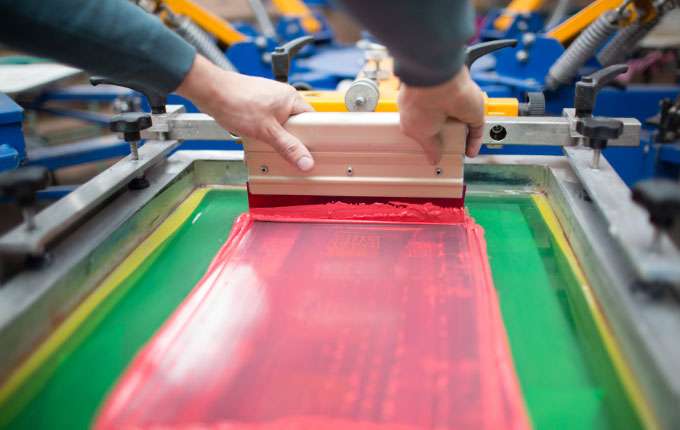
| Screen printing (1-3 colors) | +$0.30-$0.80 | 100+ | Large runs, simple designs |
| Screen printing (4+ colors) | +$0.80-$1.50 | 100+ | Multi-color logos |
| DTG (Direct to Garment) | +$1.50-$4.00 | 1+ | Complex full-color, small runs |
| Sublimation (all-over print) | +$1.00-$3.00 | 50+ | Sportswear, all-over patterns |
| Embroidery | +$0.50-$2.00 | 50+ | Logos, premium look |
| Heat transfer/vinyl | +$0.40-$1.00 | 25+ | Names, numbers, simple graphics |
| Custom woven labels | +$0.10-$0.30 | 100+ | Brand building |
| Custom hang tags | +$0.05-$0.15 | 200+ | Retail presentation |
| Custom packaging (polybag+header) | +$0.15-$0.40 | 100+ | Retail-ready, Amazon FBA |
Landed Cost Calculation Examples
Here’s what your t-shirts actually cost when they arrive at your door:
| Product | Base Price | Customization | Sea Freight | Customs & VAT | Landed Cost |
|---|---|---|---|---|---|
| 500x basic cotton (1-color print) | $2.60 | +$0.50 | +$0.40 | +$0.35 | $3.85/unit |
| 200x organic cotton (embroidered) | $4.50 | +$1.00 | +$0.60 | +$0.55 | $6.65/unit |
| 1000x polyester (sublimation) | $2.50 | +$1.50 | +$0.30 | +$0.40 | $4.70/unit |
| 5000x basic cotton (blank) | $2.60 | $0 | +$0.15 | +$0.30 | $3.05/unit |
For detailed shipping costs by method and destination, see our freight costs from China guide.
Types of T-Shirts Available for Wholesale
By Style
- Crew neck — the universal standard. 70%+ of wholesale orders. Round neckline, works for all demographics.
- V-neck — popular for fashion-forward and women’s lines. Slightly higher price (+$0.20-$0.50).
- Polo — collared, buttoned. See our dedicated polo wholesale guide.
- Henley — buttoned neckline without collar. Trending in casual menswear.
- Raglan — baseball-style sleeve seam. Popular for streetwear and vintage aesthetics.
- Oversized/boxy — current fashion trend growing 25%+ YoY. Higher fabric usage = +$0.50-$1.00/unit.
- Tank top/singlet — summer essential, gym wear. Lower fabric cost (-$0.30-$0.50).
- Long sleeve — extended seasonal range. +$0.80-$1.50 over standard tee.
By Fabric Weight
- Lightweight (120-150gsm) — summer tees, promotional giveaways, cheap bulk orders. Thinner feel, lower cost.
- Midweight (160-190gsm) — the standard everyday t-shirt. Most popular weight for retail brands. Best balance of quality and price.
- Heavyweight (200-250gsm) — premium feel, streetwear brands (Yeezy, Fear of God style). More durable, holds shape better. +$0.50-$1.50 over midweight.
Production & Shipping Logistics
Production Lead Times
| Order Type | Lead Time | Notes |
|---|---|---|
| Blank tees (stock items) | 3-5 days | Pre-made, ready to ship |
| Custom print (screen) | 7-14 days | Screen setup + production |
| Custom print (DTG) | 5-10 days | No screen setup needed |
| Custom print (sublimation) | 7-14 days | Requires polyester base |
| Full OEM (custom fabric + cut & sew) | 21-35 days | From scratch — your specs |
| Rush order (any type) | 3-7 days | Expect 20-30% surcharge |
Shipping Options for T-Shirt Imports
| Method | Transit Time | Cost per Unit (est.) | Best For |
|---|---|---|---|
| Sea freight LCL | 25-40 days | $0.15-$0.30 | Orders 500-5,000 units |
| Sea freight FCL | 20-35 days | $0.08-$0.15 | Orders 5,000+ units |
| Air freight | 5-8 days | $0.80-$1.50 | Urgent restocks, samples |
| Express (DHL/FedEx) | 3-5 days | $2-$5 | Test orders under 50 units |
| Rail freight | 15-22 days | $0.20-$0.40 | China-Europe orders |
A standard 20ft container fits approximately 15,000-20,000 folded t-shirts. For most importers, sea freight (LCL for smaller orders, FCL for large) offers the best balance of cost and speed.
Shipping Tips for T-Shirt Orders
- Vacuum-compress packaging saves 30-40% of container space — ask your supplier
- Polybag each unit to protect from moisture during sea transit
- Group by SKU/size for easier warehouse receiving
- Ship samples by express first — always verify quality before the bulk order ships
Dropshipping T-Shirts from China
Don’t want to hold inventory? Dropshipping from China is a popular low-risk model for t-shirt businesses.
How T-Shirt Dropshipping Works
- You create designs and list them on your store (Shopify, Amazon, Etsy)
- A customer places an order
- Your Chinese supplier prints, packs, and ships directly to the customer
- You keep the margin — typically 40-60% on t-shirts
Best Platforms for T-Shirt Dropshipping
- Printful — integrates with Shopify, Etsy, Amazon. Warehouses in US/EU for fast delivery (3-5 days).
- Printify — connects to multiple Chinese and global printers. Widest product range.
- AliExpress — massive selection, no MOQ. Slower shipping (15-25 days from China).
- CJDropshipping — China-based, integrates with most platforms. Competitive pricing.
- Gooten — good print quality, automated fulfillment integration.
Dropshipping vs Wholesale: Which Model?
| Dropshipping | Wholesale Bulk | |
|---|---|---|
| Upfront investment | $0 inventory | $1,500-$10,000+ |
| Profit margin | 40-60% | 60-80% |
| Shipping to customer | 10-25 days (from China) | 3-5 days (local stock) |
| Customization | Print-on-demand only | Full OEM/ODM |
| Risk | Very low | Medium (unsold inventory) |
| Best for | Testing designs, new brands | Established brands, retail |
Compliance, Labeling & Quality Control
Required Certifications for T-Shirt Imports
- OEKO-TEX Standard 100 — tests for harmful substances in textiles. Essential for EU, US, and most markets.
- GOTS (Global Organic Textile Standard) — mandatory if marketing as “organic”. China has 1,775 GOTS-certified companies.
- BSCI/SEDEX — social compliance audits. Required by major retailers (H&M, Walmart, Zara).
- ISO 9001 — quality management system. Signals consistent production standards.
Labeling Requirements
Every imported t-shirt must include these labels to pass customs:
- Fiber content (e.g., “100% Cotton” or “60% Cotton, 40% Polyester”)
- Country of origin (“Made in China”)
- Care instructions (wash temperature, dry, iron — using ISO symbols)
- Size label
- Brand label (if applicable)
- RN/CA number (for US/Canada market)
Labeling errors cause 22% of customs delays in apparel imports. Double-check all labels before your supplier ships. For detailed compliance requirements by destination, plan ahead.
Quality Control Checklist
Before approving production, verify:
- Fabric weight matches spec (request a GSM test report)
- Color matches your Pantone reference (5% tolerance is standard)
- Stitching quality — single vs double stitching on hems and sleeves
- Print quality — wash test at 40C x 5 cycles minimum
- Sizing accuracy — measure against your size chart (tolerance: +/- 1cm)
- Label placement and content accuracy
Common Mistakes When Importing T-Shirts from China
- Not ordering samples first — the #1 mistake. Never commit to 1,000+ units without testing 5-10 samples from different suppliers.
- Ignoring fabric weight — a 120gsm tee feels completely different from 180gsm. Specify GSM in your order, not just “cotton”.
- Skipping wash tests — prints that look great on day 1 can crack or fade after 3 washes. Always wash-test.
- Wrong sizing — Chinese sizes run smaller than Western. Provide YOUR size chart in cm, don’t rely on supplier’s “L” or “XL”.
- Forgetting labeling — missing fiber content or care labels = customs delay. Send label specs before production.
- Not factoring total landed cost — a $2.60 t-shirt becomes $3.85+ after shipping, customs, and VAT. Calculate your full cost before setting retail price.
- Ordering during Chinese New Year — factories close for 2-4 weeks (Jan-Feb). Place orders by November for Q1 delivery.
Bottom line
Sourcing wholesale t-shirts from China offers the best combination of price, customization, and flexibility in the global market. Basic cotton tees start at $2.60/unit FOB, with full customization (printing, embroidery, custom labels) adding $0.30-$4.00 per unit depending on complexity. For bulk orders, Chinese suppliers consistently undercut alternatives from Vietnam, Bangladesh, and India — especially on low MOQs and fast lead times.
Start with samples from 2-3 suppliers, verify OEKO-TEX or GOTS certifications, wash-test your prints, and plan your logistics early. Whether you’re building a streetwear brand, stocking a retail store, or launching a dropshipping business, China’s t-shirt manufacturing ecosystem has a solution for every budget and scale.
Ready to ship your t-shirt orders from China? Get a quote from SINO Shipping — we’ll help you choose the right freight method, handle customs clearance, and deliver to your warehouse or Amazon FBA center.
ReferenceGlossary· 12 terms
Search a term, or jump by letter.
- B2B
- Business to business. The buyer is a company (e.g. importer) that clears and takes delivery. DAP often fits B2B when the buyer has a broker and controls the import leg.
- Chinese New Year
- A significant holiday in Singapore, during which port and logistics operations may be delayed.
- clearance
- Customs clearance. Process of presenting goods and documents to customs and obtaining release for import or export. Export clearance (who files it) is the key difference between EXW and FOB.
- country of origin
- Country where goods were produced or underwent substantial transformation. Determines which duty rate column applies (WTO vs preferential); Certificate of Origin provides proof.
- FCL
- Full Container Load. You book an entire container (e.g. 20GP or 40HC); only your cargo inside.
- FOB
- Free On Board. Seller delivers to the ship and clears export; buyer arranges freight and import from ship's rail. Risk transfers when goods are on board the vessel. Sea freight only—use FCA for air. For containers, the 'on board' moment is often unclear; FCA (CY/CFS) can be cleaner.
- landed cost
- Total cost to get goods to the final destination: transport, handling, customs, duties, taxes, and last-mile. Use it to compare modes, not headline rate alone.
- LCL
- Less than Container Load. Your cargo shares a container with others; priced per CBM (plus CFS and handling at both ends).
- New Year
- Japan: late December to early January when many businesses, ports, and warehouses close or reduce operations. Plan shipments to avoid arrival during this window; expect backlog after reopening.
- SKU
- Stock Keeping Unit. Unique identifier for a product variant. Must match across carton labels, packing list, and invoice; mismatches cause warehouse holds or rework.
- surcharge
- Additional fee on top of base freight (e.g. BAF, THC, fuel, security). Always ask what's included in 'all-in'.
- VAT
- Value Added Tax. Cambodia's standard consumption tax applied to imports, currently at 10%.
No term matches your search.