
In this guide
- 01 Comparison table: the 14 shippi…
- 02 First, understand the Fuzhou po…
- 03 1. SINO Shipping
- 04 2. Penavico Fuzhou
- 05 3. Fujian Gangyun
- 06 4. Trans-Power International
- 07 5. Air-City Logistics (Fuzhou)
- 08 6. Syntrans
- 09 7. Oriental Logistics Group
- 10 8. Honour Lane Shipping
- 11 9. Vinpac Multitrans
- 12 10. Cypress International Logi…
- 13 11. CTS International Logistics
- 14 12. Sinotrans (Fuzhou)
- 15 13. Schenker China (Fuzhou)
- 16 14. Kintetsu World Express (Fu…
- 17 Match the forwarder to Fujian’s…
- 18 Rates and transit times from Fu…
- 19 Fuzhou or Xiamen? The two-port…
- 20 verify any Fuzhou forwarder in…
- 21 How we ranked these 14
- 22 Bottom line
- Fuzhou's container gateway is Jiangyin terminal in Fuqing Bay — not the historic Mawei river docks — with 68 container routes linking 300+ ports in 160 countries.
- The credentials to demand are checkable: Penavico Fuzhou has operated since 1956, and NVOCCs like Fujian Gangyun (MOC-NV08561) and Trans-Power (MOC-NV05854) are ministry-filed.
- Northern Fujian cargo (Fuqing, Changle, Ningde) usually ships cheapest via Jiangyin; southern Fujian cargo often does better trucking 2.5 hours to Xiamen for sailing frequency.
- Benchmark sea rates from Fuzhou in Nov 2026: roughly $5,400-6,700 per 20GP to the US West Coast and $2,800-3,500 to North Europe — no other Fuzhou list publishes a single rate.
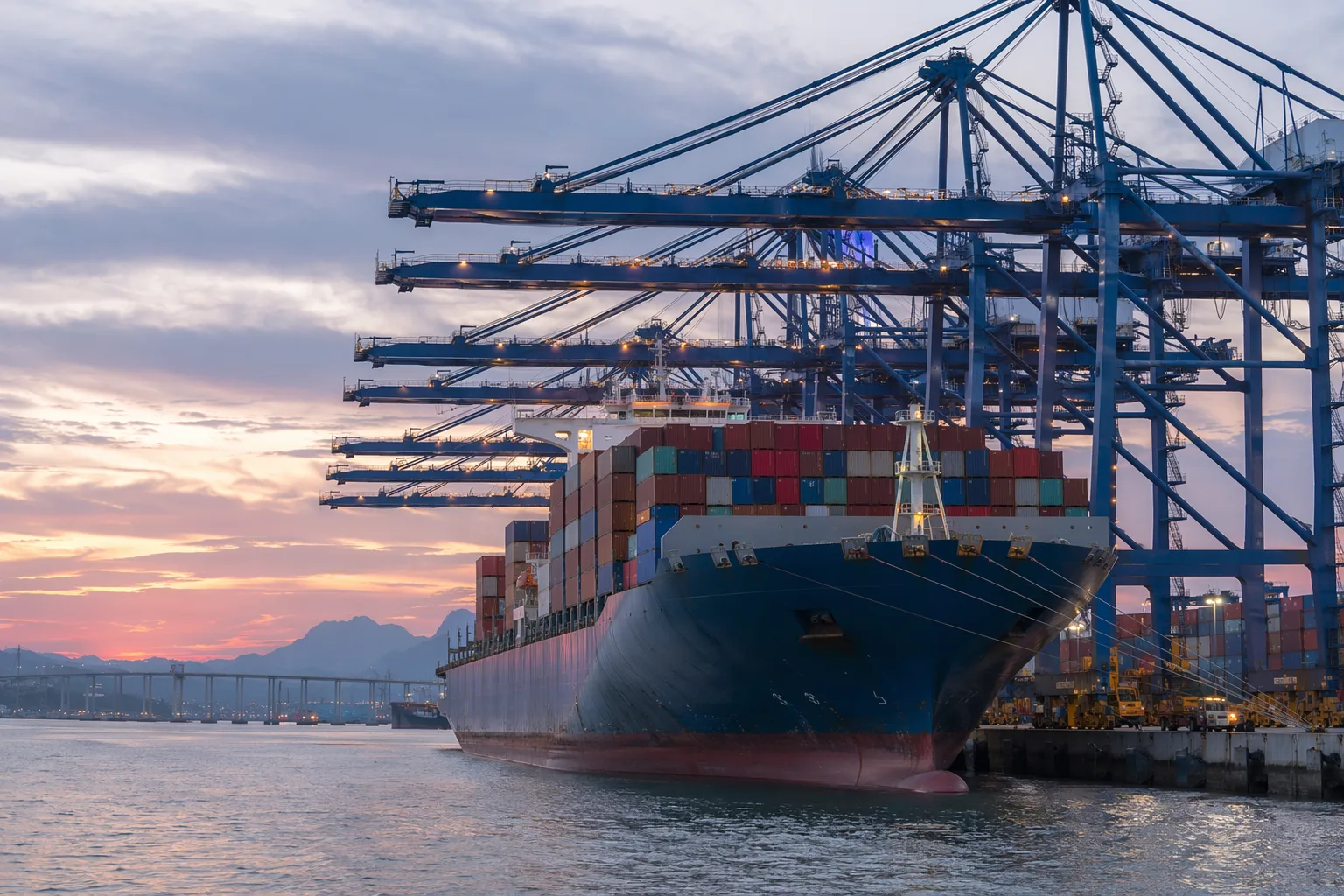
Search for shipping companies in Fuzhou and you’ll find two kinds of pages: raw directories listing 56 companies with phone numbers and zero guidance, and single-forwarder sales pages that never mention a competitor. Neither tells you the one thing that actually shapes every Fuzhou shipment: which terminal your container leaves from, and whether it should leave from Fuzhou at all.
This page fixes both. It’s a curated comparison of 14 shipping companies that matter in Fuzhou — the city’s licensed NVOCCs and veteran agencies, the national giants with local desks, and the global forwarders with verified Fuzhou offices — plus the port-system explainer (Jiangyin vs Mawei vs Changle Airport) that no other list bothers with. It applies our full guide on how to choose a freight forwarder to Fujian’s capital.
Full disclosure before anything else: SINO Shipping is our company, and we’ve put ourselves at #1. We cover Fuzhou cargo daily from our Xiamen office, operating in Fujian since 1993, and we believe the ranking is defensible — but we explain exactly what we do differently, and the other 13 entries are strong, honestly-described alternatives if we’re not the right fit. Every competitor fact below — founding years, license numbers, certifications — is published and checkable.
Comparison table: the 14 shipping companies at a glance
No other Fuzhou list gives you a side-by-side view with credentials — so here it is. “Type” matters: a Fuzhou-headquartered NVOCC gives you local pricing and Jiangyin know-how, a state giant gives you scale, and a global network gives you one contract across many countries.
| Company | Type | Best for | Founded | Credentials / scale |
|---|---|---|---|---|
 SINO Shipping | Forwarder (int’l, Fujian desk) | Multi-supplier consolidation, door-to-door, DDP | In Fujian since 1993 | Class-A, NVOCC (MOT) |
 Penavico Fuzhou | State shipping agency | Port agency depth, breakbulk, long programs | 1956 | Pioneer national Class-A; 7 subsidiaries |
 Fujian Gangyun | NVOCC (Fuzhou HQ) | Carrier-backed FCL to Asia, Europe, Americas | Fuzhou HQ | NVOCC MOC-NV08561 + US FMC filing |
 Trans-Power | NVOCC (Fuzhou HQ) | FCL programs on Maersk/MSC/Hyundai | 2005 | Class-A + NVOCC MOC-NV05854 |
 Air-City Logistics (Fuzhou) | Forwarder (Fujian specialist) | Seafood, perishables, e-commerce, DG | Group since 1984 | IATA, C-TPAT, NVOCC; bonded warehouse |
 Syntrans | Forwarder (national, Fuzhou branch) | Cargo split across Fuzhou + Xiamen | 1995 | USD 323M annual turnover |
 Oriental Logistics | Forwarder (group, Fuzhou branch) | Bonded warehousing, broad agent network | 2000 | ~2,000 staff, 400+ partner agencies |
 Honour Lane Shipping | Forwarder (HK group, Fuzhou desk) | E-commerce cargo, instant online quotes | HK group | BSA, IATA, CATA; 23-office network |
 Vinpac Multitrans | NVOCC (national) | Port operations + domestic legs in China | 1989 | NVOCC, FMC-filed B/L |
 Cypress (Fuzhou branch) | NVOCC (branch) | DDU/DDP and transit trade | Fuzhou branch | NVOCC, FMC-filed B/L |
 CTS International | State-owned forwarder | Project logistics, rail freight | SSE-listed | China Logistics Group; 90+ branches |
 Sinotrans (Fuzhou) | State-owned giant | Maximum scale and route coverage | 1950 (national) | China’s #1 forwarder; HK-listed |
 Schenker China (Fuzhou) | Global forwarder, Fuzhou office | Multinational contracts, compliance | Global | Verified Fuzhou office |
 Kintetsu (Fuzhou) | Global forwarder (JP), Fuzhou office | Air freight programs, Japan lanes | Global | Verified Fuzhou office |
Facts checked in November 2026 against company registries, published NVOCC filings and each company’s own published information.
First, understand the Fuzhou port system — Jiangyin, Mawei, and Changle Airport
Not one competing list explains this, and it’s the single most useful thing to know before you request a quote. “Fuzhou Port” is not one dock — it’s a system of terminals spread across the coast of northern Fujian, grouped under UN/LOCODEs CNFZH (Fuzhou), CNFZG and CNFZX (Fuzhou Xingang):
- Jiangyin terminal — the deep-water container gateway, on the Xinghua Bay side of Fuqing, roughly 60 km south of downtown Fuzhou. This is where your FCL almost certainly sails from. The port group runs 68 international and domestic container routes with trade links to 300+ ports across 160 countries.
- Mawei — the historic river port at the Min River mouth, next to the city. Storied (it hosted China’s first modern shipyard), but today it’s mainly domestic trade, feeders and breakbulk. If a forwarder quotes “Fuzhou port” for your containers, confirm they mean Jiangyin.
- Fuzhou Changle International Airport (FOC) — the air option, about 45 minutes from the city. It handles international cargo with typical forwarder minimums around 100 kg or 0.5 CBM, but direct freighter capacity is limited; many forwarders route air cargo via Xiamen, Guangzhou or Shanghai for daily uplift. Our air freight from China guide covers when that trade-off makes sense.
One more structural fact: a shipping line (COSCO, Maersk, MSC) sells vessel space; a freight forwarder books that space and manages everything around it — pickup, export clearance, documents, destination delivery. Unless you ship multiple containers weekly, you’ll work through a forwarder, and every company below is one. If the distinction is fuzzy, our freight forwarder vs customs broker explainer settles it — and the top 10 Chinese ports for export ranking shows where Fuzhou sits nationally.
Now, the companies.
1. SINO Shipping — door-to-door from Fuzhou, run from Fujian since 1993 (that’s us)
Best for: multi-supplier consolidation, door-to-door and DDP, English-first account management | In Fujian since: 1993 | Licenses: Class-A, NVOCC (Ministry of Transport)
Transparency first: this is our company, so weigh this entry accordingly — then check everything, because it’s all checkable. SINO Shipping has operated in Fujian since 1993 through our Xiamen office, one of seven offices across China, and Fuzhou cargo is daily business for that desk: pickups in Fuzhou, Fuqing, Changle and Ningde, export clearance at Jiangyin, and — when the schedule wins — trucking south to Xiamen for a better sailing.
What we do differently from the 13 companies below:
- We quote the routing decision, not just the rate. Northern-Fujian cargo has a genuine two-port choice (Jiangyin vs Xiamen — see the dedicated section below), and we price both options side by side instead of defaulting to whichever port our desk happens to sit in. That single comparison is regularly worth more than any rate negotiation.
- Consolidation as a core skill. Fujian orders are often multi-supplier — a seafood processor in Lianjiang, a textile mill in Changle, a furniture factory in Fuqing. We merge them into one FCL with one set of documents, using our own warehousing network, instead of quoting three LCL shipments.
- Door-to-door as the default. Pickup coordination in 120+ Chinese cities, ocean or air leg, destination customs and final delivery under one all-in quote — including DDP where your market allows it.
- English-first, in writing. Itemized quotes with destination charges spelled out — the thing importers tell us they miss most with the cheapest local desks.
Honest limits: we don’t have a standalone Fuzhou office — our Fujian operation runs from Xiamen, 2.5 hours south, which for Jiangyin-only FCL means we occasionally lose on pure origin trucking cost to a Fuzhou-headquartered NVOCC. And carrier-owned or state desks can beat anyone on spot pricing when they have space to fill. Where we win is total landed cost and accountability on multi-supplier, door-to-door or time-boxed cargo. Get a quote and benchmark us against any name on this page — that comparison is exactly what this page is for.
2. Penavico Fuzhou — the port’s original shipping agency, since 1956
Best for: port agency depth, breakbulk, programs that value institutional continuity | Founded: 1956
China Ocean Shipping Agency Fuzhou — Penavico Fuzhou — is the oldest entity on this list by decades: a pioneer shipping agency at Fuzhou Port founded in 1956 and a national Class-A freight forwarder, with seven subsidiaries and dozens of branch offices across the region’s ports. When a vessel calls at Jiangyin or Mawei, there’s a fair chance Penavico is somewhere in the paperwork.
Why you’d choose them: seventy years of continuous operation is the strongest counterparty safety on this page, and their port-agency roots mean unmatched familiarity with terminal operations, vessel schedules and local customs practice.
Watch out for: a state agency built around vessels and cargo flows is not a retail-friendly door-to-door product. SME importers report slower quoting and limited English account management — pair their local depth with your own destination arrangements, or use them through a forwarder.
3. Fujian Gangyun — the Fuzhou NVOCC with carrier muscle
Best for: carrier-backed FCL to Southeast Asia, Europe and the Americas | Credentials: NVOCC MOC-NV08561, US FMC filing
Fujian Gangyun International Logistics is headquartered in Fuzhou and carries the paperwork that separates real NVOCCs from booking brokers: registered with China’s Ministry of Transportation as MOC-NV08561 and filed with the US FMC. It maintains working relationships with COSCO and OOCL, translating into competitive FCL rates to Southeast Asia, Europe and the Americas, and it runs sea-rail multimodal services from the Fuzhou hinterland.
Why you’d choose them: the dual China-MOT/US-FMC filing means legal accountability on both ends of a transpacific shipment, and the COSCO/OOCL relationships help when equipment or space gets tight at Jiangyin.
Watch out for: strength is concentrated in FCL port-to-port; for door-to-door with destination-side service in smaller markets, confirm exactly who their agent is in your country before booking.
4. Trans-Power International — Class-A licensed, Maersk/MSC/Hyundai lanes
Best for: FCL programs on Maersk, MSC and Hyundai services | Founded: 2005 | Credentials: Class-A + NVOCC MOC-NV05854
Trans-Power International Logistics, established in 2005 and headquartered in Fuzhou, holds a Class-A forwarding license plus an NVOCC registration (MOC-NV05854) approved by the Ministry of Commerce — both independently checkable. Its carrier bench — Maersk, MSC and Hyundai — complements Gangyun’s COSCO/OOCL axis, which is precisely why quoting both gives you real coverage of the carrier market from Jiangyin.
Why you’d choose them: two decades of operation, verifiable licenses, and access to the two largest global carriers for stable weekly capacity out of Fuzhou.
Watch out for: like most Fuzhou locals, the product is strongest origin-side. Get destination charges itemized in writing — our quote comparison method shows the line items to demand.
5. Air-City Logistics (Fuzhou) — the seafood and perishables specialist
Best for: seafood, perishables, e-commerce parcels, dangerous goods | Group legacy: since 1984 | Certifications: IATA, C-TPAT, NVOCC
Air-City’s Fuzhou operation is the one genuinely specialist pick on this list for Fujian’s flagship export: seafood and perishable cargo. The group’s legacy dates to 1984, it holds IATA, C-TPAT and NVOCC certifications, and — uniquely among the companies here — it operates a customs bonded warehouse in Fuzhou that scans and repacks parcels for overseas shipment, which is why it also handles e-commerce and dangerous goods flows.
Why you’d choose them: cold-chain and perishables forwarding is a discipline, not a service line — Fuzhou-Ningde aquaculture cargo needs a forwarder who lives it daily, and the bonded warehouse solves e-commerce compliance that generalists improvise.
Watch out for: for plain dry FCL, a specialist’s pricing and attention will be ordinary. This is a use-case pick — the strongest one on the page for its use case.
6. Syntrans — the forwarder that runs Fuzhou and Xiamen as one system
Best for: shippers with cargo split across northern and southern Fujian | Founded: 1995 | Scale: USD 323M annual turnover
Syntrans International Logistics, founded in 1995 with roughly USD 323 million in annual turnover, runs a Fujian supply-chain arm (established 2003) that explicitly coordinates both Fuzhou and Xiamen ports — the only company on this list that productizes the two-port choice most Fujian importers face.
Why you’d choose them: if your suppliers span Fuzhou and Quanzhou/Xiamen territory, one forwarder managing both gateways beats two separate desks quoting against each other.
Watch out for: national mid-large forwarders live and die by the branch handling your file; ask who your named operator in Fujian is and test responsiveness with a real quote before committing a program.
7. Oriental Logistics Group — bonded warehousing and a 400-agency network
Best for: bonded warehousing needs and destination coverage through partner agents | Founded: 2000 | Scale: ~2,000 staff
Oriental Logistics Group, founded in 2000, brings group scale to its Fuzhou presence: around 2,000 staff and 400+ partner agencies worldwide, plus bonded warehousing capability. The partner-agency model is what turns a China forwarder into a door-to-door provider in markets where it has no office.
Why you’d choose them: breadth — a big agent network plus bonded facilities covers use cases (re-export, transit trade, deferred duty) that smaller locals can’t touch.
Watch out for: agent networks are only as good as the specific agent in your country. Ask who handles destination service in your market, and check that agent independently.
8. Honour Lane Shipping — e-commerce cargo with instant online rates
Best for: e-commerce shippers who want self-serve pricing | Network: 23 offices | Memberships: BSA, IATA, CATA
Honour Lane Shipping, a Hong Kong-rooted group with a 23-office network and BSA, IATA and CATA memberships, is the most digital entry serving Fuzhou: it offers instant online rate quotes, unusual in a market where quotes normally take an email thread and a day. Its focus is e-commerce cargo — the fast-turning, many-small-shipments profile where rate transparency matters most.
Why you’d choose them: speed and pricing transparency for e-commerce flows, with the membership credentials (IATA/CATA) that matter for air programs.
Watch out for: instant rates are port-to-port baselines; your all-in door-to-door number still needs the full itemization before you can compare it fairly against anyone else here.
9. Vinpac Multitrans — the double-sourced veteran NVOCC
Best for: shipments needing port operations plus domestic legs inside China | Founded: 1989 | Credentials: NVOCC, FMC-filed B/L
Vinpac Multitrans (China), founded in 1989, is an NVOCC with an FMC-filed house bill of lading whose scope spans port operations and domestic forwarding within China — useful when your cargo needs an inland leg before it ever sees Jiangyin. It’s also one of the few companies that appears independently on both major competing Fuzhou lists, a modest but real cross-source trust signal.
Why you’d choose them: 35+ years of operation, US-recognized documentation, and one accountable party from an inland factory to the destination port.
Watch out for: public information beyond the credentials is thin; run the full verification below and start with a trial shipment rather than a program.
10. Cypress International Logistics (Fuzhou) — the DDP and transit-trade desk
Best for: DDU/DDP shipments and transit trade | Credentials: NVOCC, FMC-filed B/L
Cypress International Logistics’ Fuzhou branch is an NVOCC with an FMC-filed bill of lading that specializes in DDU and DDP delivery terms and transit trade — the paperwork-heavy end of forwarding where the forwarder, not you, acts as importer of record or manages third-country flows.
Why you’d choose them: if you want a landed, duty-paid price at your warehouse door and no customs involvement on your side, a forwarder that does DDP daily beats one that improvises it.
Watch out for: DDP done cheaply is the classic gray-channel risk in China freight. Insist on knowing exactly how duty is calculated and remitted in your country — a legitimate DDP quote survives that question; see our red flags guide for the patterns that don’t.
11. CTS International Logistics — the listed state player for projects and rail
Best for: project logistics and rail freight | Status: state-owned, Shanghai Stock Exchange-listed | Network: 90+ China branches
CTS International Logistics is state-owned, listed on the Shanghai Stock Exchange and part of China Logistics Group, with more than 90 branches across China including Fuzhou coverage. Its declared strengths — project logistics and railway transport — fill a genuine hole in the local market: oversized industrial cargo and China-Europe rail aren’t things a typical Fuzhou NVOCC runs.
Why you’d choose them: public-company transparency plus the balance sheet for project cargo (plant equipment, out-of-gauge pieces) that would sink a small forwarder.
Watch out for: you’re a small account in a very large machine; SME shippers with ordinary FCL usually get sharper pricing and faster answers from the locals above.
12. Sinotrans (Fuzhou) — China’s #1 forwarder, present locally
Best for: maximum scale, every mode, corporate tenders | Founded: 1950 (national)
Sinotrans — state-owned, Hong Kong-listed, and China’s largest freight forwarder — maintains a verified Fuzhou presence through its air and sea transportation arms. There is essentially no lane, mode or cargo type the group doesn’t run, and for corporate tenders requiring a top-tier Chinese counterparty, it’s the default name.
Why you’d choose them: unbeatable route coverage and the financial stability that removes counterparty risk entirely.
Watch out for: service quality depends heavily on which branch and sales desk you land on; SME pricing is rarely aggressive, and English responsiveness varies. Benchmark them, don’t default to them.
13. Schenker China (Fuzhou) — the global network’s local desk
Best for: multinationals needing one global contract and compliance standards | Presence: verified Fuzhou office
DB Schenker runs a verified Fuzhou office — proof that the global majors take the port seriously. For companies whose procurement or legal teams require a forwarder with global governance, audited processes and one master contract across origins, Schenker solves a problem no Fuzhou local can.
Why you’d choose them: global account management, multi-origin programs, and compliance comfort for regulated industries.
Watch out for: you pay for the network — on plain FCL out of Jiangyin, expect quotes well above strong locals. Use them where the network is the product.
14. Kintetsu World Express (Fuzhou) — the Japanese major for air programs
Best for: air freight programs and Japan-linked supply chains | Presence: verified Fuzhou office
Kintetsu World Express, the Japanese global forwarder, also maintains a verified Fuzhou office. Its historic strength is air freight — relevant given FOC’s limited direct capacity, because a global air network decides intelligently between FOC, Xiamen and Shanghai uplift — and it’s a natural fit for Japanese-invested factories in the Fuzhou area shipping within Asian supply chains.
Why you’d choose them: disciplined air-freight product and Japan-standard account management.
Watch out for: same trade-off as every multinational here: process and price reflect the overhead. For price-driven ocean cargo, shortlist locals.
Match the forwarder to Fujian’s actual exports
No competing page connects Fuzhou’s forwarders to what the region actually ships — which is the whole game, because the right forwarder is cargo-specific. Northern Fujian’s export economy clusters into a few families (our Fujian manufacturing regions guide maps the province in full):
| Your cargo | What it needs | Start with |
|---|---|---|
| Seafood and aquatic products (Fuzhou, Lianjiang, Ningde) | Cold chain, bonded handling, reefer equipment | Air-City (#5), Fujian Gangyun (#3) for reefer FCL |
| Food processing and glass (Fuqing) | FCL programs, careful stuffing, stable weekly space | Trans-Power (#4), Fujian Gangyun (#3), SINO Shipping (#1) |
| Textiles and knitting (Changle) | FCL/LCL mix, consolidation across mills | SINO Shipping (#1), Syntrans (#6) |
| Footwear, furniture, stone and ceramics | Heavy/volume FCL, sometimes via Xiamen | SINO Shipping (#1), Syntrans (#6), Vinpac (#9) |
| E-commerce parcels and FBA | Bonded scan/repack, labeling, DDP | Air-City (#5), Honour Lane (#8), SINO Shipping (#1) |
| Project and out-of-gauge cargo | Balance sheet, engineering, rail options | CTS (#11), Sinotrans (#12) |
Rates and transit times from Fuzhou — the numbers nobody else publishes
Across every page ranking for Fuzhou shipping searches, the total number of published freight rates is zero. Here are benchmark ranges from our own rate database, checked in November 2026 — use them to sanity-check any quote from any company on this page:
| Destination | 20GP (USD) | 40GP (USD) | Sea transit | Air (USD/kg, 100kg+) |
|---|---|---|---|---|
| US West Coast | $5,400-6,700 | $6,100-7,500 | 16-22 days | $7.00-8.50 |
| US East Coast | $6,300-7,800 | $7,200-8,900 | 26-32 days | $7.50-9.00 |
| North Europe (Rotterdam/Hamburg) | $2,800-3,500 | $5,100-6,300 | 27-35 days | $6.00-7.50 |
| Southeast Asia (Singapore/Bangkok) | $450-900 | $800-1,500 | 6-10 days | $2.50-4.00 |
| Japan / Korea / Taiwan | $350-750 | $600-1,200 | 3-6 days | $2.00-3.50 |
Three notes on using this table:
- These are benchmarks, not quotes. Spot rates move monthly; a real number depends on your cargo, ready date and the carrier’s space position at Jiangyin that week. A quote far below these ranges usually plans to recover the gap in destination charges — the classic bait documented in our red flags guide.
- Thin lanes get routed. On destinations Jiangyin serves infrequently, your forwarder may quote via Xiamen or Shanghai — sometimes cheaper, sometimes 2-5 days slower. Make them state the routing port on the quote.
- Compare all-in, in writing. Ocean freight is typically only 40-60% of landed cost; origin charges, documents and destination fees decide the rest. Our sea freight from China guide walks through the full cost anatomy.
Fuzhou or Xiamen? The two-port decision every Fujian importer faces
Fujian gives you two international gateways about 2.5 hours apart by truck, and picking the wrong one quietly costs money on every shipment:
- Ship via Fuzhou (Jiangyin) when your suppliers are in the Fuzhou-Fuqing-Changle corridor or up the coast toward Ningde. Trucking is shorter and cheaper, the terminal is less congested, and on the 68 routes it serves directly, rates are competitive with Xiamen’s. Seafood and perishables from northern Fujian almost always ship here — every extra trucking hour is shelf life.
- Truck to Xiamen when your cargo sits in southern Fujian (Quanzhou, Jinjiang, Shishi — footwear and stone country), when you need long-haul lanes with more weekly sailings and carrier choice, or when your LCL destination only has direct consols from Xiamen. The $150-400 trucking premium often buys back more in ocean rate and schedule reliability.
- Split cargo? Use a forwarder that runs both gateways as one system — that’s Syntrans’ explicit model (#6) and how our own Fujian desk works (#1).
If Xiamen wins your comparison, we’ve built the same curated ranking for that port: list of shipping companies in Xiamen.
How to verify any Fuzhou forwarder in 15 minutes
The Fuzhou market has a long tail of unlicensed brokers behind the 56-entry directories, and the checks that filter them are free:
- Class-A freight forwarding license. Ask for the certificate number, then cross-check the company’s registration and registered capital on gsxt.gov.cn (China’s national enterprise credit registry). Brokers on a shoestring can’t fake registered capital.
- NVOCC filing. Any forwarder issuing its own house B/L must be filed with China’s Ministry of Transport — the list is public. The credible Fuzhou NVOCCs print their numbers (Gangyun MOC-NV08561, Trans-Power MOC-NV05854); no filing plus a house B/L means your cargo travels on paper issued by nobody.
- FMC filing (US-bound cargo). Searchable at fmc.gov. On this list, Gangyun, Vinpac and Cypress publish FMC-linked credentials.
- Physical existence. Fuzhou’s forwarding offices cluster around Wusi Road in Gulou District (postal codes 350001-350011). A video call from the office costs nothing and eliminates the laptop-only brokers.
- Written all-in quote. Itemized origin, freight and destination charges — plus the actual sailing port (Jiangyin? Xiamen?). Vagueness on destination fees is the #1 predictor of an invoice ambush.
The complete diligence checklist — payment terms, insurance, B/L handling, references — lives in what to look for in a forwarder.
How we ranked these 14 — and how to pick your three
Our weighting: verifiable substance (licenses, filings, founding years, certifications — over marketing claims), fit for real importer use cases (consolidation, cold chain, DDP, e-commerce, projects), counterparty safety (decades in operation, state or listed status, cross-source consensus), and service model (door-to-door capability, English communication, named accountability). We didn’t rank by size alone — Sinotrans out-scales everyone, but scale isn’t service.
To turn 14 into a shortlist of three:
- Name your dominant need using the industry table above. If your cargo is US-bound, cross-reference our best freight forwarders from China to the USA ranking.
- Verify all three with the 15-minute check — no exceptions for big names; branches vary.
- Request identical all-in quotes (same cargo, same incoterm, same ready date, routing port stated) and compare line by line with our quote comparison method. The spread between three legitimate Fuzhou quotes on the same shipment is routinely 15-25%.
Bottom line
Fuzhou gives you a real deep-water gateway at Jiangyin, 68 direct container routes, an under-used air option at FOC — and a two-port decision versus Xiamen that no directory will make for you. Skip the 56-entry phone books: shortlist three companies from this page by use case, verify the licenses (free, 15 minutes), and compare all-in written quotes with the routing port stated.
And if you want one of those quotes from the team that’s been shipping Fujian cargo since 1993 and wrote this comparison — tell us what you’re shipping and where it’s going, and our Fujian desk will come back within 24 hours with the real number, itemized, in English.
ReferenceGlossary· 27 terms
Search a term, or jump by letter.
- 20GP
- 20-foot General Purpose container. Standard dry cargo box, ~33 CBM.
- 40GP
- 40-foot General Purpose container. Standard dry cargo box, ~67 CBM.
- all-in
- Quote that includes the main cost components (e.g. freight + handling + clearance). Always confirm what's included so you're not comparing a partial quote to a full one.
- B/L
- Bill of Lading. Transport document issued by the carrier; evidence of contract and (for negotiable B/L) title to the goods.
- bonded warehouse
- Customs-controlled storage where goods can be held before duty is paid. Allows deferral of clearance; useful for distribution hubs or staged imports.
- breakbulk
- Non-containerized cargo (e.g. pallets, crates) loaded directly onto the vessel. FOB was designed for breakbulk; for containers, FCA often fits better with CY/CFS hand-off.
- CBM
- Cubic metre. Standard unit for shipping volume; used for LCL pricing and container capacity.
- clearance
- Customs clearance. Process of presenting goods and documents to customs and obtaining release for import or export. Export clearance (who files it) is the key difference between EXW and FOB.
- consolidation
- Combining several LCL shipments into one container at origin. Reduces cost per CBM; adds CFS time.
- customs broker
- Licensed agent who files customs declarations, liaises with customs, and handles clearance on your behalf.
- DDP
- Delivered Duty Paid. Seller pays all costs to the buyer's door, including clearance, duties, and Consumption Tax. True DDP means the recipient pays nothing at delivery.
- DDU
- Delivered Duty Unpaid. Recipient pays duties and taxes at or before delivery; opposite of DDP.
- destination charges
- Fees at the destination port: terminal handling, documentation, release, CFS deconsolidation (LCL), storage. Often bundled or omitted from the first quote—confirm line by line.
- DG
- Dangerous goods. Cargo requiring special handling (batteries, chemicals, flammables). MSDS and DG declaration often required for air and some sea shipments.
- door-to-door
- Service from shipper's door to consignee's door. The forwarder or carrier coordinates all legs, including pickup and delivery.
- duty
- Import duty. Tax levied by customs on imported goods, based on HS code, value, and origin.
- export clearance
- Customs process to release goods for export before departure. Who arranges it depends on Incoterm: seller under FOB/FCA, buyer under EXW.
- FCL
- Full Container Load. You book an entire container (e.g. 20GP or 40HC); only your cargo inside.
- forwarder
- Freight forwarder. Company that books transport, arranges documentation, and often coordinates customs on your behalf.
- Importer of Record
- The entity in the destination country legally responsible for the import declaration and for paying duties and taxes (abbrev. IOR).
- landed cost
- Total cost to get goods to the final destination: transport, handling, customs, duties, taxes, and last-mile. Use it to compare modes, not headline rate alone.
- LCL
- Less than Container Load. Your cargo shares a container with others; priced per CBM (plus CFS and handling at both ends).
- multimodal
- Transport using more than one mode (e.g. truck + sea + truck). CIP applies; CIF does not. Allows negotiation of stronger insurance across the full journey.
- origin charges
- Fees at the export port: THC, handling, documentation, CFS (for LCL). Under FOB these can be bundled and opaque; under FCA the split is clearer since the buyer books freight and the seller's scope ends at delivery.
- pickup
- Factory collection. Truck books, loads at origin, and transports cargo to the CFS, CY, or airport. Distance, multi-supplier stops, and cargo readiness affect cost.
- port-to-port
- Service from origin port to destination port only. You (or your forwarder) arrange pickup and delivery separately.
- stuffing
- Loading cargo into a container. For FCL, at shipper or depot; for LCL, at the CFS during consolidation.
No term matches your search.