
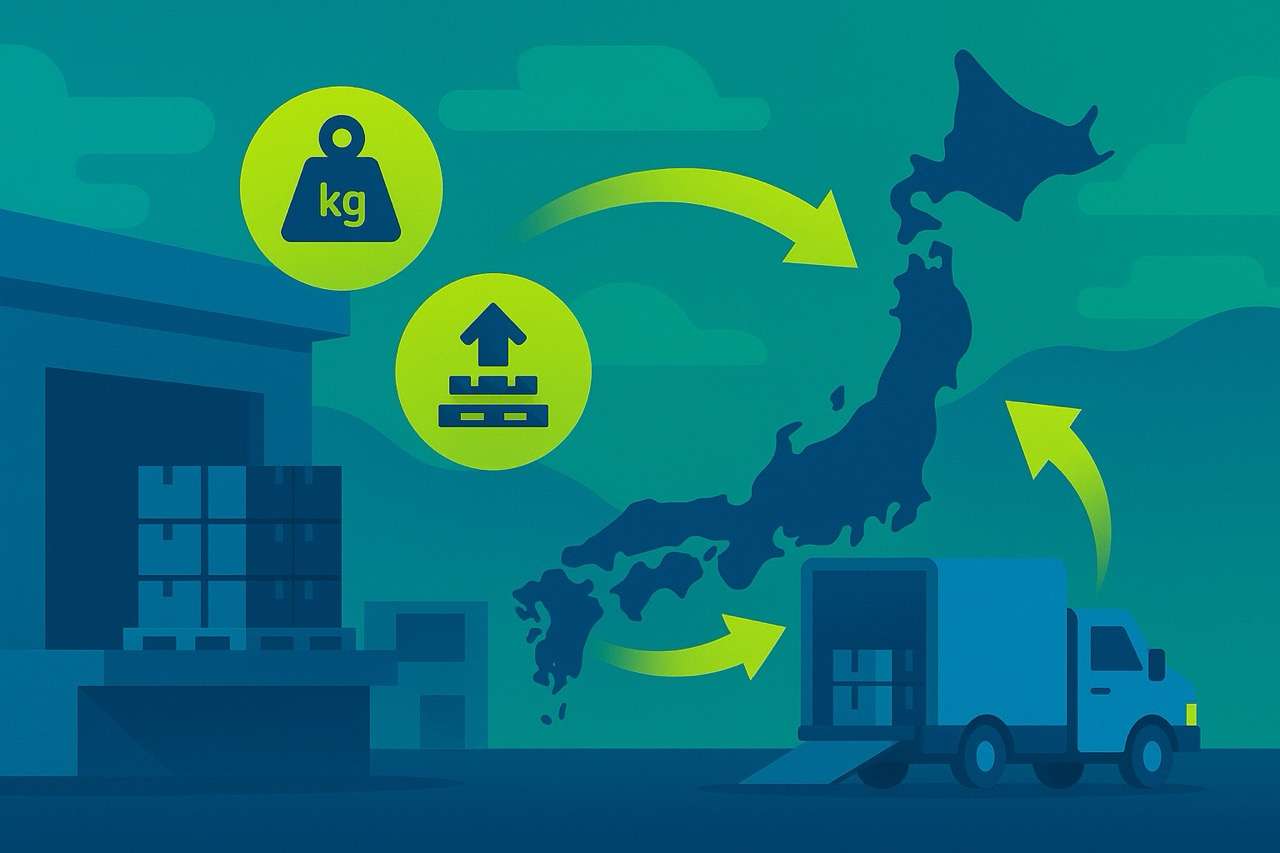
Delivering cargo to Japan requires more than just shipping goods from point A to point B. Japanese warehouses, distribution centers, and retail locations operate under strict appointment systems with precise requirements for pallet dimensions, weight limits, and equipment specifications. Failing to meet these requirements doesn't just cause delays—it results in outright rejections, costly redelivery attempts, and storage fees that can quickly erode your margins.
Unlike many other markets where some flexibility exists, Japan's logistics infrastructure is built around efficiency, safety, and standardization. Understanding these rules before your cargo arrives is essential for maintaining good relationships with Japanese receivers and ensuring your supply chain runs smoothly.
Why Delivery Appointments Are Crucial in Japan
Japanese logistics operates on precision. Delivery appointments aren't optional courtesies—they're mandatory requirements enforced across virtually all commercial receiving locations.
Tight Schedules and Limited Warehouse Access
Japanese warehouses manage extremely tight inbound schedules, often with 15–30 minute windows for each delivery. Space is at a premium, and dock availability is carefully allocated. Without a confirmed appointment, your truck simply won't be allowed to enter the facility—regardless of how far it has traveled or how urgent the delivery might seem.
Strict Inbound Rules for Safety and Efficiency
Safety and operational efficiency drive Japan's appointment culture. Each delivery slot accounts for unloading time, inspection procedures, and the equipment needed. Receivers plan their staffing, forklift availability, and staging areas around the appointment schedule. Unannounced arrivals disrupt this carefully coordinated system and are treated as serious breaches of protocol.
No-Appointment Rejections and Redelivery Fees
Arriving without an appointment—or missing your scheduled time—almost always results in immediate rejection. The cargo returns to a holding facility, triggering storage fees that can range from ¥5,000–¥15,000 per day. Rebooking a new delivery slot adds redelivery charges, typically ¥20,000–¥50,000 or more depending on distance and truck type. These costs compound quickly, making proper appointment management financially critical.
How Proper Preparation Avoids Delivery Delays
Successful deliveries in Japan start with accurate information: correct pallet counts, precise dimensions, accurate weights, and appropriate truck requirements. Providing this data when booking appointments ensures the receiver allocates the right resources. Any discrepancy between what's promised and what arrives can void the appointment and trigger the rejection cycle.
Pallet Height Limits for Japan Deliveries
Pallet height is one of the most common reasons for delivery rejections in Japan. What works in other markets often exceeds Japanese limits.
Standard Max Height for Japanese Warehouses (Site-Specific)
There is no single national standard for pallet height in Japan—limits vary by facility. However, most warehouses specify maximum heights between 1.2 m and 1.6 m, with 1.4 m being extremely common. Some modern distribution centers can handle taller pallets, while older facilities or those with lower ceilings may require 1.2 m or less.
Typical Limits: 1.4 m – 1.6 m Depending on Receiver
The most frequently encountered height limits fall into these ranges:
- 1.2 m–1.3 m: Older warehouses, small retailers, sites with limited forklift clearance
- 1.4 m: Standard limit for many Japanese distribution centers—the safest assumption when no specification is given
- 1.5 m–1.6 m: Modern logistics hubs and larger facilities with high ceilings and specialized equipment
Always confirm the specific limit with the receiver before loading cargo. Assumptions based on other markets' standards frequently cause problems.
Why Taller Pallets Are Rejected (Equipment Clearance, Stability)
Japanese warehouses reject over-height pallets for several practical reasons:
- Forklift mast clearance: Standard Japanese forklifts have limited lift heights; overly tall pallets cannot be safely placed on racking
- Racking bay heights: Shelving systems are designed for specific pallet dimensions; oversized units won't fit
- Stability concerns: Taller stacks have higher centers of gravity, increasing tip-over risk during handling
- Transport vehicle headroom: Domestic trucks have limited cargo heights; tall pallets may not fit for secondary distribution
How to Prepare FCL/LCL Cargo to Meet Japanese Height Rules
For FCL shipments, plan your palletization at origin with Japanese height limits in mind. Brief your supplier or packer on the maximum height before loading begins. It's far cheaper to stack lower at origin than to repalletize in Japan.
For LCL shipments, work with your freight forwarder to confirm that consolidation warehouses understand Japanese requirements. Request that cargo destined for Japan be palletized to the receiver's specifications during deconsolidation.
Pallet Weight Limits & Handling Restrictions
Weight limits are equally strict and vary significantly based on the receiving facility's equipment and handling procedures.
Maximum Pallet Weight Allowed (Varies by Site and Equipment)
Common weight limits in Japan range from 500 kg to 1,000 kg per pallet, with variations based on:
| Facility Type | Typical Weight Limit | Notes |
|---|---|---|
| Small retailers/shops | 300–500 kg | Often manual handling or light equipment |
| Standard warehouses | 500–800 kg | Common forklift capacity range |
| Modern distribution centers | 800–1,000 kg | Heavy-duty forklifts available |
| Industrial/manufacturing | 1,000–1,500 kg | Specialized heavy equipment on-site |
Why Overweight Pallets Create Safety Risks
Overweight pallets are rejected primarily for safety reasons. Exceeding forklift capacity can cause tip-overs, injuring workers and damaging goods. Even if equipment can technically lift the weight, Japanese facilities prioritize operating within safe margins—pushing equipment to its limits isn't acceptable practice.
Forklift Capacity vs Manual Pallet Jack Limitations
Not all Japanese receiving locations have forklifts. Many small retailers, urban shops, and office buildings rely on manual or electric pallet jacks with much lower capacities—typically 200–500 kg maximum. If your delivery destination uses pallet jacks, exceeding these limits means the cargo literally cannot be moved from the truck.
How to Split Loads to Meet Japanese Weight Rules
When cargo inherently weighs more than site limits allow, the solution is load splitting:
- Distribute heavy items across multiple pallets rather than concentrating weight
- Use smaller package units that can be individually handled if pallets are broken down on arrival
- Coordinate with receivers to confirm acceptable configurations before shipping
Splitting loads at origin is always more cost-effective than dealing with rejections and repalletization in Japan.
Lift-gate (Tail-Lift) Requirements for Japan
Ground-level delivery capability is essential for reaching many Japanese delivery points—understanding when lift-gates are needed prevents failed deliveries.
When a Lift-Gate Is Mandatory
Lift-gate trucks (tail-lift trucks) are required whenever the receiving location lacks a loading dock at truck bed height. This is extremely common in Japan, where space constraints mean many commercial locations were built without dock infrastructure.
Cases Requiring Ground-Level Delivery (Shops, Small Warehouses, Offices)
Typical situations requiring lift-gate delivery include:
- Retail shops: Most storefront locations have no dock access
- Office buildings: Deliveries to commercial offices typically require ground-level unloading
- Small warehouses: Older or smaller facilities often lack elevated docks
- Residential-adjacent businesses: Many Japanese commercial districts are mixed-use with ground-floor access only
Why Many Japanese Streets & Buildings Cannot Accept Truck Docks
Japan's urban development patterns differ significantly from Western countries. Land is expensive, buildings are compact, and many commercial structures were built in eras when logistics infrastructure wasn't prioritized. Even newer buildings in dense urban areas often lack space for truck docking bays. The result is that lift-gate capability is the norm rather than the exception for last-mile deliveries.
Additional Fees for Lift-Gate Trucks and Narrow-Access Zones
Lift-gate trucks typically cost ¥5,000–¥15,000 more than standard delivery vehicles. Deliveries to narrow-access zones requiring smaller trucks add further premiums. These costs should be factored into your logistics budget from the outset rather than discovered as surprise charges after booking.
Site Access Challenges in Japan
Physical access constraints in Japan go beyond equipment—the built environment itself creates unique delivery challenges.
Narrow Streets and Limited Maneuvering Space
Many Japanese commercial and residential areas feature streets too narrow for standard-size trucks. Delivery vehicles may need to navigate single-lane roads, tight corners, and areas with no turning space. For some locations, only kei trucks (mini-trucks) can physically reach the delivery point.
Height Restrictions for Delivery Vehicles
Overhead obstructions—bridges, power lines, covered shopping arcades, and low-clearance parking structures—limit vehicle heights in many delivery zones. Routes must be planned accounting for these restrictions, and taller trucks may need to approach from alternative directions or use different vehicles entirely.
Warehouse Rules: Hygiene, Protective Gear, No Overhang Allowed
Japanese warehouses enforce strict operational rules beyond pallet dimensions:
- Hygiene requirements: Food and pharmaceutical warehouses require clean footwear, sometimes shoe covers or facility-provided indoor shoes
- Protective gear: Safety helmets and high-visibility vests may be mandatory in warehouse areas
- No overhang policy: Cargo extending beyond pallet edges is rejected—no exceptions
- Cleanliness standards: Dirty pallets, damaged packaging, or visibly soiled cargo may be refused
Why Some Receivers Require 1100×1100 JIS Pallets Only
Many Japanese facilities standardize on 1100×1100 mm JIS pallets and won't accept other sizes. This isn't arbitrary preference—their racking, forklifts, and handling systems are optimized for this specific dimension. Cargo arriving on Euro pallets (1200×800 mm), US pallets (1200×1000 mm), or other sizes creates operational problems and is frequently rejected.
Appointment Booking Process: What Japanese Receivers Expect
Booking delivery appointments in Japan requires specific information and advance planning.
Required Information (Driver Details, Truck Type, Pallet Count, Dimensions)
When booking an appointment, receivers typically require:
- Delivery company name and contact number
- Driver name and vehicle registration number
- Truck type and size (standard, small truck, lift-gate equipped)
- Total number of pallets
- Individual pallet dimensions (L × W × H)
- Total and per-pallet weights
- Any special handling requirements
Providing incomplete or inaccurate information can result in appointment cancellation upon arrival.
Lead Time for Appointment Booking (1–3 Days Typical)
Most Japanese receivers require 1–3 business days' notice for delivery appointments. High-volume periods (month-end, seasonal peaks, pre-holiday rushes) may require longer lead times. Last-minute bookings are rarely possible and usually come with premium fees if they can be arranged at all.
How Missed Appointments Lead to Storage or Redelivery Fees
Missing an appointment triggers a cascade of costs:
- Cargo returns to a holding facility (trucking return fee)
- Daily storage charges begin accumulating
- New appointment must be booked (subject to availability)
- Second delivery attempt incurs full redelivery charges
A single missed appointment can easily add ¥50,000–¥100,000+ to your delivery costs.
Why Accuracy in Pallet Height/Weight Matters for Confirmation
Receivers plan their resources based on the information you provide. If you declare 10 pallets at 1.2 m height but deliver 10 pallets at 1.5 m, they may not have appropriate racking space. If declared weights are under-reported, handling equipment may be inadequate. These discrepancies give receivers grounds to refuse delivery even with a valid appointment.
Best Practices to Ensure Smooth Deliveries in Japan
Following these practices significantly reduces the risk of delivery problems in Japan.
Confirm Pallet Specs Before Loading
Before cargo is palletized at origin, obtain written confirmation of the receiver's exact requirements:
- Maximum pallet height (including pallet base)
- Maximum pallet weight
- Acceptable pallet types/sizes
- Any overhang restrictions
Share these specifications with your supplier or packer with explicit instructions that non-compliant palletization is not acceptable.
Use JIS-Compatible Pallets When Possible
When shipping to Japan, 1100×1100 mm JIS-standard pallets are the safest choice unless the receiver explicitly accepts other sizes. This eliminates pallet compatibility as a potential rejection reason and ensures smooth handling through Japanese logistics systems.
Avoid Overhang and Unstable Stacking
Japanese receivers have zero tolerance for cargo overhang—even small protrusions beyond pallet edges trigger rejections. Equally important is load stability: properly stretch-wrapped, banded, and corner-protected pallets demonstrate professional preparation and pass inspection more smoothly.
Communicate Special Requirements (Lift-Gate, Small Truck Access) in Advance
If the delivery location requires special equipment or access considerations:
- Specify lift-gate requirement when booking transport
- Note any vehicle size restrictions
- Identify time-of-day delivery windows (some areas restrict truck access during peak hours)
- Confirm building access procedures for office or residential deliveries
Communicating these needs upfront ensures appropriate resources are arranged from the start.
Mastering Japan's Delivery Requirements
Success in Japan's logistics environment comes down to preparation, accuracy, and respect for the system. Japanese delivery requirements may seem demanding compared to other markets, but they exist to ensure efficiency and safety throughout the supply chain.
Control your pallet dimensions and weights from the origin. Book appointments with complete, accurate information. Arrange proper truck equipment—especially lift-gates for urban deliveries. Respect the rules, and your cargo will move smoothly through Japan's precise logistics infrastructure.
The alternative—dealing with rejections, storage fees, and redelivery costs—is far more expensive than getting it right the first time. Invest the time upfront to understand each receiver's specific requirements, and your Japan deliveries will become a reliable, predictable part of your supply chain.