
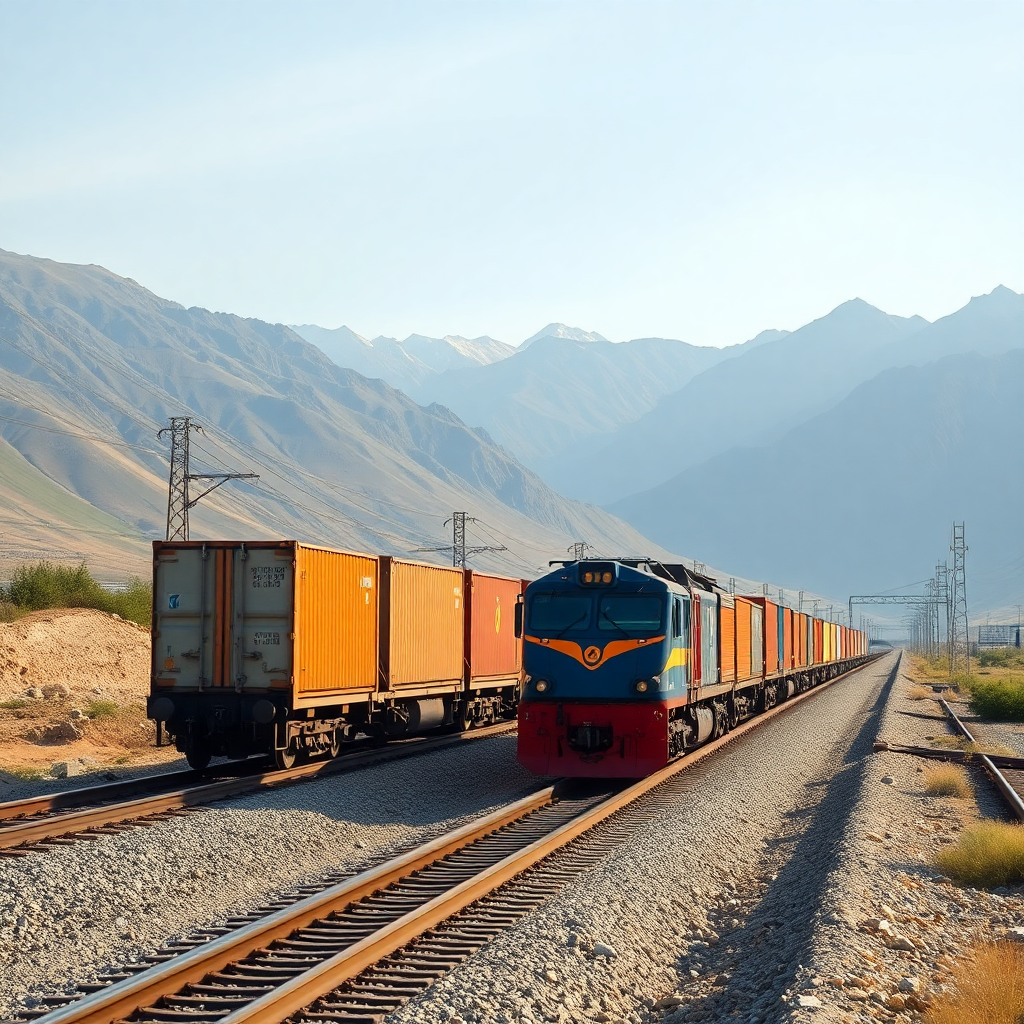
China–Europe Rail Freight
NEW SILK ROAD
| Update
Understand Rail Freight from China to Europe Transit Time, Cost & Logistics Guide
The essentials to make informed shipping choices.
Whether you're exploring alternatives to sea freight or looking to optimize cost and transit time, this guide covers the fundamentals of rail shipping between China and Europe.
Compare all key options, learn about typical routes, real transit times, and find practical answers to help you make the right decision for your supply chain.
In this guide
You'll find the advantages, limits, and practicalities of rail freight — illustrated by real-world benchmarks and actionable insights.
For importers, logistics managers, and anyone seeking a clear overview of the China-Europe rail corridor.
Understanding the Advantages of Rail Freight
from China to Europe
A Faster Alternative to Ocean Freight
Did you know rail shipments can reach Europe from China in less than three weeks? For many supply chains, this means deliveries are over 40% quicker than traditional sea freight. It's a practical option when speed matters, but air transport is out of budget.
A More Affordable Option than Air Freight
Rail freight typically costs up to 50% less than air freight for similar routes. This makes it a great middle-ground for businesses who need a balance between delivery speed and transportation costs.
Transparency and Real-Time Tracking
Modern rail freight includes full tracking and streamlined customs procedures. This visibility helps importers monitor shipments every step of the way, reducing uncertainty and simplifying logistics planning.
A Greener Shipping Solution
Did you know? Rail freight emits far less CO₂ per kilo than air, and even less than trucks. For companies focused on reducing their carbon footprint, it’s a step towards more sustainable international trade.
Exploring rail freight helps businesses find the right balance between speed, cost, and sustainability for their European imports or exports. In the following sections, you’ll discover practical benchmarks, example transit times, and tips for building a supply chain that suits your needs.
Explore the GuideTransit Times & Rail Shipping Routes Explained
How long does rail freight take from China to Europe? Explore key corridors, see typical delivery times, and understand the main routes used by shippers.

Major rail corridors link China’s production hubs to European cities. Hover or click on a route to discover details.
Sample Rail Transit Times by Destination
| Route | Typical Transit Time |
|---|---|
| China → Lyon (France) 🇫🇷 | 14–17 days |
| China → Brussels (Belgium) 🇧🇪 | 12–14 days |
| China → London (UK) 🇬🇧 | 18–20 days |
| China → Hamburg (Germany) 🇩🇪 | ~14 days |
| China → Warsaw (Poland) 🇵🇱 | ~12 days |
| China → Moscow (Russia) 🇷🇺 | ~12 days |
| China → Duisburg (Germany) 🇩🇪 | 15–18 days |
| China → Madrid (Spain) 🇪🇸 | 20–22 days |
How Do These Routes Work?
Rail freight between China and Europe is built on a network of dedicated corridors, known as the New Silk Road. These train lines cross vast distances, connecting Chinese industrial hubs to key European cities, usually in 12–20 days. For comparison, ocean freight on similar routes can take over 35 days.
Along the way, trains travel through countries like Kazakhstan, Russia, Belarus, and Poland, using purpose-built terminals and customs procedures designed to speed up the process. Most European importers choose their destination based on location and total door-to-door time—major hubs include Lyon, Hamburg, Duisburg, London, Warsaw, and Madrid.
Tip: When planning your shipment, always check both the origin city in China and the arrival terminal in Europe, as this can impact cost, speed, and onward delivery options.
Reliable rail partners like SINO Shipping provide real-time tracking and regular departures on all main routes, making it easier to coordinate logistics and predict arrivals.
Understanding Shipping Modes: Sea, Rail, and Air Freight
Each shipping mode between China and Europe has its strengths and trade-offs. Explore how transit time, cost, and environmental impact differ to make an informed choice for your cargo and deadlines.
🚢
Sea Freight
- Transit: 35–40 days (port-to-port)
- Typical Cost: Lowest ($)
- Carbon Footprint: 🌿 Low per kg
- Best For: Bulk, heavy, or non-urgent shipments
Sea freight is the slowest, but remains the most cost-effective for large volumes or when speed is not a priority. Its low carbon footprint per kilo makes it the "classic" for global trade.
Balanced Solution
🚆
Rail Freight
- Transit: 14–18 days (door-to-door)
- Typical Cost: Medium ($$)
- Carbon Footprint: ♻️ Medium-Low
- Best For: Electronics, seasonal stock, time-sensitive pallets
Rail is the “in-between” mode: faster than sea, more affordable and greener than air. It's ideal when you need quicker restocking than by sea, but want to keep costs and emissions under control.
✈️
Air Freight
- Transit: 4–6 days (airport-to-airport)
- Typical Cost: Highest ($$$)
- Carbon Footprint: 🔥 High
- Best For: Urgent, high-value, perishable cargo
Air freight is the best solution when every day counts or for fragile, high-value, or perishable goods. Its speed is unmatched, but it comes with a premium cost and a high environmental footprint.
Summary Table: Key Differences
- Sea Freight: Best for large, heavy, and non-urgent shipments. Lowest cost and lowest emissions per ton.
- Rail Freight: Offers a balance of speed, price, and environmental performance. Twice as fast as sea, much greener than air.
- Air Freight: Chosen for speed and reliability when value or urgency justifies higher cost and emissions.
Example Benchmark (40-ft container, China ➜ Europe):
| Mode | Cost | Transit | CO₂ / t* |
|---|---|---|---|
| Sea | ≈ $3 500 | 38 days | ≈ 100 kg |
| Rail | ≈ $6 200 | 16 days | ≈ 280 kg |
| Air | ≈ $14 000 | 5 days | ≈ 1 850 kg |
*Approximate average CO₂ emitted per metric tonne of cargo.
Tip: Consider the overall supply chain—sometimes combining sea, rail, and air for different legs can optimize both cost and lead time.
Freight Mode Performance Radar
Container Service Options for Rail Freight from China
The China–Europe rail network offers several container solutions. Here are the main types available and how they meet different supply chain needs.
Door-to-Door Rail Freight
This service manages every step: collection at the supplier’s warehouse in China, rail transport, customs clearance, and final delivery to your destination in Europe. It’s designed for those seeking simplicity and full visibility from start to finish.
Learn More →FCL & LCL Container Options
Choose Full Container Load (FCL) for dedicated shipments, or Less-than-Container-Load (LCL) to share space and optimize costs when sending smaller volumes. LCL is particularly suitable for 1–28 m³ and helps small businesses benefit from rail access.
Learn More →Refrigerated (Reefer) Containers
Some cargo requires a controlled environment throughout the journey. “Reefer” containers keep goods like food, pharmaceuticals, or chemicals at specific temperatures, ensuring the cold chain is maintained even over long Eurasian distances.
Learn More →Dangerous Goods Transport
Special safety rules apply for hazardous goods (HAZMAT), such as lithium batteries or certain chemicals. Dedicated rail corridors and strict procedures help ensure these shipments comply with all international regulations and are handled safely.
Learn More →The China–Europe rail network is designed to handle a wide range of cargo needs. Whether you need dedicated containers for large shipments, shared options for flexibility, temperature-controlled units, or solutions for regulated goods, each service type is adapted to a specific business challenge.
The use of ISO-standard containers and advanced rail terminals means cargo can move seamlessly between modes (rail, truck, or ship) when needed. Understanding which option matches your products can help you optimize cost, safety, and delivery speed.
Want to explore in detail? Each service link above provides practical guides and tips for choosing the right solution for your next shipment.
The New Silk Road:
How Rail Shapes Trade Across Eurasia
The “New Silk Road”—also called the Belt and Road Initiative (BRI)—is an ambitious program to connect China’s manufacturers and European markets using both overland and sea routes. Understanding this network helps explain how modern rail freight has become a reliable option for long-distance shipping.
Since 2011, more than 12,000 kilometers of dedicated rail lines have connected over 15 Chinese cities to major European logistics hubs such as Duisburg, Hamburg, Lyon, Madrid, and London. The rise of these corridors is reshaping how goods move between Asia and Europe.
Rail offers fixed departures, multimodal hubs, and transit times of 14–18 days—making it suitable for a wide range of products, from electronics and auto parts to temperature-sensitive goods. For many supply chains, this is a way to avoid long maritime routes and keep lead times predictable.
Trains cross several countries—including Kazakhstan, Russia, Belarus, and Poland—before arriving in Europe. This overland route provides alternatives when ocean shipping faces delays or disruptions, and illustrates the importance of resilient, diversified logistics options.

12,000+ km network
7 countries crossed
14–18 day transit
In 2024, over 1,700 trains made the China–Europe journey, carrying a mix of electronics, textiles, machinery, and food. As businesses seek supply chains that are both flexible and sustainable, rail freight is emerging as a dependable alternative to sea.
Inland Chinese hubs like Chengdu, Chongqing, Zhengzhou, and Xi’an connect directly to European cities thanks to infrastructure backed by both EU and Chinese investment. This connectivity is establishing rail as a long-term pillar of Eurasian trade.
Key Connected City Pairs
Xi’an
Duisburg
Yiwu
Madrid
Chengdu
Hamburg
Zhengzhou
London
Each route leverages modern infrastructure and dedicated customs solutions to keep shipments moving efficiently across borders.
Expert Insight: Understanding Rail Freight from China to Europe
Ethan Wu
Rail Freight Specialist
15 Years in Eurasian Logistics
China–Europe Expert
Transcontinental Ops
“Rail freight is not just an alternative—it’s become a key part of many supply chains. Regular schedules, efficient border crossings, and real-time tracking help importers plan with confidence.”
Why are more companies choosing rail freight for international logistics?
Rail bridges the gap between sea and air: it’s about twice as fast as ocean freight, and significantly more affordable than air. For businesses that need both reliability and speed—but can’t justify the price of air cargo—it’s a practical solution.
What kind of goods travel by rail between China and Europe?
The variety is growing every year. Today, electronics, automotive parts, machinery, clothing, and even temperature-controlled goods like food and pharmaceuticals are routinely shipped by train.
Where do most rail routes begin and end?
On the China side, key cities include Yiwu, Chongqing, Zhengzhou, Chengdu, and Xi’an. On the European side, major destinations are Duisburg, Hamburg, Lyon, Madrid, London, and Warsaw—each acting as a hub for further distribution.
Can customers track their cargo throughout the journey?
Yes, tracking is available at every step—thanks to GPS and digital border checks. This means importers can see where their shipment is at any point, just like with air express or courier services.
15–18 days
Typical transit time (door-to-door)
40–50% faster
than ocean freight
20+ countries
linked by regular service
1,700+ trains
run annually on the route
What Makes a Reliable Rail Freight Partner?
Eurasian Corridor Expertise
Deep knowledge of the rail routes, technical differences (like gauge changes), and local border regulations across China, Central Asia, and Europe is essential. Partners with this expertise help avoid delays and unexpected costs.
Experience built over more than a decade navigating the Silk Road corridors.
Pan-Regional Coverage
The most reliable providers offer direct links from China’s key production centers to major European hubs. This pan-regional coverage ensures your goods can reach many destinations with fewer transfers.
Some rail networks now connect more than 20 countries from East to West.
Customs & Compliance
Cross-border rail moves require advance declarations and compliance with a mix of customs regimes. Partners who handle documentation digitally and coordinate 24/7 with border teams help shipments move smoothly, even across multiple countries.
The right systems and experience reduce errors and waiting times at borders.
Container Flexibility
The best partners offer a range of container types—standard, temperature-controlled (“reefer”), and options for dangerous goods. This flexibility means your shipment (whatever its size or sensitivity) can be transported safely and efficiently.
Matching cargo type to the right container is key for smooth rail delivery.
Transparent Rates & Schedules
Look for clear, all-in pricing and published schedules. Transparency lets you plan confidently, compare options, and avoid surprises—whether in cost, timelines, or service levels.
Predictable rates and weekly departures help businesses stay on schedule.
Multilingual Support
International logistics involves complex documentation and diverse regulations. A multilingual team (fluent in Mandarin, Russian, and English) bridges communication gaps, making problem-solving faster at every stage.
Strong support helps you navigate regulations and cultures across continents.
95%+ On-Time
Delivery Rate
Low Incident Rate
Secure Cargo
80% Less CO₂
vs. air freight
1,700+ Trains
Per Year
40–50% Faster
Than sea freight
20+ Countries
Connected
Frequently Asked Questions
Rail transit times generally range from 12 to 20 days. For instance, a train from Yiwu to Lyon covers the distance in about 14–17 days, while shipments to London take 18–20 days. This is much quicker than most ocean routes, but still more cost-effective than air.
Yes—rail freight typically costs 40–60% less than shipping by air. It’s a practical choice for businesses needing a balance of speed and affordability, especially for time-sensitive but not urgent cargo.
Most non-perishable manufactured goods, such as electronics, car parts, industrial machinery, textiles, and more can travel by rail. With specialized containers, rail can also handle temperature-sensitive (reefer) or even hazardous (HAZMAT) cargo.
Not especially—many main border crossings (such as Alashankou, Dostyk, Brest) operate around the clock and specialize in handling large rail volumes. With the right partner, clearance is often simpler and faster than in seaports.
Absolutely. Both Full Container Load (FCL) and Less-than-Container-Load (LCL) options exist. LCL is a great way for smaller shipments (as little as 1–10 m³) to benefit from rail freight’s speed and cost-efficiency.
Yes, rail containers are tracked using GPS and modern digital systems. You can follow your shipment’s progress at every major border, offering a level of visibility similar to air express services.
Most main rail corridors offer several departures per week from each hub, and in peak times, some routes may run almost daily depending on demand and destination.
Yes—modern Eurasian rail networks are equipped for temperature-controlled cargo and for hazardous goods (as per international RID regulations), making rail suitable for a broad range of shipment profiles.
Each of these FAQs addresses a common question from businesses considering rail freight. Understanding the advantages and specificities of China–Europe rail corridors can help importers and exporters make informed choices—balancing cost, speed, sustainability, and operational simplicity.
Curious about shipping by rail between China and Europe?
Exploring rail can open up new logistics possibilities for your business—whether you’re optimizing a supply chain or simply looking for alternatives to traditional ocean and air routes. From FCL to LCL, temperature-controlled and customs-cleared shipments, modern rail networks cover all needs across Eurasia.
Learn More or Ask an Expert
Fast departures
Reliable transit
Sustainable shipping