
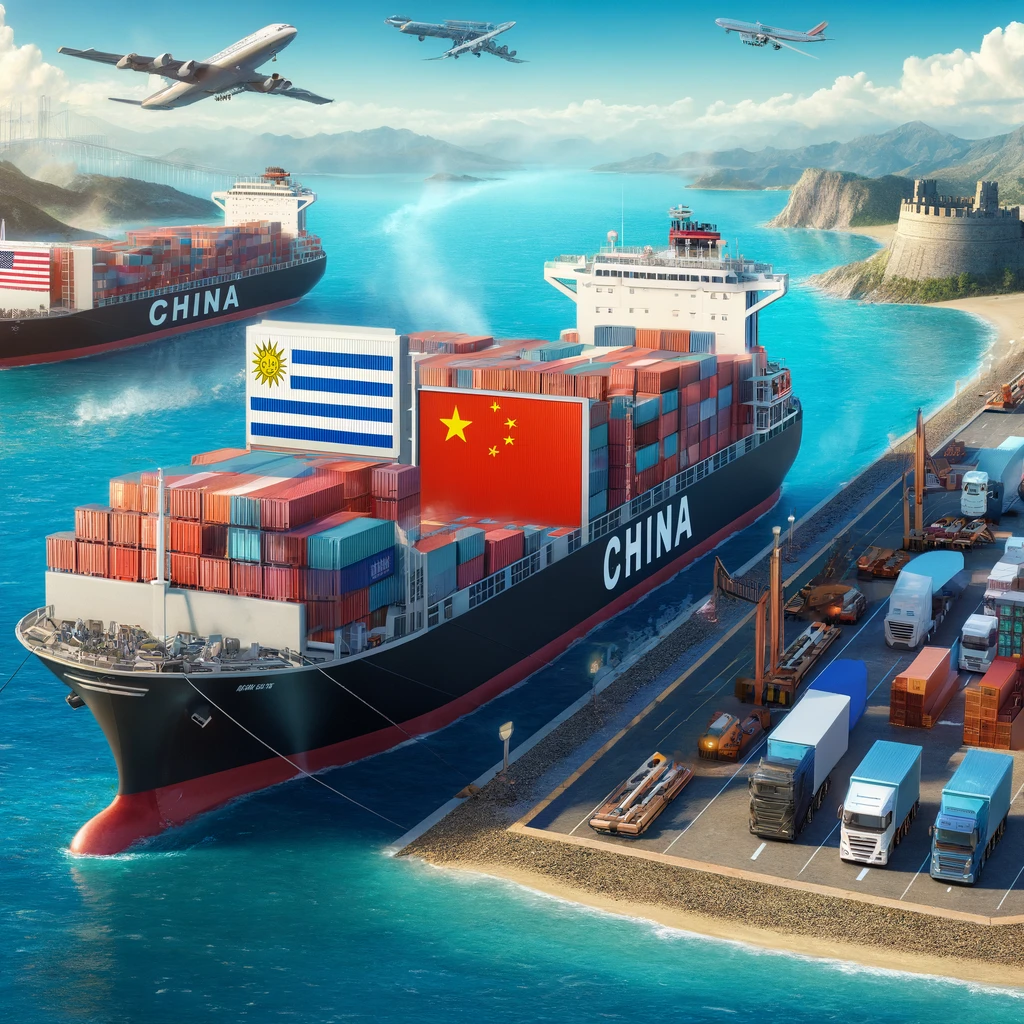
 Shipping from China to Uruguay in October 2026 means a softer ocean market: FCL rates into Montevideo Port fell -30% from September to $4,847–$5,906 (20GP) and $5,340–$6,537 (40GP) as the LATAM Atlantic lanes eased, while air and express rates rose 13% and LCL held flat at $207/cbm. This guide covers current China-to-Uruguay shipping rates by mode, real transit times to Montevideo and Nueva Palmira, the 22% VAT and 5% customs duty essentials, and how to choose between sea, air, LCL and express freight — fully updated for October 2026.
October 2026 Shipping Update: From China to Uruguay
⚠️ Attention — South Atlantic capacity tightening: rates on this page are indicative and can shift significantly — always confirm a fresh quote at booking (2–3 week validity recommended).
Costs: For October 2026, China→Uruguay sea pricing fell sharply as South American lanes corrected after September’s congestion. Sea freight (20GP) at $4,847–$5,906 (down 30% from September), 40GP at $5,340–$6,537 (down 30% from September). LCL steady at $207/cbm. Air freight at $14.16/kg (up 13% from September). Express at $22.86/kg (no change). Ocean rates declined as capacity normalized; air rates increased on renewed demand.
Delivery Times: Sea freight to Montevideo Port averages 32–40 days, while LCL shipments take 10–15 days. Air freight to Montevideo Airport is estimated at 2–4 days, and express shipping delivers in 2–5 days.
Customs: October customs at Montevideo remain demanding. Uruguay’s DGA requires accurate HS codes, a complete commercial invoice, packing list, and bill of lading for each shipment. With ocean rates falling and air rates rising, working with experienced Uruguay-route forwarders helps secure smoother clearances and protect space, especially as air capacity remains limited for larger loads.
Outlook for October 2026: Montevideo FCL rates fell sharply — down 30% from September on both 20GP and 40GP as South American lanes normalized after September’s congestion. Air and express rates rose 13% from September, while LCL rates were unchanged. Shippers should confirm fresh quotes at booking as ocean rates have reset lower, while air rates may remain elevated if demand persists.
Summary for Uruguay Shippers: FCL rates fell sharply — 20GP to $4,847 (down 30% from September), 40GP to $5,340 (down 30% from September). LCL at $207/cbm (unchanged). Air at $14.16/kg (up 13% from September) and express at $22.86/kg (no change). The October move is ocean-led as rates corrected after September’s spike. Air capacity tightened for larger loads — lock quotes early and monitor South Atlantic air and ocean bulletins for further changes.
Freight Shipping Cost from China to Uruguay for October 2026
Updated Shipping Rates and Lead Times by Mode
| Shipping Mode | Cost (October 2026) | Transit Time | Notes |
|---|---|---|---|
| Sea Freight (20GP container) – Montevideo Port | $4,847–$5,906 | 32–40 days | October rate; down ~30% from September |
| Sea Freight (40HQ container) – Montevideo Port | $5,340–$6,537 | 32–40 days | October rate; down ~30% from September |
| LCL – Montevideo Port | $207/cbm | 10–15 days | October rate; down ~30% from September |
| Air Freight – Montevideo Airport | $14.16/kg | 2–4 days | October rate; down ~30% from September |
| Express Shipping | $22.86/kg | 2–5 days | October rate; down ~30% from September |
How to Choose the Right Shipping Mode for Uruguay
October 2026 sees both 20GP and 40GP FCL rates fall 30% from September. LCL held steady, while air rates rose 13% and express was unchanged.
- Lock quotes early — With September’s sharp step-up, South Atlantic surcharges and equipment delays can shift further mid-month. Request all-in quotes (BAF, surcharges, handling) with 2–3 week validity for budget certainty.
- Use air or LCL as a hedge — At $14.16/kg air and $207/cbm LCL, both modes offer predictable cost floors for smaller or time-sensitive flows while sea FCL remains elevated.
Understanding Import Tax and Duties
Impact of Import Taxes & Duties (Uruguay, October 2026)
Uruguay continues to apply a 22% VAT (on CIF value) and an average 5% customs duty in October 2026. With sea freight rates climbing about 16% on both 20GP and 40HQ, overall landed costs rise this month. Customs vigilance remains high, so misclassification or under-valuation may trigger audits or fines — accurate HS codes and complete documentation are more important than ever.
| Product Type | CIF Value | VAT (22%) | Customs Duties (5%) | Total Taxes and Duties |
|---|---|---|---|---|
| Electronics | $10,000 | $2,200 | $500 | $2,700 |
| Apparel | $5,000 | $1,100 | $250 | $1,350 |
| Machinery | $15,000 | $3,300 | $750 | $4,050 |
| Furniture | $8,000 | $1,760 | $400 | $2,160 |
| Toys | $3,000 | $660 | $150 | $810 |
Compliance, Documentation & Local Best Practices (October 2026)
- HS Code Checks: Customs continues to scrutinize product classification—especially for electronics and machinery. Double-check with brokers to ensure accuracy.
- Document Consistency: Any invoice or packing list mismatch can cause costly clearance delays; with September’s elevated FCL rates, delays compound costs significantly.
- Local Guidance: Current elevated rate levels make it the right time to leverage Uruguay-based forwarders for better contract terms and real-time port updates from Montevideo.
- Strategic Planning: Lock FCL quotes early given September’s ~16% step-up — and compare LCL ($207/cbm) as a cost floor for smaller volumes.
Shipping from China to Uruguay Transit Time
Comparison of Transit Times Across Shipping Modes
How do transit times vary for different shipping modes from China to Uruguay?
Transit times differ based on the mode of transportation:
| Shipping Mode | Typical Transit Time | Best For | Pros | Cons |
|---|---|---|---|---|
| Sea Freight (LCL) | 35-45 days | Smaller shipments | Cost-effective | Slower due to consolidation |
| Sea Freight (FCL) | 30-40 days | Larger shipments | Faster than LCL | Requires full container load |
| Air Freight | 10-12 days | Urgent or high-value goods | Quick | Higher cost |
| Express Shipping | 3-5 days | Urgent shipments | Fastest | Most expensive |
Choose based on timing requirements and the nature of your goods.
Factors Affecting Transit Times and Mitigation Strategies
What factors can delay your shipments and how can you mitigate these?
Factors affecting transit times:
- Weather Conditions: Severe weather can cause delays.
- Port Congestion: Busy ports slow down shipments.
- Customs Delays: Incorrect paperwork can delay clearance.
- Logistics Chain Efficiency: Inefficient logistics lead to delays.
Mitigation Strategies:
- Choose the Right Shipping Mode: Match mode to timing needs.
- Work with Reliable Freight Forwarders: They navigate complexities.
- Understand Customs Requirements: Proper documentation reduces delays.
- Monitor Weather and Port Conditions: Plan around disruptions.
These strategies help ensure timely delivery of goods.
Door to Door Shipping from China to Uruguay
Advantages of Door-to-Door Services
Door-to-door shipping simplifies the logistics process for shipments from China to Uruguay by managing the entire journey from the supplier’s location to the recipient’s doorstep. This service offers significant benefits:
- Simplified Logistics: It eliminates the need for shippers to coordinate with multiple logistics providers, offering a streamlined single-point solution.
- Reduced Handling of Goods: Minimizes the risk of damage by decreasing the instances goods are loaded and unloaded.
- Lower Overall Costs: Can be more cost-effective in the long run by avoiding unforeseen expenses and delays associated with separate handling and shipping stages.
Choosing the Right Door-to-Door Service
Selecting an appropriate door-to-door service involves evaluating several critical factors:
- Reliability: Opt for providers with proven track records in timely and safe deliveries.
- Cost: Compare quotes to ensure you’re getting competitive rates without compromising on service quality.
- Service Coverage: Confirm the provider’s operational capacity from your specific location in China to the final destination in Uruguay.
- Customs and Regulatory Expertise: The chosen service should have comprehensive knowledge of the customs and import regulations applicable to your shipment to facilitate hassle-free clearance.
Sea Freight from China to Uruguay (October 2026)
Updated FCL Shipping Costs and Transit Times
| Shipping Option | Cost (USD) | Transit Time | Description |
|---|---|---|---|
| FCL (20GP container) | $4,847–$5,906 | 32–40 days | October rate; down ~30% from September |
| FCL (40HQ container) | $5,340–$6,537 | 32–40 days | October rate; down ~30% from September |
Country-Specific Shipping Trends & Port Insights (October 2026)
In October 2026, sea freight costs to Montevideo fell: 20GP down 30% and 40HQ down 30% from September as the LATAM Atlantic repricing lowers South Atlantic services. A combination of capacity discipline and demand pulse is driving the move. Montevideo port operations remain stable, but importers should lock FCL rates immediately — South Atlantic surcharge bulletins are active and further intra-month revisions are possible.
The October environment rewards early action: shippers who delay risk facing additional surcharge layers on top of already-elevated base rates. LCL at $207/cbm provides an alternative for smaller volumes, while air at $14.16/kg remains an option for urgent or high-value goods. Maintain strict compliance on documentation to ensure fast and predictable customs clearance at Montevideo.
Air Freight from China to Uruguay (October 2026)
Current Rates, Transit Times & Best Use Cases
| Criteria | Details (October 2026) |
|---|---|
| Speed | 2–4 days |
| Cost per Kilogram | $14.16 per kg |
| Ideal For | High-value or urgent shipments; October 2026 rate rose 13% from September |
| Key Considerations | Air cargo demand holds firm in October 2026, with rates edging up modestly — still a budget anchor against climbing sea freight. |
Why Choose Air Freight for Uruguay in October 2026?
Air freight to Uruguay firmed modestly in October 2026 to $14.16/kg, still providing relative budget stability as sea FCL rates climb ~16%. Customs enforcement remains strict at Montevideo airport. Transit times remain reliable at 2–4 days. Electronics, pharmaceuticals, and consumer goods continue to dominate air imports, but accurate paperwork is key to avoiding costly holds or inspections.
For Uruguayan businesses, October’s still-modest air-freight moves offer a relative hedge against falling ocean rates. The October ocean step-down is squarely a capacity-and-demand event — air rose far more, making it an attractive alternative for time-sensitive or high-value flows. Partnering with experienced forwarders and booking early ensures access to competitive rates while maintaining compliance with Uruguay’s rigorous customs procedures.
Express Shipping from China to Uruguay
Benefits and Use Cases for Express Shipping
What are the advantages of using express shipping from China to Uruguay?
Express shipping offers:
- Speed: 3-5 days delivery time.
- Reliability: High reliability with real-time tracking.
- Ideal for Time-Sensitive Shipments: Suitable for urgent deliveries, last-minute orders, and high-value products.
For example, it’s perfect for quickly restocking high-demand items like electronics.
Understanding Costs and Transit Times, Including DDP Options
How do you calculate the costs and transit times for express shipping from China to Uruguay?
Key details:
- Cost: $22.86 per kilogram (October 2026).
- Transit Time: 3-5 days.
Additional considerations:
- Surcharges: Include potential fuel and handling fees.
- Delivered Duty Paid (DDP): Simplifies customs by paying all duties and taxes upfront, ensuring faster and more predictable delivery times. For example, using DDP avoids customs delays, making the process smoother and more efficient.
Key Ports in China and Uruguay for Shipping
Major Chinese Ports for Exports to Uruguay
Which are the key Chinese ports for shipping goods to Uruguay?
China’s major ports are crucial for global trade. Key ports include:
- Shanghai: World’s busiest port, highly efficient, cost-effective, handles diverse cargo.
- Shenzhen: Major hub for electronics and manufacturing, advanced logistics, fast processing.
- Guangzhou: Key for industrial goods, robust warehousing, and distribution services.
Choose based on cargo type and route. For example, Shanghai for high-volume, Shenzhen for electronics.
Major Chinese Ports for Exports to Uruguay
For businesses exporting from China to Uruguay, selecting the right port is key for efficiency and cost-effectiveness. Among China’s numerous ports, Shanghai, Shenzhen, and Guangzhou are particularly crucial for trade with Uruguay due to their strategic locations and comprehensive services.
- Shanghai Port: Positioned as the world’s busiest container port, it offers extensive global connections and state-of-the-art logistics facilities.
- Shenzhen Port: Located near Hong Kong, this port is known for its efficiency and high-tech cargo handling capabilities.
- Guangzhou Port: With access to the Pearl River Delta, it provides versatile shipping solutions, especially for bulk cargo.
These ports are equipped with advanced facilities that streamline the export process, contributing to their roles as key players in global trade dynamics.
Major Uruguay Ports for Imports from China
On the Uruguay side, Montevideo and Nueva Palmira are the primary ports handling imports from China, each offering distinct advantages:
- Montevideo Port: As Uruguay’s largest seaport, it processes over 90% of the country’s import and export merchandise, supported by robust infrastructure and connectivity.
- Nueva Palmira Port: Serving as a vital entry point for the southwestern regions, it offers an alternative route to ease congestion and facilitate trade flow.
These ports’ operational capabilities and the customs clearance processes in place are critical for the efficient distribution of goods across Uruguay. Their performance directly impacts the shipping time and costs, making the choice of port a significant consideration for importers.
Freight Forwarders from China to Uruguay
Role of Freight Forwarders in the Shipping Process
Freight forwarders are essential in bridging the gap between shippers and transportation services, facilitating international shipping from China to Uruguay. They manage numerous aspects of the shipping process, including documentation, customs clearance, and cargo tracking. This comprehensive service ensures that goods are moved efficiently across borders, adhering to both countries’ regulatory requirements.
For instance, a freight forwarder might coordinate a shipment from Shanghai to Montevideo, handling all necessary paperwork, ensuring the cargo complies with local laws, and updating the shipper on the shipment’s status. This level of management simplifies logistics for shippers, making international trade more accessible and manageable.
Selecting the Right Freight Forwarder for Your Needs
Selecting an appropriate freight forwarder involves evaluating their experience, network, service offerings, and customer service reputation. It’s crucial to choose a forwarder with a proven track record on the China-Uruguay route, indicating their familiarity with both countries’ import/export regulations and logistical challenges.
- Experience: Look for forwarders with specific knowledge of shipping routes from China to Uruguay, as well as expertise in handling goods similar to yours.
- Network: A strong network indicates the forwarder can offer various shipping options and handle unforeseen circumstances like delays or rerouting.
- Services: Ensure they provide the services you need, whether it’s warehousing, consolidation, or door-to-door delivery.
- Reputation: Research their reputation through reviews or industry references to gauge their reliability and responsiveness to clients.
By carefully considering these factors, businesses can find a freight forwarder that enhances their logistics strategy, contributing to smoother and more efficient international shipping operations.
How to Ship from China to Uruguay: A Step-by-Step Guide
Preparing Your Shipment: Documentation, Packaging, and Labeling
Starting your shipping process from China to Uruguay? The first steps are crucial: documentation, packaging, and labeling. Proper preparation is key to ensuring your goods move smoothly through customs and arrive in perfect condition.
- Documentation is the backbone of international shipping. Essential documents include the commercial invoice, packing list, and bill of lading. These must accurately describe your goods, their value, and the parties involved in the shipping process.
- Packaging your goods securely is non-negotiable. Use quality materials and consider the nature of your goods to prevent damage during transit. Remember, well-packaged goods are also easier to inspect, should customs officials need to examine your shipment.
- Labeling must comply with both Chinese and Uruguay regulations. Clear, durable labels with the right information aid in smooth customs clearance and handling.
Following these guidelines helps avoid common pitfalls, ensuring your shipment is prepped for a hassle-free journey.
Navigating Customs and Tracking Your Shipment
The journey through customs can be complex, but understanding and preparation can streamline the process. Similarly, tracking your shipment provides transparency and peace of mind.
- Customs Clearance: Familiarize yourself with the customs regulations in both China and Uruguay. Pay special attention to correctly assessing and paying duties and taxes and using the appropriate Harmonized System (HS) codes for your goods. Misclassification can lead to delays or penalties.
- Tracking: Leveraging tracking tools offered by your freight forwarder, shipping line, or express courier service is invaluable. Real-time updates allow you to monitor your shipment’s progress and quickly address any delays or issues.
Understanding customs requirements and actively tracking your shipment not only helps ensure timely delivery but also prepares you to react swiftly to any hurdles along the way.
Alibaba and Shipping: Streamlining the Process
Leveraging Alibaba for Efficient LCL, FCL, and Door-to-Door Shipping
Alibaba, the global online commerce giant, offers businesses a robust platform for simplifying shipping and logistics. Through Alibaba, companies have direct access to LCL, FCL, and door-to-door shipping services, tailored to fit the logistics needs of any size business. The platform facilitates connections with verified suppliers and logistics partners, offering a diverse range of shipping options to enhance efficiency and reduce costs.
For example, Alibaba’s logistics arm, Cainiao, provides comprehensive shipping solutions, allowing businesses to easily book shipments, compare rates, and choose between LCL and FCL options based on their cargo volume. This accessibility helps businesses streamline their logistics operations, from sourcing to delivery.
Tips for Reducing Costs and Enhancing Efficiency through Alibaba
To maximize cost savings and operational efficiency on Alibaba, consider the following strategies:
- Choosing the Right Shipping Mode: Evaluate your cargo size and delivery requirements to determine the most cost-effective shipping option. Alibaba’s platform allows for direct comparison of LCL and FCL pricing, helping you make informed decisions.
- Negotiating with Suppliers and Forwarders: Leverage Alibaba’s marketplace to negotiate better shipping rates. Many suppliers and freight forwarders on Alibaba are open to negotiation, especially for bulk orders or long-term partnerships.
- Utilizing Alibaba’s Logistics Solutions: Take advantage of Alibaba’s integrated logistics solutions for enhanced shipment tracking and management. Cainiao, for instance, offers a centralized platform for managing orders, tracking shipments, and optimizing logistics workflows.
- Understanding Alibaba’s Ecosystem: Engage with features like Alibaba Trade Assurance to safeguard your transactions and ensure that you’re covered in case of disputes or logistics issues.
FAQ: Shipping from China to Uruguay with Alibaba
What are the main shipping options from China to Uruguay?
The primary shipping options from China to Uruguay include sea freight, with Less than Container Load (LCL) and Full Container Load (FCL) options, air freight for faster delivery, and express shipping services for urgent shipments. Each mode offers different benefits in terms of cost, speed, and volume capacity.
How long does sea freight take from China to Uruguay?
Sea freight transit times from China to Uruguay typically range from 14 to 22 days, depending on whether you choose LCL or FCL shipping. Factors such as the specific departure and arrival ports, as well as the chosen shipping line, can also affect the overall transit time.
Is air freight much faster than sea freight?
Yes, air freight significantly reduces transit time, usually taking between 3 to 5 days to ship goods from China to Uruguay. It's the preferred option for time-sensitive shipments or high-value goods that require quick delivery.
What documents are needed for shipping goods from China to Uruguay?
The essential documents for shipping from China to Uruguay include a commercial invoice, packing list, bill of lading (for sea freight) or air waybill (for air freight), and sometimes a certificate of origin. Depending on the nature of the goods, additional documents like licenses, permits, or certificates may be required for customs clearance.
How can I reduce shipping costs from China to Uruguay?
To minimize shipping costs, consider choosing the most cost-effective shipping mode based on your goods' volume and weight, negotiate rates with your freight forwarder or shipping company, consolidate shipments to save on LCL costs, and plan your shipments in advance to avoid expedited shipping fees.
What role do freight forwarders play in shipping from China to Uruguay?
Freight forwarders act as intermediaries between shippers and transportation services, handling various aspects of the shipping process, including booking cargo space, arranging documentation, and managing customs clearance. They leverage their expertise and network to streamline logistics, making international shipping more efficient and cost-effective for businesses.
How do I track my shipment from China to Uruguay?
Most freight forwarders and shipping companies provide tracking services, allowing you to monitor your shipment's progress online. For express shipments, courier services like DHL, FedEx, or UPS offer detailed tracking options through their websites, giving you real-time updates on your shipment's location and status.
How much does it cost to ship from China to Uruguay in October 2026?
In October 2026, sea freight from China to Uruguay runs $4,847–$5,906 for a 20GP container and $5,340–$6,537 for a 40GP — down about 27% month-over-month. Air freight is about $14.16/kg for 1,000kg+ shipments, LCL around $207/cbm. Rates are volatile — always confirm a live quote at booking.