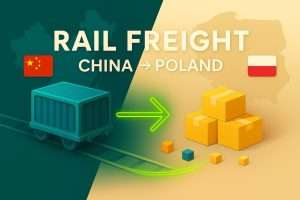
Looking for a faster, greener, and more cost-effective way to ship goods from China to Germany? Rail freight could be your winning ticket. Fueled by the New Silk Road, direct train routes now connect Chinese factories to Germany’s logistics powerhouses—giving your business a real edge in today’s global market.
Why is everyone talking about China–Germany rail freight?
The China-Europe Railway Express (中欧班列) has become a backbone of the Belt & Road Initiative (一带一路), bridging the gap between slow, unpredictable ocean shipping and sky-high air freight costs. Even during global supply chain disruptions like COVID-19, these trains kept goods moving reliably.
Here’s what smart importers are gaining:
- 12–16 days delivery (twice as fast as sea freight)
- Up to 60% savings compared to air cargo
- Real-time tracking and a lighter carbon footprint
Ready to make your supply chain faster, greener, and more resilient? It’s time to explore what rail freight from China to Germany can do for your business.
Why Choose Rail Freight from China to Germany?

The #1 Eurasian Rail Corridor
When it comes to rail freight in Eurasia, the China–Germany route stands out as the undisputed leader. Since the very first direct trains in 2011, this corridor has become the backbone of cross-continental logistics—over 12,000 trains ran between China and Europe in 2020 alone. Major investments from Deutsche Bahn and China Railway are set to double capacity by 2025, targeting a remarkable 500,000 containers per year. Specialized operators like DB Cargo Transasia now provide seamless, door-to-door rail logistics across the continent.
A Corridor Built for Modern Supply Chains
After record growth through 2022, the market saw some volume adjustment in 2023–2024. Increased ocean freight competition, geopolitical tensions with Russia, and capacity strains on the German network have reshaped the landscape—but rail remains a resilient and essential solution.
Why does this matter for your business?
- Speed: Fast, reliable deliveries keep your supply chain agile.
- Cost savings: Rail rates can be up to 50% lower than air freight.
- Sustainability: Major reduction in carbon emissions—supporting green goals and CSR.
- Frequency: Regular departures, even during global disruptions.
Key Benefits for German Companies
Curious how rail compares to sea and air shipping for your China–Germany trade? Here’s a practical overview:
| Rail Freight (China → Germany) |
Sea Freight | Air Freight | |
|---|---|---|---|
| Transit Time | 12–16 days | 30–40 days | 2–4 days |
| Price | Moderate (50% less than air) | Cheapest per unit | Highest |
| Reliability | High (fixed schedules, 10+ trains/day) | Average (port delays, strikes) | Very High |
| Sustainability | Eco-friendly (up to 95% less CO₂ than air) | Decent | Poor |
| Arrival Points | Duisburg, Hamburg, Munich, Nuremberg, Leipzig | Hamburg, Bremen, etc. | FRA, MUC, DUS |
| Ideal for | Electronics, machinery, textiles, auto parts, FMCG | Bulk/low value goods | Urgent/high-value |
- Duisburg: Europe’s largest inland logistics hub—handling up to 70 trains weekly. The Port of Hamburg sees 200+ trains per day, ensuring unrivaled access for Chinese cargo.
- Modern terminals: German logistics infrastructure is built to welcome China-Europe rail, offering smooth customs and onward distribution.
- Eco advantage: Rail freight produces up to 95% less CO₂ than air and 80% less than road, making it the clear choice
Why German Importers Are Turning to Rail
Rail freight is reshaping how German businesses import from China. Here’s why:
- Direct connections from all major Chinese export hubs (Xi’an, Chongqing, Chengdu, Wuhan, Yiwu, Shanghai) to Germany’s top logistics cities (Duisburg, Hamburg, Munich, and more).
- Avoid port congestion and dock strikes: Trains bypass busy seaports and unpredictable disruptions.
- Streamlined customs clearance: Digital systems like Germany’s ATLAS platform make import processes fast and efficient.
- Meet EU and German green targets: Rail helps you align with the Green Deal and CSR reporting requirements.
When Rail Freight Is the Best Option for Germany
Rail is the perfect fit if your business needs:
- Faster delivery than sea, but air is too expensive
- Predictable, scheduled arrivals to keep your supply chain running on German precision
- Inland delivery—not just to ports, but direct to major logistics hubs across the country
- Sustainability at the core: Rail emits only 14–28 grams of CO₂ per ton-kilometer (the lowest of any long-distance mode)
Main Rail Routes from China to Germany

Europe’s Leading Rail Corridor
China–Germany rail freight has become the backbone of Eurasian logistics, and Germany remains the top European destination for trains departing from China. In 2020 alone, over 12,000 trains crossed the continent, with the Germany route consistently #1 for frequency and volume. However, 2024 saw a drop in traffic due to the war in Ukraine, network congestion in Germany, and a shift in Europe’s rail market share (Germany’s share dropped from 86% to 78.6%).
Key Corridors: Direct Trains Linking China and Germany
The main rail corridors between China and Germany are engineered for speed, reliability, and capacity. These routes connect China’s largest industrial zones to Germany’s major logistics hubs, keeping European supply chains moving, even during global disruptions.
| Route Name | Departure City (China) | Arrival Hub (Germany) | Typical Transit Time | Notable Features |
|---|---|---|---|---|
| Chongqing–Duisburg | Chongqing | Duisburg | 13–16 days | Flagship route, high frequency |
| Xi’an–Hamburg/Duisburg | Xi’an | Hamburg/Duisburg | 14–17 days | Largest capacity, backbone line |
| Chengdu–Duisburg/Hamburg | Chengdu | Duisburg/Hamburg | 13–16 days | Multiple departures each week |
| Zhengzhou–Hamburg | Zhengzhou | Hamburg | 13–16 days | Links central China to N. Germany |
| Wuhan–Hamburg/Duisburg | Wuhan | Hamburg/Duisburg | 14–18 days | Central China–Germany |
| Yiwu–Duisburg | Yiwu | Duisburg | 16–18 days | Light goods, export-focused |
| Shanghai–Hamburg | Shanghai | Hamburg | ~16 days | New direct line since 2022 |
- Secondary German hubs: Nuremberg, Munich, and Leipzig are also key inland arrival points, improving nationwide distribution.
Major Departure Cities in China
Rail freight to Germany is fueled by China’s most powerful export cities:
- Xi’an
- Chongqing
- Chengdu
- Zhengzhou
- Wuhan
- Yiwu (world’s largest small commodities market)
- Shanghai (fast-growing new direct line)
These cities are manufacturing and logistics powerhouses, ensuring regular departures and flexible options for shippers.
Main Arrival Hubs in Germany
Germany is a logistics superpower, with modern rail terminals ready to handle massive volumes from China:
- Duisburg — Europe’s largest inland port and key rail freight terminal, handling up to 70 China-Europe trains per week.
- Hamburg — The continent’s biggest seaport and rail port, with over 200 trains a day.
- Munich, Nuremberg, Leipzig — Important inland terminals for regional and nationwide distribution.
Arriving by rail means goods can be distributed quickly throughout Germany and across the EU.
What Countries Do These Trains Cross?
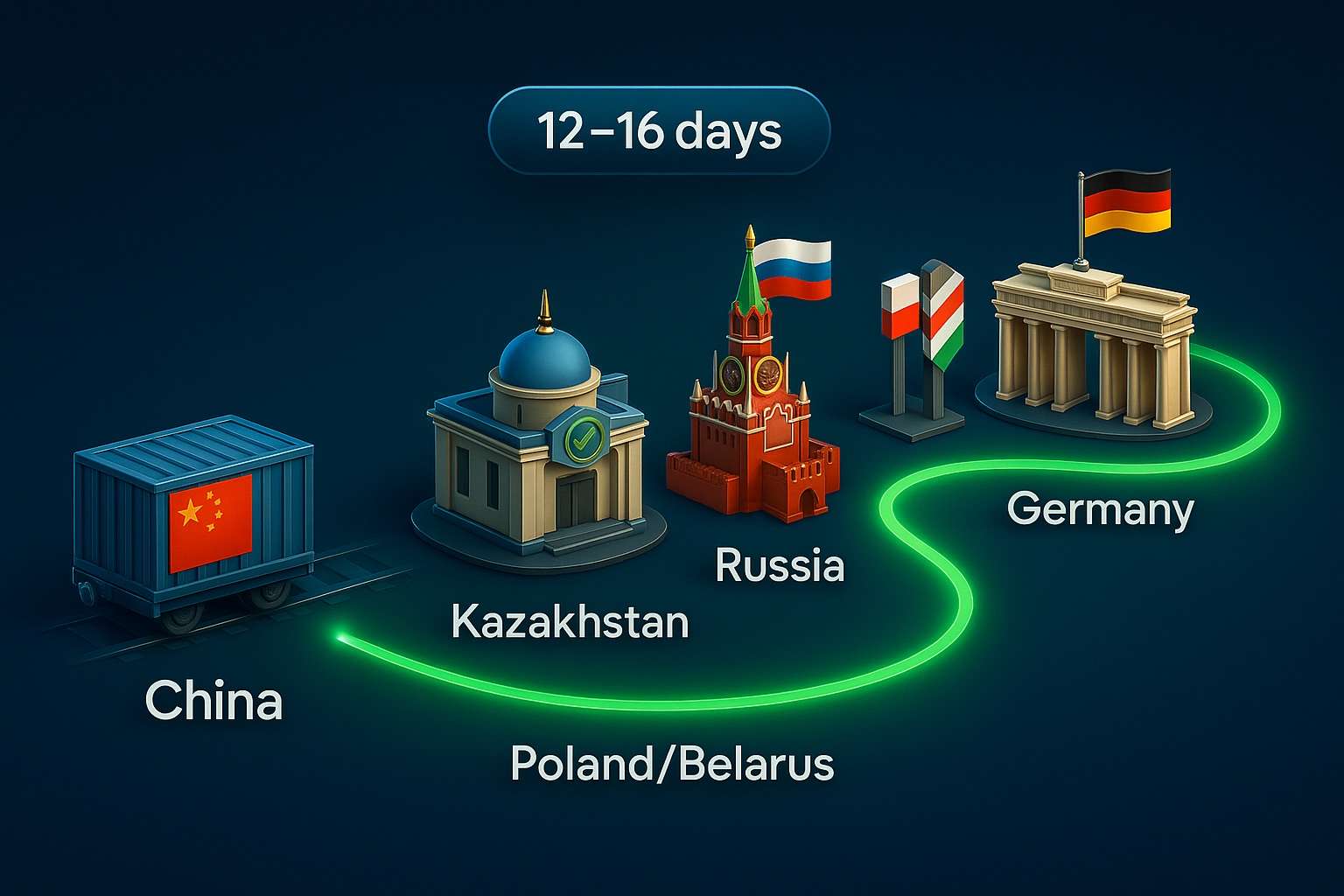
The main China–Germany rail corridors traverse the heart of Eurasia, crossing multiple international borders:
- Kazakhstan
- Russia (Northern Corridor)
- Belarus
- Poland
- Germany
Each border crossing is supported by “green lane” customs processes for speed and reliability.
Alternative Route: The Middle Corridor
Rerouting for resilience: In response to recent geopolitical tensions (especially the war in Ukraine and sanctions affecting Russia/Belarus), the “Middle Corridor” (中间通道) is emerging as a robust alternative:
- Route: Kazakhstan → Caspian Sea → Azerbaijan → Georgia → Turkey → European Union → Germany
- Benefits: Bypasses Russia, offering lower geopolitical risk.
- Transit time: Slightly longer (usually 1–3 days more than the northern route), but with growing capacity and investment from China, the EU, and Turkey.
2025 Trend:
More shippers are using the Middle Corridor, attracted by its stability and long-term growth potential.
Transit Times & Reliability of Rail Freight from China to Germany
Fast, Predictable Delivery Across Eurasia
One of the main reasons German importers are switching to rail is the impressive door-to-door transit time. Rail freight from China to Germany delivers your goods in just 13 to 18 days, offering a significant speed advantage over ocean shipping while avoiding the high costs of air freight.
Typical Door-to-Door Transit Times
| Origin City (China) | Destination (Germany) | Transit Time (Days) |
|---|---|---|
| Chongqing | Duisburg | 13–16 |
| Xi’an | Hamburg/Duisburg | 14–17 |
| Chengdu | Hamburg/Duisburg | 13–16 |
| Zhengzhou | Hamburg | 13–16 |
| Wuhan | Hamburg | 14–18 |
| Yiwu | Duisburg | 16–18 |
| Shanghai | Hamburg | ~16 |
- Frequency: Over 10 trains depart daily from China to Germany during peak season, ensuring regular service and flexible options for shippers.
What Impacts Speed and Reliability?
While rail is fast and reliable, several factors can influence the final transit time of your shipment. Here’s what you need to know:
- Border Crossings:
Rail routes cross multiple borders—Kazakhstan, Belarus, Poland, and Germany. The implementation of efficient “green lanes” and harmonized customs processes keeps border delays to a minimum. - Seasonality and Weather:
Peak shipping seasons (like Golden Week and Chinese New Year) and harsh winter weather can occasionally add 1–3 days to delivery times. Planning ahead helps you avoid surprises. - German Infrastructure:
Parts of Germany’s rail network are in urgent need of modernization, with over €40 billion in upgrades required. Temporary bottlenecks can occur, but ongoing investments aim to resolve these issues long-term. - Last-Mile Delivery:
Final delivery to your warehouse or customer typically involves road transport from the rail terminal. Choosing experienced logistics partners ensures a seamless handoff. - Rail Operator Quality:
Working with established operators (like DB Cargo Transasia or CR Express) increases your chances of schedule adherence, transparent tracking, and fast customs clearance.
Recent Disruptions: How Geopolitics Shape the Journey
The world of rail freight is not immune to global events. In recent years, several geopolitical and infrastructure factors have impacted China–Germany rail transit:
- War in Ukraine:
Routes passing through Russia and Belarus are now considered riskier by insurers and some clients, leading to increased use of alternative corridors (like the Middle Corridor via Turkey). - Infrastructure Closures:
Major renovation projects—such as the temporary closure of the Frankfurt–Mannheim rail corridor in 2024—can affect schedules and force rerouting. - Changing Traffic Patterns:
As a result of these disruptions, a growing share of China–Germany freight is shifting to the Middle Corridor, which, while slightly slower, offers lower geopolitical risk and growing capacity.
Rail Freight Costs: Pricing Guide for China–Germany
Understanding your shipping costs is crucial for smart logistics decisions. Rail freight between China and Germany delivers a powerful balance between price, speed, and reliability—often outperforming other modes in total value.

Rail Freight China–Germany: Price Ranges by Season
Rail freight rates fluctuate throughout the year, primarily based on demand, route congestion, and overall capacity. Here’s what you can expect:
| Service Type | Low Season<br>(Off-Peak) | High Season<br>(Peak) |
|---|---|---|
| FCL (20ft container) | $2,200–$4,200 | $4,200–$6,200 |
| FCL (40ft container) | $3,500–$6,500 | $6,500–$8,500 |
| LCL (>500kg) | $1.20–$2.20 per kg | $2.20–$3.20 per kg |
- Cost advantage: Rail is typically 30% cheaper than air freight, and only about 30–50% more than sea freight, but offers much faster and more reliable delivery than ocean shipping.
- 2023–2024 trend: After years of strong growth, a drop in overall volume and a period of overcapacity have put downward pressure on prices—it’s a good time to negotiate.
- Example spot rates for 2024:
- 40ft container: $6,000–$8,000
- LCL (consolidated freight): $215 per m³
Rail vs. Sea vs. Air Freight: Cost Snapshot
Choosing the right shipping mode is all about balancing cost, speed, and reliability. Here’s a quick comparison for a 20-foot container:
| Shipping Mode | Typical Price (20ft container) | Best Use Case |
|---|---|---|
| Rail Freight | $2,200–$6,200 | Fast, inland Germany |
| Sea Freight | $1,600–$3,000 | Lowest price, non-urgent goods |
| Air Freight | $10,000–$17,000 | Urgent, high-value, small volume |
- Rail is the sweet spot for businesses needing faster delivery than sea but without the sky-high rates of air freight—especially if your goods are destined for inland German hubs.
Additional Fees to Consider
Don’t forget about ancillary charges that can affect your total landed cost:
- Customs clearance (Germany): €100–€300 per shipment
- Insurance: 0.3–0.5% of cargo value
- Last-mile delivery: €150–€700 (from terminal to your final address)
- Documentation & handling: €25–€80
- Warehousing: Varies by location, duration, and congestion—costs can rise if hubs are saturated during peak seasons
Pro tip: Booking early, consolidating LCL shipments, and working with experienced freight forwarders can help minimize surprises and unlock further savings.
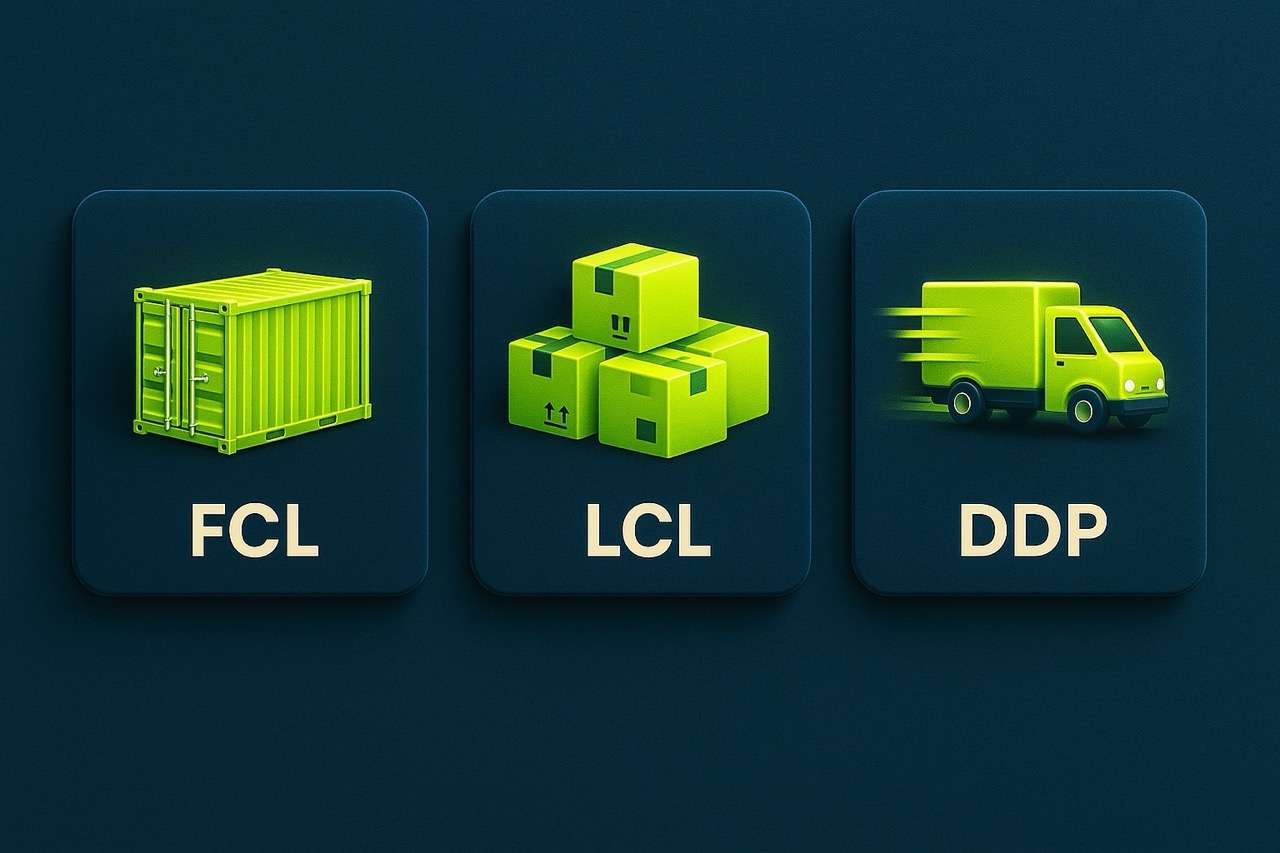
Rail Freight Services Available: FCL, LCL, DDP
Choosing the right rail freight service can make all the difference in your supply chain—affecting speed, cost, and overall peace of mind. Here’s a breakdown of your main options for shipping between China and Germany.
Service Types for China–Germany Rail Shipments
Whether you’re shipping full containers or just a few pallets, rail offers flexible solutions tailored to your needs:
| Service Type | Description | Best For |
|---|---|---|
| FCL | Full Container Load – Reserve the entire container (20ft or 40ft) for your cargo only. | Large, regular shipments |
| LCL | Less than Container Load – Share container space with other shippers (groupage service). | Small to medium, flexible volumes |
| DDP | Delivered Duty Paid – End-to-end solution with all charges prepaid (including customs & VAT). | E-commerce, hassle-free, new importers |
- FCL gives you maximum control and security, perfect for bulk or high-value shipments.
- LCL lets you pay only for the space you use—ideal for businesses scaling up or with smaller orders.
- DDP simplifies everything, bundling freight, customs, VAT, and delivery into one predictable cost.
DDP (Delivered Duty Paid): Pros & Cons for German Importers
Delivered Duty Paid (DDP) rail services are increasingly popular among German importers—especially for first-timers or e-commerce businesses.
Pros:
- All-inclusive pricing: One invoice covers freight, duties, VAT, and delivery—no hidden fees.
- Time-saving: Your freight forwarder manages documentation, customs, and last-mile delivery.
- No surprises: Eliminates the risk of unexpected customs delays or costs on arrival.
Cons:
- Slightly higher rates: You pay a premium for convenience.
- Less control: You have limited visibility or influence over the customs process.
Pro tip: If you value simplicity and want a fully managed solution, DDP is a smart choice.
How to Choose the Right Rail Freight Service
Not sure which option fits your business? Here’s a quick guide:
- Choose FCL if you have enough cargo to fill a container, want direct handling, and need reliability for large shipments.
- Pick LCL if you’re shipping smaller volumes, want cost flexibility, or are testing the market.
- Opt for DDP if you want a hassle-free, all-in-one solution—perfect for e-commerce, dropshipping, or first-time importers who don’t want to deal with customs complexities.
Customs & Documentation Requirements for Rail Freight China–Germany
Getting your goods smoothly into Germany starts with the right paperwork. Efficient customs clearance is crucial for fast delivery, cost control, and compliance with German and EU regulations.

Key Documents for Rail Shipments
To avoid delays or fines, make sure your shipment includes the following essential documents:
- Commercial Invoice: Clearly details buyer, seller, goods, and value.
- Packing List: Itemizes all cargo and packaging.
- Rail Bill of Lading (Waybill): Proof of shipment for rail transport.
- Certificate of Origin: Confirms manufacturing country, used for tariffs and trade agreements.
- Import Licenses: Required for regulated or restricted goods (e.g., chemicals, medical devices).
- Insurance Certificate: Highly recommended, especially for high-value goods.
- EORI Number: Economic Operators Registration and Identification—mandatory for all EU/German importers.
- Compliance Certificates: For many products, proof of CE marking, RoHS, or REACH compliance is required.
German and EU Customs Clearance: Tips & Pitfalls
German customs (“Zoll”) are efficient but strict. Here’s how to avoid the most common pitfalls:
- Declare the correct value and HS codes: Misclassification or under-invoicing can trigger audits and costly delays.
- Pay German VAT/duties promptly: The standard German VAT rate is 19%, applied to most imports.
- Work with an experienced customs broker: Choose one familiar with rail shipments for smoother clearance.
- Double-check all documentation: Missing or incomplete paperwork is a leading cause of shipment delays at German terminals.
Pro tip: Start gathering documents early and communicate closely with your freight forwarder or customs agent.
Special Compliance: CE Marking, EORI Number & More
Some products and businesses must meet extra legal requirements for import into Germany and the EU. Here’s what you need to know:
| Requirement | What is it? | Who needs it? |
|---|---|---|
| CE Marking | Confirms product meets EU safety, health, and environmental standards | Electronics, toys, machinery, etc. |
| EORI Number | Unique importer/exporter identification number for EU customs | All EU importers |
| Product Certs | Additional certifications like RoHS, REACH, etc. | Required for certain industries |
Sustainability & Environmental Impact of Rail Freight China–Germany

Rail Freight’s Carbon Footprint: A Clear Advantage
If you’re looking to green your supply chain, rail freight from China to Germany stands out as the most eco-friendly option for long-distance shipping.
| Transport Mode | CO₂ Emissions (g/ton-km) | Relative Impact |
|---|---|---|
| Rail | 14–28 | Lowest |
| Sea | 35–50 | Low/Moderate |
| Road | 60–150 | High |
| Air | 500+ | Extremely High |
- Rail freight emits up to 95% less CO₂ than air, and 80% less than road transport (according to German studies).
- Deutsche Bahn and China Railway have committed to doubling their “green rail” volumes by 2025, investing in electric locomotives and digital efficiency.
- Germany’s Port of Hamburg—with 200 trains per day—is a leading European hub for sustainable logistics, helping reduce truck traffic and emissions across the continent.
Every tonne you ship by train helps your business meet tough sustainability targets and appeals to eco-conscious clients.
Green Logistics: EU and German Regulations & Incentives
The transition to low-carbon logistics is not just good for the planet—it’s also encouraged by powerful EU and German policy tools:
- Eco-bonuses and tax incentives:
Both Germany and the EU provide financial incentives and lower taxes for companies using rail over road or air, supporting modal shift. - Mandatory CSR and emissions reporting:
German companies are now required to report their supply chain emissions (“Nachhaltigkeitsbericht”). Rail makes compliance easier. - Fit for 55 & EU Green Deal:
Ambitious EU policies aim to cut transport emissions by 90% by 2050, putting rail at the center of future supply chains. - Urban access benefits:
Rail deliveries to hubs like Hamburg, Duisburg, and Munich help avoid urban truck bans and congestion, enabling faster and greener last-mile logistics.
Challenges & Limitations of China–Germany Rail Freight
While rail freight offers impressive speed, sustainability, and value, it’s important to be aware of the practical challenges that can affect your China–Germany shipments. Planning ahead and working with the right partners helps you overcome these obstacles.

Capacity Constraints
- Falling Volumes, But Still High Demand:
In 2023–2024, overall volumes on the China–Germany rail corridor dropped sharply—Germany’s share of EU-China rail trade fell from 86% to 78.6% (just 12,866 TEU China → Germany in 2023, down 80%). However, capacity can still be tight during peak season. - Advance Booking Essential:
Rail slots fill up fast, especially for Full Container Load (FCL) shipments during the pre-holiday rush or after Chinese New Year. - LCL (Groupage) Shipments:
Less-than-container-load cargo may experience longer consolidation and transit times when demand is high or space is limited.
Infrastructural & Regulatory Challenges in Germany
- Aging Rail Infrastructure:
Germany’s national rail network is in urgent need of modernization, with €40 billion in upgrades planned by Deutsche Bahn. Infrastructure bottlenecks, delays, and occasional service disruptions are still a reality. - Temporary Closures:
Major renovation projects—such as the temporary closure of the Frankfurt–Mannheim corridor in 2024—can reroute or delay freight trains. - Customs Complexity for New Importers:
Navigating German customs (Zoll) can be challenging for first-timers, especially with strict documentation and product compliance requirements.
Competition with Road & Sea Freight
| Mode | Main Advantage | Main Drawback |
|---|---|---|
| Rail | Speed + eco-friendly | Capacity, access limits |
| Sea | Lowest cost, highest volume | Slow |
| Road | Door-to-door flexibility | High CO₂, traffic risk |
- Sea freight remains the leader for bulk, non-urgent, or very low-cost goods.
- Road transport offers unmatched last-mile flexibility, but at a much higher environmental and sometimes financial cost.
Political & Economic Risks
- Geopolitical Tensions:
Sanctions, insurance complications, and sudden policy changes in Russia/Belarus can impact traditional northern rail routes. - Economic Uncertainty:
Fluctuations in fuel prices, labor costs, and customs tariffs can quickly shift the economics of rail freight. - Global Disruptions:
Events like the Red Sea crisis or the COVID-19 pandemic have shown how quickly logistics patterns can change. - Regulatory Changes:
New international conventions (e.g., the 2024 UN harmonization of China–Germany rail rules) may impact procedures, documentation, or costs.
Recent Developments & Future Outlook for China–Germany Rail Freight
The landscape of China–Germany rail freight is evolving fast. Major investments, international cooperation, and digital innovation are setting the stage for an even stronger, greener, and more reliable Eurasian rail corridor in the years ahead.
The Belt & Road Initiative: Transforming Eurasian Trade
- Belt & Road Investment:
China’s Belt & Road Initiative (BRI, 一带一路) is the driving force behind Eurasia’s modern rail network, channeling billions into new tracks, terminals, and border infrastructure. - DB Cargo Transasia Expansion:
Deutsche Bahn’s specialized subsidiary, DB Cargo Transasia, is now offering seamless, door-to-door rail services in 18 European countries—including Germany’s key industrial hubs. - Pioneering Green Tech:
Joint initiatives between Chinese and German partners are accelerating the adoption of low-carbon rail technologies, artificial intelligence for network optimization, and digitalized customs procedures for faster, greener logistics.
Infrastructure Investments: New Lines & German Hubs
- Strategic Upgrades in Germany:
Massive investments are flowing into key logistics hubs like Duisburg, Hamburg, and Bavaria—adding new terminals, automating operations, and expanding capacity to absorb growing rail traffic from China. - Middle Corridor Growth:
The expansion of the “Middle Corridor” route—connecting China to Europe via Kazakhstan, Azerbaijan, Georgia, and Turkey—adds a resilient alternative to traditional Russian routes, reducing geopolitical risk for shippers. - Global Harmonization:
In 2024, a new UN rail convention aims to harmonize rail freight rules between China and Germany, making cross-border shipments faster, simpler, and more predictable for all parties.
Digitalization & Intermodality: The 2025 Vision
Tomorrow’s China–Germany rail freight is smarter, faster, and more sustainable. Here’s what’s coming next:
| Trend | What It Means for You |
|---|---|
| Digitalization | Real-time tracking, online bookings, automated paperwork |
| Intermodality | Seamless transfers between train, truck, and ship—enabling true door-to-door logistics |
| Sustainability | Increased green incentives, electric trains, and climate reporting for your supply chain |
- AI-Driven Logistics: Deutsche Bahn and Chinese partners are leveraging artificial intelligence to optimize rail traffic, reduce bottlenecks, and speed up customs processes.
- Double the Capacity: The goal for 2025 is to double Eurasian rail traffic—giving businesses more flexibility, frequency, and resilience than ever before.
FAQ: Rail Freight from China to Germany
Is rail freight from China to Germany faster than sea shipping?
Yes! Rail freight typically takes 12–16 days, while sea freight usually takes 30–40 days door-to-door. Rail is the best choice for importers who need reliable, mid-speed logistics without the cost of air.
How much does it cost?
Rail freight rates generally range from $2,200–$6,200 for a 20ft container. For less-than-container-load (LCL), rates start from $1.20 per kg—but exact prices depend on season, route, and market demand.
What documents do I need?
To clear German and EU customs, you’ll need a commercial invoice, packing list, rail bill of lading (waybill), certificate of origin, EORI number, and (depending on your products) compliance certificates like CE, RoHS, or REACH.
Can I use DDP (Delivered Duty Paid) for rail freight?
Absolutely. DDP rail means all freight charges, customs, VAT, and delivery fees are prepaid—giving you a hassle-free, fully managed shipping solution.
Is rail sustainable?
Definitely. Rail produces up to 95% less CO₂ than air freight and 80% less than road transport. It’s the most climate-friendly way to ship long-distance and helps you meet German and EU sustainability goals.
What are the main arrival hubs in Germany?
Key rail terminals include Duisburg, Hamburg, Munich, Nuremberg, and Leipzig—giving you access to the entire German and European market.
Any recent disruptions or changes?
Yes. The Ukraine conflict, infrastructure upgrades in Germany, and the rise of the Middle Corridor route have shifted some rail traffic and schedules. In 2024, a new UN convention is harmonizing China–Germany rail procedures for smoother shipments.